Alternative Career Changes for Teachers Who Are Tired of Teaching

Is your teaching career in a rut? Have you lost the passion you had when you started your teaching career? Are you looking to make a career change and have no idea how to get started?

There are several different career choices for teachers you can follow if you have an educational background and relevant transferable skills and accomplishments.

Several of these second job options are quite unusual and ones that you may not have otherwise considered. You may ask the question:

What can I do with a teaching degree if I don’t want to teach? There are many significant career changes for teachers to research and identify those that best suit their passions and strengths.

Teachers can use their transferable teaching skills for opportunities in human resources, marketing, sales, journalism, information science, publishing, childcare administration, and higher education, and many more.

Or maybe you are considering transitioning into school administration as a principal or assistant principal.

Different Career Choices for Teachers

If you are trying to determine the best jobs for teachers who don’t want to teach, it depends on the individual.

Consider these new career options if you are looking to make a career change within education or outside the education field.

School Administrator

As was just briefly mentioned above, a transition into school administration may be all you need in terms of a career change. Are you tired of teaching but still want to help students? Perhaps applying for a promotion to Vice/Assistant Principal or Principal is the move for you.

This career transition will allow you to maintain your educational career while helping a larger population of students and staff to a greater degree. You can also put your leadership skills to work by collaborating with your peers to maintain an inclusive and harmonious school community.

Over the past 1225years, I have helped many teachers transition into educational leadership roles. Other administrative positions include District Superintendent and Curriculum Coordinator.

Higher Education – College or University

Teachers and educators can transition into higher education human resources, alumni relations, curriculum development, student affairs, instructing, and college administration with relative ease. With an education master’s degree and teaching skills, you can efficiently work in school administration and as a faculty member.

You can even consider working as a college instructor, university professor, or departmental dean. There are endless career choices for teachers in higher education.

Instructional Coordinator

With a teaching background, you may have been involved at some point with preparing class syllabi, coursework, and instructional planning. If you enjoy the profession of instruction and want to shape students’ learning process on a larger scale, you can become a curriculum specialist or instructional coordinator.

You can choose textbooks, train teachers, evaluate current programs, and implement technology in school systems. An instructional coordinator career will give you the feeling of a new job while remaining in the school system.

Information Science

Information science is currently a fascinating field that examines how people use, access, and present information. Blogs, websites, and digital libraries often rely on educators’ knowledge to better understand how people access, respond to, and retain information. There are several opportunities for teachers today in distance learning, online publishing, and new media.

Human Resources / Personnel Coordination

Human resources, labor, or personnel relations may be the right field for a teacher. This exciting field brings together personnel development, economics, financial planning, management, and psychology. Therefore, you may be able to find an inspiring career opportunity in this field while using many of the skills you’ve attained as a teacher.

Museum Curator or Guide

If you have always loved museums, you should know that museums often seek candidates with education degrees for roles as technicians, curators, guides, and archivists. Jobs in museums offer a fascinating and educational alternative for educators.

Archivists research, classify, and catalog electronic data, books, letters, sound and video recordings, film, news articles, and photos. Curators deal with tangible items such as historical objects, collectibles, and art, and coordinate programs and displays.

Social Worker

While you were a teacher, you likely encountered struggling children and families. Did you ever wish there was something more you could do for them? As a social worker, you can work closely with families to ensure children are provided a safe and nurturing home environment.

This could be a good option for a career change, as you will still be able to shape and help children or teenagers while working toward the root cause of potentially life-long problems.

Corporate Trainer

One of the most popular alternative career choices for teachers is a corporate trainer. The focus is on job-specific duties and development. Your goal is to impart knowledge and build upon the skills of the corporate professionals you are working with. This is an excellent career option for educators because it is still very similar to teaching, but in a completely different environment and at a higher level in the business sector.

Business Owner / Entrepreneur

If your passion for education still runs strong, what about building your own business around that field?

For instance, you might want to create a business focused on after-school programs, tutoring, adult literacy education, or early childhood development. Or, you may have a passion in a completely different area that you’d like to pursue as a business owner.

The World Wide Web allows you to create your own business quickly. There is a whole world of customers out there waiting for your expertise.

This career option will allow you to build a business from the ground up, be your own boss, and establish your own policies, procedures, hours of operation, mission statement, etc. You can pretty much create anything your imagination allows.

With so many different career choices for teachers available, you will have plenty of routes you can take to branch out of the classroom, whether while remaining within the education field or by entering an entirely new industry.

There are many other job options for teachers or administrators to research.

Once you decide to change your career, you will need to develop a new resume and cover letter geared toward your new job target!

Writing a Career Change Resume

If you are thinking about changing your career, your new resume will be entirely different from your original teaching resume.

It will be vital to communicate how your teaching skills, education, and work experience will transfer to the skills, training, and experience required for the new position.

There are a few research and writing steps and strategies to follow to create a resume and cover letter that demonstrate your qualifications for the new target position.

Analyze the Skills Needed for the Targeted Position

Research the job requirements thoroughly. Ensure you understand what the position entails, including required skills, education, or experience to perform the job. If you aren’t sure or the details are not precise, call the personnel department or the contact information listed for the job posting and ask a few questions to clarify the job’s scope.

List Information Under Headings

After you have all the information, review the job’s details to see which skills, education, and experience you have that fit. Divide the requirements into three or four categories, and then under each category, list what skills, education, and experience you have that fit that category.

Add Work History

After you have shown what skills, knowledge, and experience you have that meet the targeted position criteria, list your work experience in reverse chronological order with your most recent position first. Be short but detailed, pointing out aspects of your previous jobs that would qualify as relevant areas to succeed in the new place.

Recognition / Awards

If you have received recognition for school involvement from your present school or prior positions that point out skills or attributes that the school recognized as having improved or helped it in any way, you will want to have these listed. For example, if the school recognized you for your organizational or communication skills, you would want to list them.

Employers or Professional References

After you have your new skills resume ready, you will want to finalize your recommendations. Do not present these until you go for an interview. Get permission first from your references to use them, and ask them to mention any special skills or attributes you have that would help you qualify for the position you are seeking. Ask if they will write you a letter of recommendation highlighting these skills.

Additional Recommendations

If you are involved in any neighborhood, community, or volunteer activities in which you have used these skills, you may want to obtain references, preferably in writing, from the heads of these organizations. Additional recommendations will demonstrate to employers that you can apply your skills and experience across all aspects of your life. It will improve your chances of getting the position you seek the more qualifications and expertise you can bring to the table.

You Are On Your Way!

Now that you know what type of position you’d like to pursue outside of the classroom, you are ready to make the big transition into a new career. Additionally, with the above tips on how to change your resume for a career transition, you will create a strong and eye-catching resume that will help you gain interviews and get your foot in the door of your new career.

Need help with your career transition? If you’d like assistance with any aspect of your career change job search, I’d be happy to help! I offer resume packages, interviews, and career coaching, LinkedIn profile development, and more to help you on your way. Please email me or call me toll-free at 1-877-738-8052 today!

How to Set and Accomplish Career Goals Easier in 2026

Are you prepared to reach your career goals in 2026? Perfect!

Creating a solid, documented plan to accomplish your career goals will keep you focused and help you achieve your aspirations.

Writing down your goals will help you execute them, ensuring you don’t fall short of your career vision and aspirations.

First off, have you given much thought to what you’d like to achieve?

Procrastinating on goal setting, not only robs you of proper research and forward planning, it often leads to rushed and unfocused steps that aren’t in alignment with your real aspirations. This is why the best time to create goals is when you have time to really think.

2026 Career Goals – Key Points to Put Your Career Plan in Motion

Grab a coffee, pen, paper, or whatever you need to get started on this vital step in your life and career.

1. Set Realistic, Specific, and Measurable Career Goals

You must have a vision, daily goals, and a strategic yearly plan, and use many of your characteristics. Many studies have shown a direct correlation between setting specific career goals and finding tremendous success.

  • Goal setters are shown to be more productive because their goals keep them accountable.
  • Goal setting helps you identify what you want to accomplish and what you need to do to get there.

2. The End of Your Life Reflection Question

What will you want to accomplish when envisioning yourself at the end of your life?

  • When developing your goals, start from the end goal and work backward.
  • Write down the 3-5 main points that come to mind.
  • This exercise will help you determine the most important and main goals you should work toward this year.

3. Reflect on Your Past Career Achievements

Take some time to reflect on 2024 and your job achievements – write them down.

  • How far you’ve come can help you determine where you want to go next in your career.
  • Self-reflection is an excellent activity for growth. And while we are talking about development, don’t miss this in-depth blog post on incorporating a growth mindset in the classroom.

4. What Do You Value in Your Career And Personal Life?

You need to know what’s important to you to set lasting career goals. If you are unhappy with your job, it’s time to take steps to change your career dissatisfaction.

  • Aligning your career goals with your values is essential.
  • When your goals align with your values, you will derive greater enjoyment from achieving them.

5. Be Ambitious

  • Be enthusiastic about what you want to achieve.
  • You can’t expect to reach great things if you don’t allow yourself to dream.
  • It’s okay to dream big – if people don’t think you can prove them wrong.
  • Dream big without talking yourself out of it – don’t get discouraged.

6. Set SMART Goals

SMART goals are specific, measurable, achievable, realistic, and have a timeline.

Specific: the goal should be precise and descriptive
Measurable: Can the result of reaching the goal be measured?
Achievable: Is the goal realistic?
Realistic: Does the goal fit into your overall career aspirations?
Time Frame: Are there milestones throughout the goal process? Is there a set deadline?

7. Be Specific When Writing Your Career Goals

If your goal is too broad, achieving it will be much more challenging. It needs to be specific and descriptive.

  • Be specific about your career aspirations and professional goals that you’ve set.
  • For instance, just saying you want a new job or a different career path isn’t nearly specific enough to know where to start to achieve it.
  • If you don’t know how to make your goal more specific, brainstorm and reflect on your wants. Once you have a concrete end goal, it will be much easier to devise a plan to achieve it.

8. Understand Your Motivation for Each Career Goal

You will more likely commit to your goal if you fully understand the purpose of setting the target in the first place.

  • Identify the motivation behind the goal.
  • Ask yourself: why is it vital for you to achieve this goal?
  • Ask yourself: why do you want to achieve this goal?

9. Break Your Career or Personal Goals Down

Your goal can be significant, but break it down into manageable chunks to avoid overwhelming yourself.

  • Suppose your goal is to rejuvenate your career in education so you can enjoy your personal and professional life. Document the steps you will take. It will happen by taking small steps daily.
  • Break the significant goal into smaller chunks to keep you motivated and help you always progress toward it.
  • Prioritize what needs to be completed when accomplishing the more significant goal within your time frame.

10. Share Your 2026 Career Goals

Once you share your goals with others, they will become more accurate.

  • Write down your goals.
  • Tell others about your goals.
  • You will be more committed and accountable once you’ve shared your goals with others.
    Set regular reminders in an app or calendar to keep you accountable, motivated, and on track.

11. Make a Plan

Do you know what steps you’ll take to start the process?

  • Write out a plan or a to-do list to help you get closer to achieving your goals.
  • Figure out what you need to do to get on the right path.

12. Assess the Risks of Accomplishing Your Goals

Identify any obstacles that might get in the way of achieving your goals.

  • Don’t expect everything to go perfectly – be as proactive as possible.
  • Identify potential issues to better prepare for any hiccups.
  • You may need to be flexible and develop alternative approaches.

13. Identify Your Resources

What courses, people, websites, etc., can help you achieve your goal?

  • If you are starting from square one toward your goal, it can seem daunting. It can be constructive to identify the resources you have to help you get started.
  • You might be able to get help or advice from a mentor, colleague, career coach, family member, friend, or online professional social networks.
  • Do you need to take a course or seminar, or return to school for a different degree?
  • How about updating and targeting your resume, cover letter, and LinkedIn profile?
  • Many career and education job search tips and resources are available to educators.

Reading books or blogs can ignite your enthusiasm and help you gain knowledge for your 2026 career goal.

Additionally, you are not the first person to have tried to accomplish your goal. Look to online resources or people in your network who have done your work. You can learn a lot from these resources.

14. Set a Reasonable Time Frame

Make your action plan more formidable by setting it within a time frame.

  • According to statistics, people are more productive when working towards a written deadline.
  • Consider how long each step toward your primary goal will take, then set a due date next to each.

15. Stay Motivated

Achieving your 2026 career goals should be your motivation. It is the driving force that propels you forward. What is your motivator? More money, time off, respect on the job, an opportunity for advancement, or smaller class sizes?

  • Ensure you have a support network. Lean on your friends and family. It can do wonders to help you through tough times.
  • Even though you should carve out some time each day to work towards your goal, don’t forget to have fun and give yourself a healthy break when necessary. These will help you recharge, refocus, and stay motivated.
  • Pick different places to work. Have you thought of researching an international teaching job?
  • If you’re bored with working in your home office, why not take your work to a coffee shop, the library, or wherever you’re more motivated to get things done?

16. Stay Focused in 2026

Identify your priorities to help you spend your time wisely and on the right tasks.

  • Track your efforts to minimize the time spent on tasks that don’t contribute to your goals.
  • By staying focused on the task, you will accomplish the goals faster.
  • Ensure your workspace is organized to help you focus
  • Eliminate outside distractions – including technology and social media.
  • Stick to your to-do list.
  • If you are actively looking for a job, stay organized.

17. Hold Yourself Accountable

Hold yourself accountable for the goals you’ve set for yourself.

  • Ensure your goals are achievable within a realistic time frame.
  • Accomplish something every single day toward attaining your goal.
  • Don’t let yourself lose momentum by slacking off on your progress; it’s tough to regain momentum once lost.
  • Never forget to reward yourself for your efforts; it will get old fast if it’s all work and no fun.

18. Reward Your Efforts

Reward yourself when you’ve completed specific actions or steps toward your 2026 goal.

  • Rewards will help to keep you motivated.
  • Match the reward to each milestone’s difficulty—a larger prize for a more challenging step in the process.
  • Just as deadlines keep you accountable, pursuing an award is a powerful motivator to stay on track.

19. Evaluate and Fine-Tune Your Career Progress in 2026

It’s important to consistently check in with yourself to see how you are progressing.

  • Evaluate your progress.
  • Assess which areas of your plan work and which need tweaking.
  • Make any necessary adjustments to keep yourself on track and make progress.

20. Reach out to a Mentor or Accountability Buddy

Enlist a mentor or friend to keep you accountable to achieve your career goals.

  • Just like a workout partner or personal trainer can help you get in shape, having a mentor or accountability buddy helps you with your career goals.
  • A friend or mentor can offer you help, support, and encouragement.
  • They can support you and help you stay accountable.
  • Speak with them once a week to discuss your progress and keep you going.
  • Having someone to share your journey with and discuss the ups and downs is nice.

Focus on the reward, and don’t fall behind on your career goals.

Call me (Candace) at 780 513 – 0010, or call toll-free in North America at 1 877 738 – 8052, or email candoco@telus.net to get started on your career goals!

Whether you need job search assistance, resume writing, LinkedIn profile writing, social media career networking, or job interview coaching, I’m here to help you ensure you have the best year yet!

Don’t procrastinate on your 2026 career goals.

Now it is your turn. What are your goals, and what is your plan to achieve them?

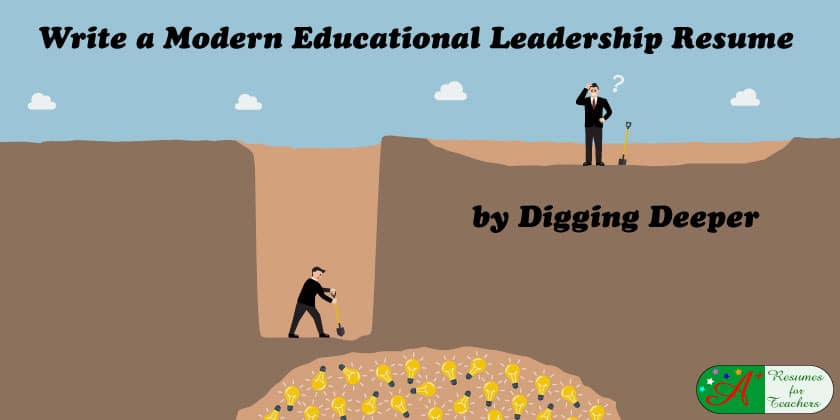
Write a Modern Educational Leadership Resume by Digging Deeper

Dig deep into your past to create a winning educational leadership resume to showcase your leadership experience and relevant career accomplishments.

Let the type of leader you are, whether transformational, visionary, or a combination, shine through. Delve into your experiences to develop relevant achievements, leadership skills, and initiatives you have demonstrated. Directly relate these career experiences to the position you want to secure. Consider the points outlined below to create an interview-worthy resume for an educational leadership role.

Tips to Write a Memorable Educational Leadership Resume 

Job Titles in Leadership Within Education

  • School Principal
  • Assistant Principal
  • District Administrator
  • Instructional Coordinator
  • Director or Supervisor
  • Dean of Students
  • Dean of Faculty
  • University Registrar
  • Head of School
  • Educational Consultant
  • Board Chairperson
  • Interim Principal
  • Instructional Leader
  • Master Teacher
  • Curriculum Developer
  • School Administrator 

Start with An Attention Grabber/Professional Summary

A professional resume summary is your first chance to gain the reader’s attention. Use this section of your educational resume to showcase relevant skills and demonstrate to the reader what you will bring to the table.

A career summary should detail your most valuable skills and qualifications. The first line should include the years you have worked in the education field and your specialty. Bold the first line to make it stand out from the rest of the paragraph.

Keep the opening paragraph to 4-5 concise and meaningful sentences or bullet points that set the tone for the remainder of your resume. The resume profile example below summarizes the qualifications for a school principal position.

Results-oriented, innovative educational professional with over 20 years of administrative leadership expertise. Committed to encouraging a continued passion for educating and mentoring students and faculty to ensure a school atmosphere that is respectful and motivating. Collaborative and resourceful facilitator fosters a school culture in which mentorship, relationship-building, and advocacy are essential to academic success. Empowering leader with a proven track record of increasing student achievements and directing teacher professional development—an unwavering focus on creating a supportive relationship between students, staff, parents, and the community.

Target Resume to Show Expertise

An educational leader takes an action-oriented approach to improving the overall academics and school atmosphere. Make your leadership qualities the focal point of your resume by effectively using relevant accomplishments and educational terminology.

Throughout your resume, focus on your expertise in leadership and education. Introduce these qualities in the professional summary. Showcase fundamental skills in the “Areas of Expertise,” “Core Competencies,” and “Areas of Strength” sections. Include other leadership qualities in career achievements, community involvement, or professional development.

Secondary Resume and Cover Letter/Tailor

Do not send out a one-size-fits-all resume if you apply to several institutions or positions within a division. Differentiate yourself by communicating your unique qualifications for the position you’re interested in.

Once you have read over the job posting for specific position requirements, you can delve into which achievements and experiences would directly correlate with that position. If you have skills that showcase your school’s operations and administration, highlight them in your resume to target a school principal’s job. The expertise you have gained from community outreach may be better suited to be the focus of your board chairperson’s resume.

A secondary resume is an excellent idea if you plan to apply for several positions with detailed, specific requirements. For example, writing a resume for an educational consultant position would be different from creating one for a literacy coach position.

When writing a cover letter, try your best to tailor it to the school, district, county, or institution you are applying to. Tailoring your letter will convince the reader that you have taken the extra time to create a customized note that targets the position you are applying for, rather than sending a generic letter. 

Write with Meaning and Purpose – Show Personality

When creating your educational leadership resume, remember to let your personality shine through. While keeping your dictation professional, you still want to give the reader a sense of who you are and make you a fabulous fit for the new position.

Make sure to review your documents to avoid repetition. Mix up the wording, and if you feel comfortable using the thesaurus, find synonyms for words that are used too often. These familiar words could be excellent, created, or teacher, and replace those words with superb, developed, and educator.

While using wording you are comfortable with and would typically use will help you stand out, why not use a more modern font style, a professional color for section headings, or a stylish border?

Your skills and qualifications will land you an interview for a leadership role in education. Remember that the decision-maker is sifting through a stack of documents, looking for something extra. Make the recipient of your resume stop and look closely at your application. 

Dig Into Your Past to Uncover Accomplishments

Previous work experience is the core of any resume; personal experiences and accomplishments let you stand out from the other candidates. As a seasoned educator applying for a leadership position, it is essential to relate your skills and expertise to strategically chosen accomplishments. Going beyond strictly classroom experiences may be relevant. Have you served on professional committees or played an integral role in community outreach programs?

List your critical achievements in bullet point form. Highlight successful results, notable educational benchmarks, and key objectives when creating your accomplishment points. Whenever possible, utilize numerical data to support your actions. Remember that all your experiences should be in reverse chronological order (most recent first).

A great way to develop your accomplishments is to use the acronym C.A.R.: Challenge – Action – Result.

Use a “Bullet Point Formula”: Action Verb – Example – Result.

In both options, you will want to explain what you did in the position or the challenge, what action you took to overcome the problem, and the effect on the student, school division, community, etc. Showcasing your school administration leadership practices will be vital. Below are examples of accomplishment statements. Consider the formatting and length of each point. 

Write Relevant and Concise – Accomplishment Bullet Points Examples

School Principal:

  • Developed a strong, cohesive academic team by establishing high expectations and encouraging a team approach to address school goals and issues while continually promoting creativity, respect, and innovation through professional development initiatives.

Assistant Principal:

  • Actively involved in “Child Study,” consisting of a team of administrators, counselors, district special education supervisors, and social workers who meet weekly to discuss “at-risk” students; upheld the highest confidentiality while devising an action plan, i.e., referrals for special education, testing, or outside placement.

Education Consultant

  • Facilitated weekly conferences for enrollment advisors on academic initiatives and training opportunities while ensuring full compliance with the school division’s student engagement strategies.

Curriculum Developer

  • Collaborated with Foundation partners and colleagues to create an 8-10 Common Core-aligned curriculum to identify developmentally appropriate content by choosing strategic teaching methodologies and delivery modalities best suited to individual schools and students’ needs.

Head of School

  • Implemented a strategic Guided Reading program that resulted in an average 75% increase in literacy scores within one year.

School Administrator

  • Facilitated expanding the school literacy program by hiring new librarians, increasing the number of student book fairs, and approving the acquisition of more library materials.

University Registrar

  • Directed the conversion of an existing management information system to an online integrated database system to coincide with the change in the semester calendar for the University of 25,000 students.

Dean of Students

  • Coordinated with the Advancement Office and the Music program to successfully secure a $200,000 foundation grant for new instrument purchases by effectively creating grant proposals. 

Lose Extra Words or Irrelevant Information – Be Concise

While you want to explain as much as possible in your resume to land that coveted interview and, finally, the dream job as a School Administrator or Dean of Students, you must write concisely and tailor your resume to the specific posting.

Fragmented sentences in your document are common. It isn’t necessary to include extraneous words such as ‘the’ and ‘then.’ Using too many of these words will bog down your resume and bore the reader. Get to the point of what you are saying succinctly to allow your career achievements and leadership capabilities to shine through.

Don’t include every job you have held since your teenage years. You don’t need to add your high school diploma in the education section if you have a post-secondary degree. Instead, include relevant details directly related to the position for which you wish to land an interview.

Your passion for hiking or knitting need not be included in your final draft. In the interview, you can share more about who you are as a person outside of work if it is appropriate.

If you are changing careers and may not have direct experience, utilize transferable skills and relate them to the position. 

Integrate the Right Keywords

When entering an educational leadership position, you should be familiar with specific key phrases. Keywords should be integrated throughout your resume in moderation to highlight the leadership skills you will bring to the job. Education buzzwords are essential to include in your job search documents. The Applicant Tracking System will process your application before it reaches an interviewer, making keywords vital.

Keywords are beneficial when used appropriately on a resume and when they connect directly with personal examples. Utilize buzzwords in achievement statements, the professional summary, and an “Areas of Expertise” section.

List of Potential School Leadership Keywords:

  • Class Scheduling
  • Solution Focused Approach
  • Response to Intervention
  • Data Analysis
  • Differentiated Instruction
  • Student Discipline and Support
  • Budget Management
  • Staff Professional Development
  • School Improvement Plans
  • Policy and Procedure Development
  • Mission Statements
  • Student Assessment
  • Curriculum Adaptations
  • Classroom Evaluation
  • Strategic Planning
  • School Security and Safety
  • Workshop and Seminar Presentations
  • Admissions and Student Enrollment
  • Mentoring and Coaching
  • Technology Integration
  • Assessment Tools
  • Standardized Testing and Scores
  • Academic Standards
  • Parent and Community Involvement
  • Academic Progress Reporting 

Formatting, Design, and Font Consistency

Creating a modern educational leadership resume will take time and effort if you want it to present you in the best light. In your job search documents, showcase your credentials, abilities, and qualities, and remember to reflect your personality and passion.

While the education field is a creative and innovative area in which to thrive, you still want to maintain a clear, concise, and professional resume. Consistency is vital when presenting your complete application package, including a professional resume, tailored cover letter, and a thoughtful thank-you letter after your interview.

Ensure that all your documents use the same font, text size, borders, and section dividers. Overall, the aesthetics of your resume should not be overwhelmed with various colors or an overbearing design. A clean-cut and consistent modern summary is the way to go.

Use a classic color to direct the eye to specific section headings, your name, or an appropriate border to differentiate your resume from the group of candidates. Incorporating color, icons, or a page border is at your discretion. Do what makes you feel comfortable and suits your personality. Just don’t go overboard with these eye-catching options.

Maintain an appropriate amount of white space in your educational leadership resume. This point directly relates to your desire to keep your qualifications and accomplishments the focal point, rather than overload the reader with condensed text.

An educational leadership resume should follow a combination, accomplishment-based format. For each work experience, write a paragraph describing the position’s scope, using the appropriate keywords.

Under each job listing, list your most significant, relevant achievements. Include several bullet points highlighting each position’s successes, providing enough detail as needed while remaining concise.

Proofread and Edit

Proofreading is another crucial stage in creating your leadership resume. While you have spent hours building a detailed summary that highlights your leadership qualifications and accomplishments, it could be worthless if it contains spelling and grammatical mistakes.

Editing is necessary and should be taken seriously in the resume-writing process, as it is often underutilized and rushed. Double-check the accuracy of the details you provided, including dates and spellings. Go over the formatting one final time to finalize the professional appeal of your resume.

Finally, after you have read through your resume several times, ask a colleague or friend to review it, or hire someone to review it. It never hurts to have another set of eyes to proofread, ensure consistency, and validate visual appeal.

If you need help creating the perfect educational leadership resume, don’t hesitate to contact Candace. Call her toll-free at 1 877 738 8052 or via email.

Teaching Resume Profile Samples / Career Summary of Qualifications

Scrutinize the resume profile samples below to generate ideas on how to write your resume.

Are you struggling to draft a career summary to apply for your next teaching job? Look no further. This blog post will help.

What Is a Resume Profile?

A profile appears at the beginning of your resume and is a concise paragraph or bulleted list. This career summary should include the top qualities you can bring to the education position.

This section could be called an introductory paragraph or summary of qualifications. Resume profiles are usually five to six lines in length. Each sentence needs to reflect on your years of experience, related skill sets, or ability to shape a dynamic school environment.

How to Write a Resume Profile

Include your willingness to help each student succeed, the compassion and support you can offer all students, and other talents you can bring to the classroom. If appropriate, include any foreign languages you speak or can read/write – mention skill level (beginner, semi-fluent, fluent).

The introductory paragraph of a teaching resume is an excellent place to include short slogans that sum up your philosophy of education or commitment to students and the value you can bring to the school. For instance:

Dedicated to helping each student reach their full potential.

or

Excited to bring an inspiring and hands-on learning experience to the students.

Style of Resume Profiles

Sentences should not be written in the first-person format (i.e., containing “I” or “me” pronouns). Resume career summaries should have action words and buzzwords that describe your skills and talents.

Include relevant awards or notable or prominent achievements in the top resume summary. Everything you include in this section should be backed up throughout the rest of the resume’s information.

Sharpen your writing to make this area concise, on-point, polished, and perfect. Don’t rush the writing of your resume. Including keywords in the resume summary is vital to getting past the applicant tracking systems and in front of human hands.

Examples of Resume Profiles

Read the following resume profile samples to help you write your teaching resume. These examples will help you recognize desirable traits and understand how to word them properly.

Business Corporate Trainer

Business-orientated professional facilitator with 10 years of hands-on experience as a corporate trainer. Diverse communication and instructional skills to help individuals effectively comprehend and retain presented material. Gifted ability at capturing and holding the listener’s attention while delivering the information via different mediums. Committed to establishing a warm, supportive, and inclusive learning environment to optimize student learning. Strength to create an environment where all students are allowed to learn by providing one-on-one support when needed to help them succeed.

General Education K- Grade 12 Teacher

Highly enthusiastic teaching professional who is eager to provide all students with a solid education. Talent for bringing the classroom to life with real-world examples and innovative technology. Proven ability to discover students’ varying learning styles, ensuring each student’s unique academic needs are met. Encouraging educator who offers plenty of positive reinforcement to maintain a calm and controlled classroom. Well-rounded with exceptional communication, interpersonal, organizational, and problem-solving skills. Semi-fluent in written and verbal Spanish.

Childcare Provider

  • Versatile childcare provider eager to transition into the role of a professional educator.
  • Extensive training and hands-on experience in early childhood education, special education, and accommodating multiple intelligences.
  • Proven capability to assess students’ individual goals, needs, interests, and learning styles to develop a well-rounded educational program.
  • Trustworthy individual with strong communication and interpersonal skills to build meaningful, long-lasting relationships with students, teachers, parents, and all other school community members.

Elementary Teacher

Energetic and goal-driven instructor who is dedicated to helping each student reach their full potential, regardless of academic capabilities or challenges. Ability to incorporate role-play and group discussions to enhance students’ socialization skills. Talent for using manipulatives, technology, and group projects to facilitate multiple intelligences and keep students interested and focused. Compassionate person who takes the time to get to know students as individuals. Caring individual who will strive to foster strong relationships with all students. Fluent in verbal and semi-fluent in written French.

Secondary Education Teacher

~ Social Studies/History/English Grades 7-12

“Effective learning is based on a set of general principles which constitute a social contract between all participants.”

Enthusiastic and energetic professional dedicated to providing students with the abilities and potential to master the necessary skills to become responsible, well-educated community members. Unwavering commitment to instill confidence and self-esteem by providing open communication lines and welcoming attitude when approached by students. Sensitive to different perspectives, encouraging student feedback regarding teaching methods, and applying it to enhance learning.

Assistant High School Principal

  • Forward-thinking educational leader with the proven capacity to develop a vision and deliver on organizational missions and objectives throughout teaching career, taking on increasingly more significant supervisorial roles within education.
  • Cultivate a school climate and culture of success and promote rigorous performance standards based on continuous improvement and best practices implementation.
  • Provide a motivational tone for students and staff where educational excellence is the focal point.
  • Dependable mentor with collaborative leadership skills to build solid relationships with students, parents, and faculty.

Incorporating Keywords in the Career Summary

One of the best ways to get potential employers to look past your lack of experience is by utilizing educational buzzwords.

Relevant keywords should be placed throughout your resume (in the introductory paragraph, areas of expertise, and any classroom experience), cover letter, philosophy of education statement, and follow-up thank you note.

To find keywords/buzzwords, look at a school’s website and read through pages about its philosophy, current events, and news. If the administration implements a new policy or initiative, you will discover its details there. Consider reading recent articles or journals that pertain to your desired teaching position to uncover keywords to include in your resume profile.

The grade level or subject area you wish to teach will determine teachers’ and administrators’ unique words. Standard terms and phrases you may hear regardless of content area or age level include: multiple intelligences (Howard Gardner’s theory), learning modalities, manipulatives, SmartBoard (a form of technology), IEPs (Individualized Education Plans or Programs), and so on.

After the profile section, many resumes will include a table or other formatting style to have an “Areas of Expertise,” “Core Competencies,” “Areas of Strength,” or “Areas of Knowledge” section. Here is an example:

Core Competencies Include:

Academic Policies & Programs · Program Management & Coordination · Instructional Material Development · Integration of Technology · After School Programs Development · Standardized Testing & Scores · Creative Problem Solving · Conflict Resolution · Classroom Management · Individualized Instruction

This short section that lists your essential skills in education should directly follow your strong professional profile. Combining the professional profile and areas of expertise makes for a great first impression and a strong beginning to your resume document.

Need help developing your teacher resume and cover letter? Contact Candace via email or call 1 877 738 8052 to get started today!

You can view our services and our resume examples.

How to Choose the Teaching Position You Want

Take the correct steps to choose the teaching position that is right for you. Now that you have decided to enter the world of education, you need to pick a subject area that interests you.

For many teachers, choosing a job type is easy. They follow their passion. While for others, it can be difficult.

Subjects you can choose to teach include:

  • Math
  • Science
  • Social Studies
  • English Language Arts
  • Music
  • Physical Education
  • Drama
  • Technology
  • Art

Which of these subjects do you find the most interesting?

Understand the Requirements for Your Desired Teaching Position

Teaching may be a foreign concept to you if you are a career changer, particularly if you have no prior instructional experience. Before crafting the initial version of your resume, you must clearly understand the expectations for educators in your desired subject area. 

Once you have a better understanding of the fundamental tasks, you can tailor your resume and cover letter appropriately and prepare yourself for the interview that is sure to follow.

Some of the job responsibilities for the average teacher include:

  • Designing and implementing stimulating lesson plans that cover the curriculum.
  • Utilizing lectures, activities, demonstrations, thematic units, and group projects that accommodate multiple learning styles.
  • Offering one-on-one assistance to meet students’ diverse needs.
  • Establishing a positive, open, and comfortable learning environment where every student feels welcome and supported.
  • Setting clear academic and behavioral guidelines and expectations.
  • Following through with disciplinary measures to maintain an orderly and focused learning environment.
  • Preparing and administering formal and informal assessment methods, including homework, quizzes, and examinations, to track student progress.
  • Communicating progress to students and parents/guardians regularly.
  • Coordinating with family members, teachers, and other staff to incorporate remedial programs and/or offer guidance and counseling to students in need.
  • Participating in extracurricular activities, ranging from coaching sports to supervising detention or lunch.

Consider the Different Age Levels

The age level you wish to instruct will also determine additional tasks. For instance, if you are interested in early childhood education, lectures will be minimal. In contrast, hands-on activities, play-based learning, and demonstrations will be frequent teaching methods.

When teaching younger students, you can expect more significant engagement with parents. Additionally, the methods and tools you use will differ. Arts and crafts, songs, role-playing, games, storytelling, and similar activities are often used to captivate and sustain young learners’ attention.

Consider the Differences in Content Areas

The content area you would like to teach will also affect your tasks and the tools you use. For example, Science teachers utilize laboratory beakers, hot plates, Bunsen burners, microscopes, dissection tools, etc. The primary responsibility is safety, and the talent is to show a direct correlation between the classroom and the real world.

Social Studies teachers incorporate globes, history textbooks, and current events from newspapers and online sources, thereby bringing to the forefront a better understanding of different cultures, religions, and ways of life.

English Language Arts instructors integrate Shakespearean plays, poetry, essay writing, and novels to improve written communication skills and inspire creativity and imagination.

Math instructors use protractors, overhead projectors, geometric shapes, math manipulatives, and other items to offer visual demonstrations. The main goals are to help students tackle everyday math situations and prepare them for the next academic level.

All Teaching Areas Have the Same Basic Responsibilities

Regardless of the position or grade level you are interested in, you must tackle the essential responsibilities and make the teaching experience your own. Bring the classroom to life via unique methods that work for you and excite your students. This talent will develop over time. But for right now, take it one step at a time, and look forward to your new career! Continue taking professional development to advance your career in education. 

Examine Your Talents and Interests to Determine Your Teaching Area

Which subject area did you excel at when you were in school? Are there any topics that you already have experience with? For instance, if you are an engineer or an environmentalist, you may want to look at Science; a choir director may lean toward Music; an archivist would thrive in Social Studies. These are examples, of course, and may not necessarily suit your situation, skill set, or desire.

Once you have chosen a course you know you will enjoy and think you can effectively teach, you must pick a grade level. Each level of education (elementary, middle school, high school, and post-secondary) requires certification and a unique skill set. The more open you are to teaching different grade levels, the better your chance of finding opportunities. So, try to keep an open mind during the job search process.

Elementary School

These students are being introduced to most subject areas. If you are looking to teach the rudimentary elements of a course, then this is the educational level you may wish to focus on.

Students in this age group enjoy learning and are enthusiastic, which can be incredibly rewarding for teachers. However, you must develop creative lesson plans to hold individuals’ attention and keep them engaged in learning.

Middle School

Teaching middle grades can be a challenge, as pupils are at a more rebellious stage and may not want to learn. If you are keen on a challenge, have extraordinary interpersonal skills, and want to teach more than just the basics, this is the right group of learners for you.

High School

Students will prepare themselves for post-secondary education and the working world. The marks they earn in twelfth grade will determine what academic institutions they can enter and what field they may wish to pursue.

If you want to deal with young adults and grasp concepts at a higher level, you may want to become a high school instructor.

Post-Secondary Instruction

Teaching at the higher education level requires a different set of credentials, often including a master’s degree or a Ph.D. in education. You will be teaching and working with students there to learn and develop their knowledge base in a particular field.

Consider Which Teaching Areas Are In Demand

Before deciding which type of position you want to pursue, you may also want to consider which areas are in significant demand in your local school district(s). Some schools have cut funding entirely for programs that are not part of the core requirements, so before picking a Physical Education, Art, or Music position, check to make sure these are even available in your area.

Depending on the state or region, there may be a shortage of Math or Science teachers (for example). This may be a fair tiebreaker if you have difficulty deciding between two or more subject areas. Furthermore, even if you pick a particular subject or age level now, it does not mean you can’t change your mind later.

Perhaps you start in Social Studies but find that you are better suited for English Language Arts. Alternatively, you begin as an elementary school educator but find you’d prefer teaching an older age group, so you progress to middle school. Nothing is set in stone; you can permanently alter your teaching area.

If you are unsure if you want to change careers to teaching, there are some questions you can ask yourself. 

Do you need help creating a solid resume and cover letter? Contact Candace today at candoco@telus.net.

Feel free to view our services here.

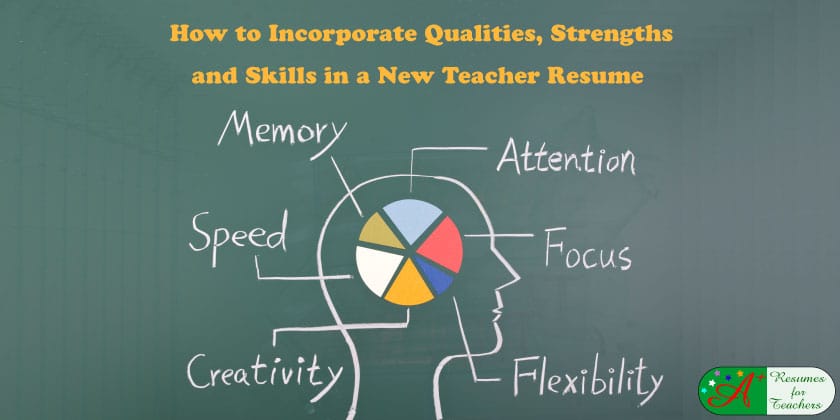
How to Incorporate Qualities, Strengths and Skills in a New Teacher Resume

Identify and incorporate qualities relevant to the position you seek in your job search documents. Start your resume with a vital area of strengths and skills section to showcase you are a viable career changer job applicant. If you have little classroom experience, you may wonder how to find them.

An excellent way to determine your areas of expertise (or areas of knowledge if you prefer not to call yourself an “expert”) is to examine the different topics you covered while completing your education. Reflect on your classroom observations or practicum experiences to identify the teaching skills you strengthened or issues you excelled in.

Items you may wish to include are:

  • Use of manipulatives
  • Technology integration
  • Guided reading
  • Individualized support
  • Parent-teacher conferences
  • Hands-on learning
  • Group projects
  • Graphic organizers
  • Creative learning environment

Additional items to include:

  • Needs assessment and analysis
  • Performance management
  • Strategic planning and implementation
  • Group discussions
  • Brainstorming sessions
  • Motivation
  • Mentoring

If you find it hard to develop education-related skills as a career changer, this last group could have easily been experienced (and perfected) at one or more of your other positions in your past career. Incorporate qualities that school principals will be seeking in new teachers.

Regardless of the areas you wish to include, ensure they are relevant to the grade level you want to teach. For instance, if you hope to be a high school chemistry teacher, you will want to discuss hands-on experiments instead of guided reading. If you apply to be an early childhood educator, you will include cooperative learning or socialization skills instead of career preparation.

First, identify your key areas of knowledge and relevant skills. The next step is to incorporate qualities you want to highlight in your resume and other job search documents.

Highlight Your Relevant Skills in a ‘Key Skills’ Section

Your resume will have an entirely separate section devoted to these unique skills. The header will read “Areas of Expertise” or “ Areas of Knowledge”.

Use the following alternatives for a section title, which is located after the resume profile summary:

  • Core Competencies
  • Key Strengths
  • Skills Summary
  • Proficiencies
  • Specialized Skills
  • Technical Proficiencies
  • Strengths & Qualifications
  • Professional Skills
  • Occupational Abilities
  • Expertise Highlights
  • Industry Competencies
  • Career Proficiencies

Arrange your topics in bullet point format in two separate columns to draw the reader’s eye. Readers want more than 10 points; you may wish to arrange them in a horizontal list across three lines, with markers such as • or ~ between them.

Either format will make these words pop and let the reader know immediately you have what it takes to be an outstanding new teacher.

Integrate Traits and Showcase Your Abilities in Your Cover Letter

When crafting your career change cover letter, it’s essential to present your qualities and skills subtly. Avoid mere listings or bullet points of skills; illustrate how you apply these skills or characteristics to enrich the learning experience. Present a brief narrative spanning three or four lines, elaborating on your areas of expertise in full-sentence format.

For example:

• By incorporating manipulatives, complementary activities, and small group projects, I can establish a hands-on classroom environment that entices all students to learn or

• By utilizing different forms of technology such as the Internet, SmartBoard, and digital cameras, I can successfully reach out to all students and facilitate their unique learning styles, or

• I encourage student learning by developing and implementing exciting lesson plans that convey meaningful and relatable information.

Incorporate Qualities – Desired By All School Districts

Besides skills and job responsibilities, personal traits are also important to all school districts when hiring teachers and support staff. A good educator teaches the core subjects and helps students develop academically and socially.

To make the shortlist for job interviews, you must demonstrate that you are far more than just “good.” Show potential school district representatives that you are incredible and would be a real asset to their school or district.

Passion for Teaching and Learning

One quality you must demonstrate is a passion for teaching and learning. If students see you are excited about learning, they will too. Remaining enthusiastic and keeping the drive to educate alive will always make your job meaningful and rewarding.

Supportiveness

Another quality valued by administrators and educators is a nurturing and supportive attitude. It is crucial to recognize each student’s individuality, with their distinct goals, needs, learning styles, talents, and challenges. Familiarize yourself with your students and tailor your approach accordingly. Make it clear to your students that you are available to provide support whenever needed.

Creativity

Potential school district representatives highly desire creativity. Spice up your lectures, incorporate new complementary resources, and find innovative ways to reach students; you will gain an edge over your competition.

Dry lectures are a thing of the past. Teachers need to facilitate auditory, visual, tactile, and kinesthetic learners – types that can vary by grade level. Use creativity to bring the classroom to life and keep students engaged in learning.

Goal-Driven

Another quality you should possess is a goal-driven nature. This trait goes hand in hand with enthusiasm. If you are already eager to help your students learn, set the bar high and help them achieve greatness in your classroom.

Your goal should be to ensure no student gets left behind, and everyone reaches their potential—set goals for yourself as a teacher and your classroom. Encourage students to participate in goal setting and achievement.

Cooperative

Cooperation is a must and highly desired. As an educator, you will work with a diverse population, including students, staff, and parents. You must understand how to communicate and get along with others, regardless of personality type. Convey a willingness to cooperate with others in the school population, listen to their thoughts and concerns, and collaborate to develop effective solutions.

By consciously incorporating qualities in your resume and cover letter, you will surely pique the reader’s interest and gain a better edge for landing a teaching interview.

When you receive the interview call, remember the qualities that helped you get there. During your meeting, reiterate them and work to maintain these traits in your new profession as an educator.

If you need help writing a resume and cover letter, contact Candace or call 780 513-0010; if calling from North America, call toll-free at 1 877 738 8052. You can also check out the services we offer or the resume samples on our website.

Including Past Employment and Volunteer Experience to Make a Career Change

Are you wondering how to include past employment history or community services in your resume when transitioning to teaching?

As someone entering the field of education, you may not have much experience that directly relates to the classroom. The key is to include every position related to instruction, group leadership, training, plan development and implementation, etc.

Highlight Your Transferable Skills

Demonstrate your past positions and job responsibilities similar to those a teacher requires. This will show potential schools you have the experience and skills they seek.

Pick out the relatable positions mentioned above when determining whether you should include every job you have ever had or just particular ones. Knowing what to include and omit from your resume will affect the number of interviews you generate. 

These may include corporate trainers, daycare workers, coaches, etc. Even if your primary duties are separate from teaching, you may find one or two tasks that you regularly perform that correspond with your new desired career.

For example, perhaps it is your responsibility to develop, edit, and administer training materials to new employees in your plant. This responsibility can be seen as similar to writing and helping with lesson plans in the classroom. Make sure that you include this job and highlight this task.

Include Every Teaching Related Experience

Even if you have minimal hands-on classroom experience, include all of it in your resume. If you have 40 hours of classroom observation time, then mention it.

List it as a regular job in your resume, including the school you were at, its location, the dates you worked, and the classroom you were in. Briefly describe what you did while you were there. For example, watching how the regular classroom teacher handled behavioral problems, delivered lectures, and utilized various methods to engage them.

Mention if you provided one-on-one support to the students, presented units to the class, effectively handled any problems, and anything else you may have gained from experience.

When listing your work experience, include anything that involved you being in the classroom or helping students. Put all these positions under a header of Teaching Experience. For the rest of your past posts, go chronologically from newest to oldest. Highlight relevant job responsibilities as well as essential duties.

Leave Off Non-Pertinent and Older Experiences

If you enter the world of education at a more mature age, you do not have to list every job. Include positions from about ten years past, ensuring that everything relevant is mentioned, even from 10+ years ago. Some people will include older experiences in an autobiography if they happen to create one. 

On the other hand, if you have not been in the workforce for long but have held many positions, it is a good idea not to include all of them. Don’t look like a job hopper who cannot commit and make up their mind.

Again, include everything relevant to teaching and student support. Filter out positions you held for less than six months or are entirely irrelevant. For instance, your pizza delivery job during the summer of 2017 won’t be needed.

Use Volunteer Experience and Community Activities

Volunteering is not only a reward in itself, but it can also be added to your resume. Participating in community activities shows potential employers that you are committed, hardworking, and an active team player within the local population.

Highlighting your relevant volunteer experience is an excellent way to demonstrate applicable skills and hands-on experience as a career changer. This is especially true if you have minimal formal training or time in the classroom.

If you are not already involved as a volunteer in your local community, you should be. Depending on your chosen program, you may work many hours a week or only a few per month.

What Volunteer Experiences Should You Include?

You may want to acquire education- or student-related positions, such as tutor, coach, camp counselor, classroom aide/assistant, or Sunday school teacher. Reading to children at the library or helping with an after-school program is a great way to become involved in education outside of a formal or traditional setting.

When incorporating your volunteer experience and community activities into your resume, determine which positions involved you in a classroom or instructing children. Any posts that fall into that category can be put in a separate section. Entitle the section ‘Classroom Experience’ or ‘Instructional Experience.’

If you already have paid experience in a school setting, it is good to put volunteer activities immediately following your formal time in the classroom. This would include any practicum or student teaching experiences. The new section header will read Additional Classroom (or Instructional) Experience.

List each position like you would with your other jobs. Include the school name, location, dates worked, and title held. Explain your role, responsibilities, and accomplishments. You might think these positions should only count if you are paid; however, that is not the case.

What you include in the resume must show the value you can bring to the school district. 

School administrators are not concerned about your past wage; they want to see that you have had the experience and developed the skills and qualities essential for being a well-rounded teacher.

As for everything else, insert other volunteer experience at the end of your resume under the header of Volunteer Experience or Community Involvement.

Add anything relevant you currently participate in, from tutoring to helping at the soup kitchen. Include positions you have held over the past five years. List your job title, the organization’s name, and the dates you were active.

Mention Volunteer Work in Your Cover Letter

Your level of involvement and how relevant your role was to be a classroom teacher, mention your volunteer experience in your cover letter, again reinforcing your commitment and hard work. Remember to discuss your community involvement when it comes time for the interview.

Remember, when changing your career to teaching, don’t overlook past positions and experiences that you may not think are directly teaching-related. Upon further inspection, many of your past experiences can include critical teaching-related skills and accomplishments that schools will find desirable.

When creating your career change resume and cover letter, describe your past experiences through a teaching-focused lens. This will ensure you correctly highlight the transferable skills and accomplishments schools seek.

Do you need help creating a solid resume and cover letter for your new teaching career? Contact Candace today via email, call 1 877 738 8052, or view our services.

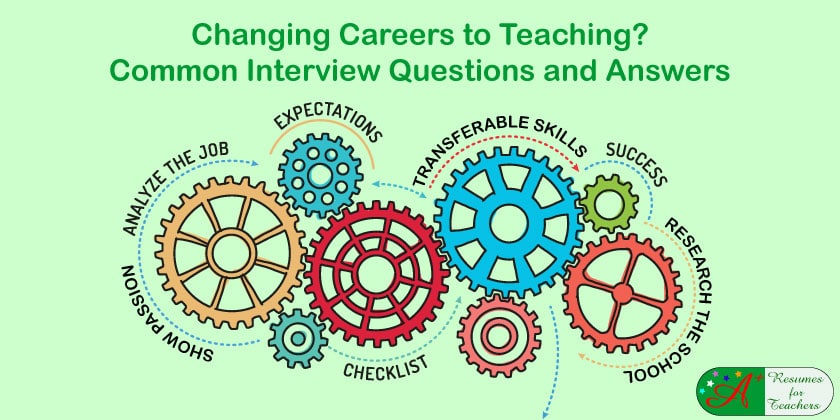
Changing Careers to Teaching Interview Questions and Answers

Interview questions and answers to help those making a transition into teaching. Entering the education sector will require you to communicate your transferable skills in an interview.

Maybe you are looking to enter teaching from the corporate world, healthcare, or another business area? A successful transition from your current career to your new one as an educator will require proper preparation for the interview process.

Part of preparing is to practice answering potential interview questions for any teaching position, including primary, elementary, middle, high school, and post-secondary.

Did You Make an Informed Decision?

Make sure you want to switch to education for the right reasons. If you doubt pursuing this new career in teaching, give yourself some time to think it through. Do not be too hasty.

The worst thing you can do is jump into something unprepared. Take the time to do some soul searching and research to make the best possible choice.

Assuming you’ve already examined teaching as your next career move, you will need to be prepared for your upcoming teaching interviews!

Below are several sample teacher job interview questions along with potential answers to help you get ideas about how to answer these tricky interview questions.

So, let’s get started!

Here are sample questions you could be asked in a job interview if you are making a career change to teaching.

Practice Interview Questions Before Interviewing

Why did you decide to become a teacher?

“I want to pass my knowledge on to others and help students cultivate a true passion for learning. I believe education is an enriching career that enables individuals to give back to the community. By instructing students that come from all areas of our community, I can help them develop the skills and characteristics needed to become productive, fulfilled, and contributing members of society.”

Are you confident that this is the right career path for you?

“I have no doubt in my mind teaching is the career path I wish to follow. I had several teachers throughout my academic experience that totally amazed me. They brought learning to life and inspired me to further my education. I have spent several years in a fabulous job, but it felt like something was missing. I wanted to find a career that was not only challenging but made a positive difference in the lives of others. In my past role, I had the opportunity to instruct and mentor colleagues. I was successful at it and wished to pursue that endeavor full time.”

Why did you leave your last job/career?

“Though I was content in my past job, I knew I could be doing more with my life. It’s not that I disliked my position, responsibilities, or colleagues. I determined it was time to move on. My patience, communication skills, and ability to reach others made me feel that education would be the perfect fit. I am eager to start shaping the minds of our youth and set them on the path toward success.”

What do you want to do with your life?

“Teaching. I want to be an educator, as I do not simply see this as a job or title. I see teaching others as a way of life. Educating others has been a passion of mine for a very long time, and I wish to pursue this dream. I want to start off teaching middle school students, and if a coaching position opened up, I would take that as well. Regardless of the grade level or subject/sport, I desire to educate others.”

Why is education important?

“Education is the cornerstone for success. It helps individuals develop new skills and eliminate prejudices. Learning opens doors to new possibilities, allowing students to reach their goals and achieve their dreams. It is what helps society change and advance for the better. Education is the basis for growth and development – as an individual, and as a whole community.”

Do you have any direct experience instructing others?

“In my last job, I trained two new staff members. I worked with them on a one-on-one basis, walking them through company policy and procedures. We then advanced to learning and mastering specific skills and processes. At the end of their three-month probation, I administered a series of assessments and graded them.

“I have served as an assistant coach for the boy’s basketball team for the past four years. I develop and implement drills, conditioning exercises, and plays, and work with the group on an individual basis, as well as a whole.”

Describe your experience as a student teacher?

“My experience as a student-teacher can be described as informative and eye-opening. I knew there was a lot to being an educator. Watching a classroom teacher firsthand showed me how much more I needed to learn. I discovered new methods for effectively managing the classroom, encouraging active participation, and promoting appropriate socialization. I had the chance to design and present a thematic unit on weather.

“The weather unit incorporated simple class instruction, followed by small group projects that were presented to the class, and finally a brief essay on what the students learned. Though I was a tad nervous going in as a student teacher, I have come out of the experience with a great deal of confidence and enthusiasm for teaching my own class.”

What unique skills do you bring to the table as a career changer?

“During my time as a human resources specialist, I have developed numerous skills that will be essential for leading a classroom. These include communication and interpersonal skills. I can get along with all personality types, as well as individuals from all walks of life.

“I am highly organized and manage my time well. These are essential traits for implementing lesson plans and keeping students on schedule. I excel in conflict resolution and peer mediation to help me cultivate a well-disciplined and cooperative classroom.

“Finally, I know what it takes, academically and socially, to qualify for and succeed in a variety of positions. I will be able to use this information to shape my students accordingly and prepare them for the working world.”

PRO TIP: Uncovering and communicating the transferable skills you can bring to teaching is paramount to land a teaching job offer.

Have you ever had to discipline another person before?

“Yes. When acting as office manager, it came to my attention that one of my employees neglected his duties, opting to surf the Internet and chat with friends. I called him into my office and expressed that he was paid to work, and for no other reason.

“I explained to him the importance of his role in the company and why he was key to our success. Then, I mentioned that he would be monitored more closely, and a further review would be conducted if necessary. He understood what he did was wrong and quickly blossomed into a model employee. I will use these same tactics in the classroom, pointing out what is incorrect behavior, and explaining what should be done instead and why.”

Do you have much experience with planning and implementation?

“In my past position, I oversaw designing and administering employee handbooks covering a variety of topics. These topics included policy and procedures, rights and benefits, and training opportunities. The comprehensive manuals broke down concepts into simple forms with a gradual progression toward more complex topics. The employees found the booklets to be informative and easy to understand.”

Are there additional interview topics or questions you would like help with? Our interview coaching service could be the solution. Find out more about this one-on-one, individualized service here.

Teachers relocating to another country or state may need answers to numerous questions to make the best decision.

Quickest and most effective techniques to get a job in another state before moving there.

How far in advance should I apply for a job out of state?

What process will I take to relocate to another state without a job?

Discover the best methods to conduct a job search out of state or country.

Suppose you are relocating to another state or country. In that case, there is not only the hassle of the physical move but also the uncertainty that comes with a new school district, a new homeroom, and the possibility of a new teacher licensing.

Below are 14 job search tips for teachers relocating out of state or out of the country. Consider these strategies when seeking a new teaching position to reduce some of the stress of moving.

Teachers Relocating – Get Your Job Search Off to The Right Start

  1.  Start Your Search Early

It will be beneficial to begin planning your move as soon as possible. If you are moving your entire family, getting things squared away is an added hassle. Set aside time early on to research your new location, district, or country so significant aspects of the relocation don’t bog you down. Make it a priority to research location, licensing, and job opportunities early on so you are not stressed out about it when you make that move. 

  1. Transfer Your Licensing/Certification

Learn the licensing and certification requirements of the state or country you are moving to in advance, as it may take up to a year to become properly certified. If you take the time to look into the certifications required before your move, you should have ample time to plan for the testing dates and potentially save up for the extra costs of obtaining the required credentials.

If your new district requires special courses, you may be able to complete them online before your move to be certified when you arrive in the new location.

It may be possible that your application gets put to the side if you do not have the correct credentials despite being fully qualified in education and experience. You are far more marketable if you have taken the time to become certified and gained the proper state licensing, even though they may not be required, as with charter or private schools. 

  1. Search by State/Country

There are several websites where you can search for schools looking for teachers relocating from around the country. If you are moving to a specific state, include that in the search function to narrow the job search. Look on job boards, LinkedIn, and other social media applications to easily filter teaching jobs by state, grade level, school type, and district.

If you are moving out of the country, consider narrowing your search to overseas countries that are specifically looking for foreign teachers. There are plenty of opportunities for native English-speaking teachers abroad. Make sure you do your research, as with any potential employer, to ensure you have the qualifications and make a good fit.

There are several steps to follow if you plan to relocate to Canada for a job.

  1. Take Advantage of Job Search Networking

The goal of networking is to create as much exposure as possible. If you have friends, family, previous colleagues, or college alumni in the state or country you want to relocate to, use them as part of your “marketing” team. They may have connections in the teaching industry and pass your name and credentials on to the right people.

The objective of using this method is word of mouth. If enough of the right people know you intend to move to the district, your name will be at the top of the contact list when a position opens, especially if it needs to be filled quickly. Also, reach out to former professors or superiors who may have moved to another country or state and let them know your intentions for the move. They may have the connections and be able to lend a hand in your job search.

  1. Utilize Social Media/LinkedIn

Teachers relocating can use social media to better understand current events in the area they are relocating to. This knowledge may help during an interview. Social media can help research teaching opportunities that have not been posted on a job search site or that a friend has posted about.

If you don’t have a LinkedIn profile yet, then create one. If you have one, optimize it to get the best results. This is one site where you can build an online network in the city you are moving to. Join networks such as your grad school alumni group. Check whether anyone you graduated with has moved to the city you are relocating to, and reach out to them to share your intentions. They may have connections within the area you wish to move to and pass on your information to potential schools.

Prepare Your Job Search Documents and Applications

  1. Resume

Ensure that your resume is updated when you start applying for positions in the area you are relocating to. Take a close look at the required qualifications in the job posting and ensure your resume reflects the information and credentials the district is seeking. If you need to update your licensing, start the process immediately and let potential employers know you have initiated the required certification process for the state or country.

Another tip is to leave your current address off your resume and cover letter. Some, but not all, hiring managers or principals may disregard your application altogether if they see that you are not currently in the area.

However, if you are moving to another country, have the required skill set and teaching experience a school is looking for, and have conveyed that you are the right person for the job. The fact that you are from another country may not be a significant obstacle.

  1. Cover Letter

If there are no specific openings in your target district, consider sending your resume and cover letter to principals in the spring or mid-summer, introducing yourself.

This is an excellent tip if you have a timeframe for when you will be arriving permanently or coming for a visit. A cover letter will introduce your skill set and let the school district know that you ARE moving to the area, not just THINKING about it. Let your potential employer know your intentions and introduce yourself in the letter.

You may not get an immediate response, but your information may be filed for future openings.

Another tip for teachers relocating to remember:

If you are applying for a job out of state, make it clear in your cover letter. Indicate that you are moving to the area for a specific reason unrelated to the job and provide a date range. Let them know you will be paying for relocation costs.

  1. Be Honest

If you decide to leave your current address on your resume, cover letter, and social media accounts, then be prepared to address the relocation topic upfront. State the timeline for your move and that the relocation expenditures are your responsibility. If you are selected for an interview, ask whether a Skype, FaceTime, or phone interview is possible, but let them know that you are willing to make a trip there to speak in person if budget permits.

Do let your potential employers know any dates set for the move and any other plans related to your relocation. Being upfront and honest about your intentions to move will go a long way in the selection process.

  1. Teachers Relocating Need to Submit Online Applications

Most districts utilize online application systems to prescreen candidates and maintain a consistent candidate pool for the school. These systems pick out teaching buzzwords, required credentials, and any other requirements mentioned in the job posting. It is imperative that when you submit your documents to these online systems, you have the correct credentials for the position, along with the necessary keywords. Otherwise, you will not get past the screening process.

  1. Send Follow-Up Letters/Emails

Once you have submitted your resume and cover letter or online application, it is a good idea to follow up with potential employers to see if there are any further questions you can answer for them.

Don’t overwhelm the recipient with correspondence; it may sour their impression of you and lead them to discard you as a potential candidate. If you do not hear anything from the hiring manager or principal, do not despair. They may not have responded because a decision was made to pass on your application and file it for future opportunities, or they may have passed it on to other schools looking for someone with your experience and qualifications.

  1. Apply for “Anchor” Positions/Fill a Need

Depending on the reason for your move, whether it be that your spouse has been transferred or you want a change of scenery, be aware that you may not obtain your dream job immediately. Considering that you are moving to another state or country with varying expectations for teachers, you may not qualify immediately in the new location.

If the move is imminent and you have a set deadline to get a new position, consider applying for a job you may be overqualified for. This may seem counterintuitive, as you have worked hard in your current situation to gain the experience and education to teach at a high level, but it may be a strategy to get your foot in the door.

Gaining employment as a teaching assistant or a substitute teacher, for example, opens doors within that district and shows potential employers that you are serious about the move and willing to work to establish yourself as a team-oriented and dedicated educator.

Searching for a job in another state can be difficult, but keep an open mind about where your job search will take you. Implement best job-search practices to optimize your time. Consider positions in a suburban versus an urban area, or in a private versus a public school, to set roots. This allows you to become more acquainted with the site and make connections within the school community, thus establishing yourself and giving you time to showcase your professional skills and experience.

Get Ready for Long-Distance Job Interviews

  1. Practice Interviewing

Phone interviews are not something most teachers go through in the selection process, so it may seem intimidating to some when it comes down to discussing your qualifications, skill set, and why you would make an excellent fit for the position without sitting in front of an actual person. Phone and video interviews are common when moving to another country or state. Practice thriving in these uncomfortable circumstances so you can shine when the opportunity arises to put your best foot forward and win an interview.

  1. Plan a Trip for an In-Person/Informational Interview

In-person interviews are the best way to demonstrate how you are the right person for the role. However, relocating to another state or country may not be feasible for an initial introduction. Be prepared to take a trip or two to your intended location to attend job fairs, conferences, or informational interviews if it’s within your budget. Making an effort to meet with people and make those connections shows potential schools how serious you are about making a permanent move. It may also be possible to schedule the job interview around other moving-related tasks you have, such as house hunting.

Stick to a Clear Job Search Plan

  1. Teachers Relocating Need to Set Goals

Finding a teaching position in another state or country can be lengthy, so begin it early and do not leave it to the last minute, especially when you have other stresses related to your move to worry about. When challenges arise, be prepared to navigate them by setting expectations and goals for the job search. Remember that you may not get your dream job right away, but it will become more of a reality once you have established roots.

By utilizing these job search tips, prepare for the overall process of finding a new teaching position abroad or across the country.

Please call Candace at 780 513-0010, or if you live in North America, please call toll-free 1877 738-8052, or email her if you need help.

Email and Phone Tips to Follow-Up After a Job Interview

When you are in the market for a new and exciting career in education, it can be intimidating to realize that there is so much competition for your dream teaching or school administrator job. Creating a fantastic resume and personalized cover letter is the first step in a successful job search.

Why not increase the odds of landing a teaching job offer by standing out from the crowd? Get attention by sending a follow-up email thanking the interviewers for their time and reiterating why your qualifications are perfect for the position. 

Don’t hesitate to call the hiring manager to remind them you are interested in the education job and are willing to answer any questions they may have to solidify your prospects.

Examples of Appropriate Follow-Up Techniques

Sample conversations or correspondence for approaching appropriate follow-up via email or phone after a job interview.

Email Follow-Up

An email follow-up after an interview is the quickest way to contact the hiring manager and should be sent within 24 hours after your job interview. It is also a good form to use as you can review your email and ensure you are saying what needs to be said.

In your email follow-up, highlight how your talents and capabilities as a teacher or principal align with the role and the school district. Refer to your interview notes and the job posting when choosing your wording to resonate with how your conversation progressed.

Communicate your continued excitement and enthusiasm for the teaching role by reiterating your interest in the job and how you align with the school district or organization.

Phone Follow-Up

If the job you are applying for requires a lot of phone time, you may consider calling the hiring manager to follow up and say thank you. This shows you are taking the initiative and have the strong communication skills required for the position.

A phone call is a quick and easy way to follow up, but most importantly, it is more personal. However, it may make some people nervous about being put on the spot so soon after an interview. Have a copy of your teaching resume in front of you for guidance and a list of references if you haven’t provided them already.

Practice the conversation with a friend so you are not stuttering your way through the call, and always begin the conversation with your full name, the position you applied for, and when you met if you need to leave a message to keep it brief and reinstate why you are the best teaching candidate for the job.

The Layout of a Follow-Up Email

When creating a thank-you email, ensure you are concise and to the point while still conveying your interest in the position. The basic layout will consist of 3-4 short paragraphs only. If you include bullet points in the middle, an opening and closing paragraph will round out the specific points you made.

Be as specific as possible while getting to the point and keeping it short. There is no need to restate the details in your resume. Connect your relevant experiences as a teacher or school administrator to the interview conversation points, and reiterate to the hiring manager or interviewer what you bring to the table to benefit the school or organization.

First Paragraph: 

Reinstate your interest in the position and the date you met.

When beginning your thank-you email after an interview, thank your interviewer for the interview. Mention the date you said and the title of the position you interviewed for.

This shows that you have tailored the email to the specific school district. The opening paragraph should only be a few sentences long. You want to leave many details on how well you will fit in with the school district in the middle section. Take a look at the examples below:

“Thank you for meeting and speaking with me yesterday. I found the conversation to be very enjoyable. I am extremely interested in the grade six teaching position with ABC School District and believe I would be the right fit for your school district. Let me reiterate some of the skills and attributes as a teacher I can bring to your outstanding team of educators…”

 “Thank you for taking the time to meet with me on March 3. It was a pleasure speaking to you about the educational leadership role. I found our conversation very enlightening, and it has reassured me that I am the ideal candidate for the school principal job with DEF School District.” 

Second/Third Paragraph: 

Bullet Points vs. a Paragraph of Qualifications

There are two ways to continue with a thank you email. The middle section of your correspondence should connect your qualifications to the interview and the school district’s expectations for the role. Pick a specific point of conversation from your interview and expand on it. Accomplish this in two ways: using bullets or paragraph form.

Bullet points are great for staying concise and for making your skills and attributes stand out. Use separate points to relay your applicable educational background, relevant work experience, and 3-5 facts about your experience that connect your expertise to the position and how you will contribute to the organization.

Here is an example:

  • Master of Business Administration, specializing in Finance, and a Bachelor of Management in Accounting.
  • 15 years of corporate experience in accounting, marketing, and sales.
  • Designed and prepared marketing strategies by assessing current trends and the competitive landscape.
  •  Prepared and analyzed data reports, budgeting strategies, and business projections to improve organizational success.
  • Demonstrated capability to manage various stakeholder interests by creating meaningful corporate relationships, maintaining open communication, and identifying top business priorities.

If you choose to continue in a formal letter format instead of bullets, use one or two brief paragraphs to describe your achievements and relate them to the job description, company mission, and conversation points from the interview.

“I found our conversation very enjoyable and especially liked discussing your need for someone who can create value and insight during clientele conversations. Over the last few years with Color Co., I have encountered similar barriers to what we discussed, such as solidifying budgets and streamlining the decision making process. My priority would be making quality conversations with our clients a focal point as it has been proven successful in my previous positions.” 

Closing Paragraph: 

Reiterate fit for the position and ask if there are any other questions

In your final paragraph, let them know that you can take any questions they may have regarding your fit for the position. Reiterate that you are the right candidate for the job and thank them for speaking with you.

“I look forward to speaking with you further to explore this position, as I am convinced that my skills, passion, and experiences are a perfect match for this exciting opportunity. I hope to become an involved member of your district and a contributing individual in the school community. Please feel free to contact me if any further information is needed. Thank you again for taking the time to meet with me.”

Tailor Your Email to the Specific Job Interview

As with your resume and cover letter, it is best not to send a generic, one-size-fits-all follow-up email. Take points from your interviews, such as focusing on the future or business progress opportunities. Relate those points to your experiences and how your attributes and skills will fulfill the role. Jot down notes after your interview to remind yourself of the topics discussed and what points you may want to mention in your follow-up email.

Highlight Qualifications

Reiterate your teaching or educational leadership qualifications and characteristics that make you the perfect candidate. Briefly reestablish why you are a strong candidate for the job and how your previous experiences and expertise will lead the company into a successful future. Briefly mention, in bullet or paragraph form, the qualifications you have and tie them to what the potential employer is looking for.

Show Enthusiasm for the Education Role

After your interview, whether you complete it via email or phone, a well-thought-out follow-up will show the potential employer that you are extremely interested in the position and honestly believe you are an excellent match for the role. By following up, you remind the interviewers that you are a strong candidate and are reinforcing that you are well-qualified and should be considered. Using strong wording in the follow-up will show the interviewers that you are serious about fulfilling the teaching or school administration position.

 Mention Outstanding Details

A follow-up email or phone call is your opportunity to mention any outstanding details you missed during the interview. It has been said that we always think of better things to say once we have had time to reflect. This can be said about the interview process. If you believe there is a better answer to a specific question or want to address a missed point, do so in your thank-you note.

Proofread

It would help if you continued proofreading your work. You submitted an application that allowed you to interview for a position you are the perfect fit for. Why squander that chance with a grammatical or spelling error in your thank-you email? A typo can knock you out of the running, so carefully proofread your work before you hit send. As with everything else you have sent, the thank-you email should not be missed, and it deserves a final edit before you send it.

The Sooner, the Better

Hopefully, you took the time to learn how to close the job interview properly to get the best results. 

Send your follow-up email or phone call within 24 hours of the interview. This will rekindle your interest in the position and help you stand out from the other interviewees.

Leave a brief message if you call your interviewer directly and get their voicemail. Include your full name and phone number, the name of the position, when you interviewed, a thank you, and a request for the person to contact you if you can provide any additional information. Try calling early or late in the day, as your contact will most likely be in the office and not in meetings. Here is an example:

“Hello, Mr. Smith. This is Janet Right calling. I just wanted to say thank you for meeting with me yesterday to discuss the Principal position with the Samson School District. If you could please call me back at your earliest convenience with any questions you may have, I would appreciate it. My number is 555-555-5555. Thank you again for your time.” 

Double Check Names

As part of your proofreading process, make sure that you double-check the spelling of the interviewer’s name and title. Also, ensure you have the correct email address. If you are unsure of the spelling or email address, you can always check the company website or LinkedIn or collect business cards at the end of your interview.

Things to Avoid

The main thing to focus on when preparing to send a thank-you email, phone call, or follow-up message is to remain positive. It does not bode well for someone who sounds upset by how long the process is taking or demands a timeline for when a candidate will be hired. No matter how qualified you are, this will deter any hiring manager from selecting you for the position.

Do not bombard the interviewer’s inbox or voicemail with messages. A single follow-up thank you email or phone call usually does the trick. If you have not heard from the company after a long time, send a quick email to let them know you appreciated the opportunity to speak with them and that you are still interested in the job.

Wrapping it up!

Remember that the best follow-up conversations, whether by email or phone, must be concise and polite. This is your opportunity to express your strong interest in the education position and ask if there is anything else you can provide them to help make their decision in your favor. By getting in touch after an interview, you are not only showing your appreciation for the opportunity but also serving as a subtle reminder that you are the right fit for the organization.


Do you want assistance with drafting a winning thank-you email or letter? Contact Candace today at candoco@telus.net or toll-free at 1-877-738-8052.