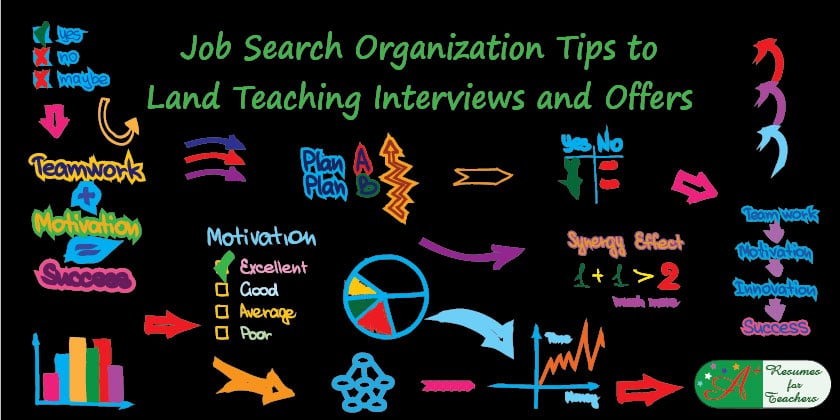
10 Job Search Mistakes Educators Make and How to Fix Them

Are you guilty of making these job search mistakes while trying to land a position? If you are, your success may have come to a grinding halt.

Don’t make the same mistakes as many school teachers, principals, college instructors, and higher education administrators throughout your job hunt. If you are making these blunders, get moving and take steps to rectify them to get your job search back on track.

If your phone isn’t ringing, it could be because you are accidentally sabotaging your success. We have compiled a comprehensive list of the common job-search mistakes or obstacles to determine if you are guilty of committing any of them.

Don’t Make These Job Search Mistakes.

1. No Clear Target Mentioned in Resume

We all know individuals who work in teaching jobs they have grown to hate. They become unmotivated and uninspired by the day-to-day routine. To avoid turning into the “tired teacher,” you must take the time to find a teaching job that merges nicely with your natural skills. Finding a position that works well with your personality and abilities will ensure happiness, satisfaction, and success in your working life.

Target your search and focus on positions that you will find fulfilling. Determine what motivates you, clarify your values, and evaluate your preferred school environment. Before you begin your job search, you must know what position you wish to secure. Being unprepared or unfocused will only increase your chances of being unsuccessful. Don’t let the reader guess what type of position you are interested in. They won’t take the time to try.

2. Using a Standard Application Letter

Have you ever sent out a standard, boring, mass-produced cover letter hoping someone will bite? Almost every school principal can spot a ready-made, standardized application letter from a mile away.

A cover letter not tailored to the specific educational position you are applying to and does not illustrate the value you can bring to the school will not result in an interview. A cover letter needs to tell your story.

In the letter, communicate how the specific position you’re applying to is the next logical step in your story. The letter should give a school administrator a reason to pick up the phone and call you for an interview. Take the time to read this in-depth post on teaching job application letter writing tips with examples.

Grab the reader’s attention by tailoring your cover letter to each job posting or position. Respond to a specific job posting by sending a cover letter that matches the job requirements and qualifications. When applying to a particular posting, you should always include the posting number (if listed), or your document could end up in the wrong folder or be discarded altogether. Review completed application letter examples if you have time.

3. Using Limited Job Search Methods

You could miss many job opportunities if you only apply to advertised jobs. Although your job search should incorporate scanning the internet, district websites, job boards, LinkedIn, and newspapers for job postings, your efforts should not end there.

In addition to applying for advertised positions, you should also tap into the hidden job market. Experts say most hires don’t come from online job boards or official application channels. Instead, they come from networking.

If you are job-hunting, make use of your connections because you never know when you will meet someone who knows someone looking to hire for your exact skill set. Don’t underestimate the power of unsolicited resumes and cover letters – they do work and are very useful.

Networking allows you to meet with potential school administrators and seek possible teaching job leads. You never know who you may know who could know of an option for you.

Social Media channels are critical to your career and job search. LinkedIn is an excellent option for connecting with other professionals and building a professional online presence to share with others. Review our LinkedIn profile writing service here. Check Twitter for hashtags relevant to your field and geographic area, and Facebook for professional networking groups.

4. Sending a Poorly Designed Resume

School district hiring departments and principals are bombarded with hundreds of resumes daily. Therefore, your resume must set you apart from the competition. Ensure your resume is clear and concise, with one teaching objective supported by accomplishments, emphasizing the benefits you can bring to the school. Don’t miss our school administrator and teacher resume samples on the website.

When preparing your teacher resume, ensure it is tailored to the position of interest. Check the job posting for keywords or other terminology to incorporate into your resume. Applicant tracking systems and related pieces of software will screen your education resume and application letter to see if you should make it to the next round of consideration.

Targeting using keywords will help you pass initial screenings and reach a school principal or hiring manager.

5. Not Including the Right Keywords in Documents

Keywords are specific terms or buzzwords related to education and teaching that help software scan and search your resume effectively. Schools use keywords to weed out unqualified candidates. When developing your resume, include teaching-specific terminology throughout the content. Sprinkle the words naturally through the profile and skill summary section and in the work history.

Discover relevant keywords in the job posting, on the district’s website (check whether they have a page outlining their mission or vision), and in other community publications. Terminology that will get you noticed at one district may send you to the bottom of the stack for another institution with different needs, goals, or values. Adjust your resume slightly based on the differences between the jobs you are applying for.

6. Not Including Related Career Accomplishments

Your resume is your marketing tool, and keywords and achievements play a vital part. Modesty has no place here! You need to find and include significant, concrete results that you can highlight in your resume. When describing your teaching accomplishments, be sure to use key keywords and statistics to emphasize the significance of your achievements.

Format your accomplishment-driven resume so your accomplishments stand out. Don’t cluster your achievements and responsibilities together. Instead, only write an overview of your responsibilities in paragraph format, and draw attention to your top successes with a list of bullet points. Bring your reader’s eyes to your vital selling points.

If your career successes are events you can quantify, that’s an excellent plus. Don’t forget to include something similar to this:

  • Increased the class’s math scores on a standardized test by 20% using unique teaching techniques.
  • Did you develop a program that enhanced 76 students ‘ educational outcomes? If so, say that rather than just noting that you managed a program.

7. Submitting Your Resume to the Wrong Person

Do you have any idea who is reading your educational-focused resume?

Sending your resume blindly, without a little research, could result in it being lost or discarded.

Call your targeted school’s district office takes a matter of minutes. The receptionist will provide you with the proper contact information. Remember to get the correct spelling and title of the hiring individual. Ensuring your resume reaches the right person is a necessary first step to getting your application reviewed.

Double-check the job posting for instructions regarding where to send your application materials. Districts may require you to submit your information via a website. This is a typical process.

Other job advertisements might give the name of a contact person or a particular address to which the documentation should be submitted. If the posting specifies where to send the application and you don’t follow it, the hiring committee could disregard your application because it wasn’t addressed to the appropriate person or office.

8. Not Preparing for the Interview

Preparing for your interview may take a small investment in time, but it will make all the difference. Good interview preparation will also help you combat nerves. Before attending your interview, research the prospective school and school district. Find out the school’s size, key objectives, and mission, and any recent news.

Once you have completed your school research, prepare to communicate your importance through your achievements. Inspect your career for relevant examples of how you increased student achievement, improved success rates, accommodated special education students, or piloted new programs or curricula.

Remember, you are selling your strengths to this school; investing a little time in preparation will ensure a successful interview. Your ability to demonstrate how your accomplishments match the department, campus, or district’s needs may be the difference between an offer and a rejection.

9. Not Asking Questions During the Education Interview

At the end of an interview, the potential employer will ask if you have any questions for them. 

Avoid asking questions that may already have been answered or addressed on the school’s website. If you ask questions that could have been answered by a source, it indicates you didn’t take the time to prepare for the interview or didn’t listen well. These questions will show your interest in the school and your readiness for the interview. Ensure the questions you ask are brilliant and targeted.

As you prepare for the interview, it’s wise to devise a list of questions in advance. Plan for more questions than you anticipate you’ll have time to ask, as some may be answered throughout the interview. Check off questions that are answered earlier in the process, and you’ll be left with a good list of questions to understand better what to expect from the role and the culture on campus.

10. Fail to Follow-Up

Once you have completed your educational interview, sending a thank-you letter to the person who interviewed you is essential. Send this letter within 24 hours after the job interview. If a panel or committee interviewed you, one thank-you note would suffice, addressing it to the individual supervising the recruitment process. Thank the interviewer for the opportunity to interview, and ask that your appreciation be communicated to the other committee members.

Ideally, you’ll have time later in the day to craft and mail a thoughtful thank-you note reminding the hiring manager why you are an excellent fit for the job.

If that won’t be manageable due to various commitments, you can begin a thank-you note before the interview. To finish the letter, add a couple of sentences describing a specific interaction, and then drop it in a mailbox or at a post office on your way home from the interview.

If you have not heard from the school after two weeks, sending a follow-up letter indicating your continued interest is acceptable. The interviewer or committee members may have difficulty deciding, and your letter could be the key to finalizing their decision.

[bctt tweet=” “ow many of these mistakes have you made in your job search?””

How many of these mistakes have you made in your job search? What can you change to ensure you don’t make the same error?

By avoiding these mistakes and instead of following the tips in this article, you should be well on your way to acing that interview and landing that job.

Prepare for your next interview by learning more about the questions you can expect to answer by downloading our Ultimate Teacher’s Job Interview Crib Sheet. You can view our resume services here if yoyou’dike one-on-one help with your resume.
15 Higher Education Resume Writing and Formatting Tips

Discover the ultimate higher education resume writing tips to land the perfect position at a college or university. As I am sure you know, your resume or curriculum vitae (CV) is the key to opening doors to interviews.

It lets you showcase your relevant skills and expertise for the job opening. This is your time to impress, as an effective resume concisely describes your professional skill set and how you have succeeded in your previous positions. A quality higher education cover letter and your resume should intrigue the reader, encouraging them to get to know you better and how you could fit within their institution.

Top Professional Resume Tips for Higher Education Teaching Professionals

Professional Profile

Resume objective statements are old school. They do not add value to your document. A professional career summary or profile should begin your resume with a brief description of your soft skills. This is the first point in your resume where you can showcase your skills, expertise, and passion for the position you are applying for.

Ensure that you create this summary based on the specific position. This lets the person reading it know you took the time to understand what the college or university is looking for in a candidate and target your valuable assets to the position requirements.

Start your professional summary with a sentence outlining your experience, for instance:

 “Passionate, well-rounded, and dynamic educator with nearly 15 years of experience driving interactive and engaging classroom discussions where students are held accountable for recognizing the connection between learning and experience.”

This would be an excellent introduction to an Adjunct Professor’s resume.

The professional profile is the opportunity to convey some of your essential skills and use some academic buzzwords in a meaningful paragraph before you delve into your hard skills and professional background.

Areas of Expertise – Examples

This area of expertise section of your higher education resume should be littered with educational buzzwords/keywords that you find in the job posting. This is where you can insert relevant keywords and job competencies that Applicant Tracking Systems will instantly pick up. Ensure that the characteristics you include align with your background and with what the institute would look for in an applicant.

One resume-writing tip a university instructor might use is to develop a bullet-point list of 10-12 core competencies that highlight the areas of expertise. These strengths will communicate that you know the teaching skills and areas needed to perform the job you wish to secure.

Sample Areas of Strength to Include in Your Resume

Adjunct Professor:

Student Connections, Subject Matter, Curriculum Development, Instructional Design, Real World Applications, Creative Problem Solving, Academic Policies, Classroom Management, Feedback and Assessment, Mentorship, Student Management Systems

 Dean of Students:

Student Retention, Crisis Management, Diversity and Inclusion, Student Development Theory, Policies and Procedures, Professional Development, Policy Development, Program Review, Faculty Evaluation.

 Chief Financial Officer:

Financial Reporting, Capital Management, Budgeting and Forecasting, Risk Management, Treasury Management, Compliance and Governance, Stakeholder Relations, Strategic Planning, and Regulatory Grant Funding.

 Communications Director:

Communication Strategies, Strategic Communication, Public Relations, Crisis Communication, Professional Leadership, Attention to Detail, Brand Management, Digital Communication, Social Media Branding.

 Department Chair:

Academic Leadership and Administration, Research and Scholarship, Program Development & Management, Supervision of Teaching, Program Evaluation, Conflict Resolution, Strategic Planning, and Data-Driven Decision-making.

College Student Advisor:

Student Counseling & Support, Academic Advising, Data Analysis, Interpersonal Communication, Academic Educational Guidance, Crisis Intervention, Program Coordination, Reporting, Case Loads.

Co-op Advisor:

Career Preparation, Academic Integration, Data Management, Compliance and Policy, Materials Development, Learning Management Systems, Student Support, Progress Monitoring, and Work Term Monitoring.

Higher Education Resume Keywords

Larger employers use applicant tracking systems to weed out resumes as the initial review. A concrete way to pass this initial review is to include relevant industry keywords or buzzwords specific to the position you are applying for and apply them to your skill set. Use the job description to determine what knowledge, skills, and qualifications the employer values, and sprinkle those words throughout your resume.

For example, an Adjunct Professor should possess organizational skills, be an effective communicator, be technologically savvy, and support colleagues.

One thing to remember is to build the wording from the job posting into your resume. If the posting states, “individualized lesson planning a plus,” incorporate that into your resume as “Experience in creating individualized lesson plans to encourage full student participation and engagement based on unique learning styles, needs, and goals.”

Look at the school website, department page, online job descriptions, and other job postings to help determine some key buzzwords to include.

Using the correct keywords is one of the most important aspects of writing resumes or CVs in higher education or any other industry.

Education and Credentials

Most higher education positions require applicants to have a minimum of a bachelor’s or master’s degree. Take a close look at the job posting to determine the educational requirements, and consider listing only those relevant to the position. There is no need to list your high school diploma.

If a significant amount of time has passed between achieving your last degree and the date you are applying for a new position, consider not including graduation dates.

A general rule of thumb is to start your education list with the most recent completions. State the name of your degree, the institution, and the institution’s location, then the year of graduation or expected completion, if applicable. Under your education, include any teaching certifications or other credentials you have received.

Include Thesis Details

Suppose you have obtained your master’s degree or doctorate. In that case, you may want to include your thesis statement within your educational experience section, especially if it is relevant to the subject you wish to teach. Include the institution where you received the degree below, in italics so it stands out without removing the educational listing.

For instance:

Thesis: “The role of nature vs. nurture and its impact on children’s early childhood and elementary education.”

Thesis: “Homework and Achievement: Investigating the role homework plays on student achievement.”

Teaching or Professional Experience

In the professional experience section of your resume, include a brief description of your job duties and responsibilities, followed by a listing of your achievements within that position. Ensure that you list your most recent post first, and if you are no longer at the job listed, write your description and accomplishments in the past tense.

Listing your achievements in bullet points makes them stand out on your resume. The achievements must reflect classroom experience, school community involvement, and educational improvements you made in your past.

Depending on the position you are applying for in higher education, you may have previous accounting experience, board positions, or professional jobs other than teaching.

Suppose you are applying for an adjunct teaching position in a corporate career. In that case, you will want to highlight any subject-related experience and skills, as well as any training or presentation experience.

Here are a few examples of work experiences.

Dean of Students Resume Excerpt Sample Excerpt:

Maintained student service and academic program offerings for 10,000 on-campus and 15,000 distance education students. Established development and institutional advancement initiatives. Addressed diversity issues within the college curriculum, oversaw residential housing operations, and recruited senior administrators and academic staff.

  • Established a campus crisis counseling initiative for students and families in the dean’s office.
  •  Organized and facilitated ten-week-long educational program events that increased academic participation by 20%.
  •  Created a comprehensive communication and training program to meet senior academic staff’s diverse needs, goals, and learning styles.

  Director of Alumni Relations Resume Sample Excerpt:

 Advise and administer the development and management of alumni events and volunteer programs. Identify, cultivate, and solicit alumni prospects for annual gifts and educate graduating students about alumni benefits and philanthropy. Ensure accurate and complete alumni database records utilizing state-of-the-art technological programs.

  •  Raised $1 million for special projects and events in collaboration with various faculties and the Alumni Association.
  •  Introduced new and improved database recording technology to create a more effective customer service protocol for alumni who emailed, called, or visited campus.
  •  Coordinated with the Senior Director of Alumni Engagement to create and execute a more comprehensive approach to alumni engagement by creating online chat rooms and on-campus clubs.

Professional Development and Other Resume Headers

After completing the professional experience section, you can decide what further headings to include on your higher education resume. Some examples of additional sections that you can have are:

  • Professional Development
  • Professional Affiliations
  • Presentations
  • Publications
  • Volunteer Experience

Try to keep the information specific to the job you are applying for. If you have volunteer experience with no transferable skills, do not include it, as you want to maintain a job-specific, tailored resume.

Another point to remember is not to overload your resume with information that may not necessarily be required to obtain your next job as an Adjunct Professor, Chief Technology Officer, or Director of Education. If you find your resume is getting too long after including your extracurricular involvement, take the time to review it and consider what could be removed to maintain an acceptable length.

Remember, though, that if the job posting requests an academic CV, they expect a more extensive resume that includes all of these sections.

Quotes and Recommendation Statements

If you have meaningful quotes from colleagues or supervisors that describe vital skills and attributes that connect you to the position you are applying for, why not include them on your resume? If you do not have space in your resume or would rather have a quote at the bottom of your cover letter, go for it.

If you include a testimonial/quote on your resume, the best places to insert the one or two lines are at the top of the page, above your professional profile, or at the bottom of the resume. Do not forget to include the name of the person who provided the quote, and italicize the lines to stand out against the other resume font. Here is an example:

“Ms. Smith is a very creative and collaborative leader who has provided our district with exceptional support and programs, ensuring success for all teachers and students.”

Dean Quinton, Principal

Focus Your Resume to Match the Job Position

What to include in your resume will depend on your expertise, professional background, skill set, and what position you are hoping to secure. By closely examining the job, you can better understand what the institution is looking for in a qualified candidate.

If you are applying for a position that is the next step in your career path, such as transitioning from an instructor to a dean position, include the relevant skills to secure an interview for the Dean of Students role. However, if you want to enter the college or university scene as a professor or adjunct instructor, you would include a much different set of skills. You may use some transferable skills from previous employment.

A critical tip for tailoring your higher education resume is to ensure the content aligns with what the educational institution is looking for. Make them picture you in the position through your experiences and accomplishments.

Use C.A.R. to Determine Accomplishments

One of the best ways to determine your accomplishments is to use the acronym C-A-R: Challenge-Action-Result. When describing your achievements, think of a challenge or task, your strategy for handling it, and the results you achieved. Employers are looking for ways to disqualify you; therefore, ensure that you clearly outline how your past experiences and successes have benefited the company or institution.

For example:

“Identified district-wide curriculum issues specific to special needs learners. Hired specialists and facilitated workshops for special education teachers to eliminate issues.”

“Implemented Fountas and Pinnell Reading Program to help all students jump a minimum of one reading level by year-end.”

“Introduced an after-school peer support program to encourage students to help one another with their studies while tackling social problems and increasing peer friendships; resulted in decreased problem behaviors and increased understanding of the material.”

Quantify Accomplishments

Numbers go a long way toward establishing your achievements in a more meaningful way. Numbers stand out against a sea of words, so as often as possible, quantify your accomplishments using numbers as much as possible.

Here are a few examples:

“Boosted student attendance by 10% by restoring student-faculty relationships.”

“Reduced student discipline rate by 8% by implementing restorative discipline program.”

“Increased students’ final exam marks by 20% by implementing a study tutorial program.”

Proofread

This is probably the most crucial step in writing your higher education resume. Always proofread your work for spelling and grammar. Being able to submit a resume that is free of mistakes and looks polished will undoubtedly be worth the time you take to read it over a few times. Make sure that the spelling is correct and that your dates and address information are accurate. A great tip is to have a friend re-read your resume to see if you missed anything.

Research Faculty Institution

Investigating the college or university’s mission, future goals, and position expectations can go a long way toward your next career step. Avoid using the first person when describing the capabilities you will bring to the position. Simple statements that connect the job description to your responsibilities show that you have read and thought about the requirements specified in the posting.

Resume Formatting and Design

Your resume’s overall formatting should be consistent with the other submitted documents. This means your resume, cover letter, thank you letter, reference page, etc., should all have the same header, margins, font style and size, and borders, if applicable. Bold or italicize your name and section headings, and keep your qualifications the focal point.

Summing it Up!

Being organized is a top skill for any position in higher education. Ensure that your resume or curriculum vitae looks professional and clean, which will easily translate to your academic skill set. Read the job description and posting in detail to tailor your resume or CV to match. This will set you apart from other candidates and land your application in the interview pile.

Use metrics throughout your work. This will showcase your accomplishments in detail and allow the reader to assess your hard skills for the position you are applying for.

There are many ways to write a professional resume for your next job as Dean of Students or English Professor. Follow the tips outlined above, and you will surpass the other applicants and sit across from the interview panel in no time.

Take the time to review resume samples to get ideas for formatting, content, keyword placement, and organization.

If you need help writing your job search documents, including a strong higher education resume and cover letter, contact me (Candace) at 780 513-0010, or if you are in North America, call toll-free 1 877 738 8052 or email me  candoco@telus.net

Teacher Resume Objective Statements are Old School

Are teacher resume objective statements a thing of the past? In a word, yes! If you consider using one in your resume, there is no need. Resume objective statements used to be both commonplace and expected. However, they have gone out of fashion, and for a good reason. If you are looking to shake up your career, consider spicing up your resume, too!

What is a Resume Objective Statement?

It is an assertion about your employment goals. The career objective is found at the top of the resume and is one to two lines long. They can either clarify the position you wish to obtain, the field you want to work in, or the skills you hope to bring. The thought is they segue between your resume and cover letter, provide an introduction, and direct the reader’s focus toward your job goal. Ultimately, though, they are wishy-washy, not unique, and waste the reader’s time.

Examples of Outdated Education Resume Objective Statements

  • “To obtain a position as a Teacher.” – Great, just like every other candidate.
  • “To obtain a position as a Gym Teacher.” – Okay, but what do you bring to the table?
  • “To obtain a position as a Principal.” – This statement alone shows a lack of leadership and creativity.
  • “To enter the field of education.” – Splendid, and then what? How does that help the reader?
  • “To obtain employment with a school that facilitates professional growth.” – A commitment to professional development is fantastic, but you need to leave the reader wowed and wanting more.

So why not just revamp or re-energize a lackluster objective? The entire concept is outdated and is basically ignored by human resources personnel and recruiters. In this competitive job market, you need to excite the reader, stand out from the crowd, and quickly and clearly demonstrate why you are an asset to the school district.

Not only are these statements a thing of the past, but using them could potentially hinder your job search as well. They are bland and forgettable. They often go unchanged from job to job, and as time goes by. What does this mean exactly?

If you are applying for more than one job type, there is a good chance you will forget to update your resume objective. This error is glaringly obvious to the reader and will get your application thrown in the No pile. When you make errors in your document, you show a lack of attention to detail.

What is the Alternative to Resume Objective Statements?

The most effective way to engage the reader is to develop a hard-hitting profile summary or introductory paragraph. This is the first section of your resume that appears after your contact information and the job title of the position you wish to interview for.

If done correctly, a teacher profile summary captures the reader’s attention and interest right away. The purpose of this first paragraph is not only to introduce you to the hiring administrator but also to succinctly convey your standout qualities.

The profile summary contains your years of experience, soft skills, hard skills, proven abilities, and commitment to education. It is written either as a paragraph or in point form, and ranges from 5 to 7 sentences.

It should be written in the third person (no “I” statements) and leave the reader wanting to know more. Each line should be impressive and highlight why you are a great candidate for the teaching position.

Introductory Paragraph/Profile Summary Samples for Teachers

Elementary School Teacher

Learning-oriented educator with 14 years of hands-on classroom expertise. Committed to providing all students with a meaningful and memorable education. Talent for designing creative lesson plans that facilitate students’ unique goals, needs, interests, and learning styles. Proven ability to incorporate project-based learning and blended learning to actively engage students, promote classroom participation, and boost comprehension and retention. Proficiency in establishing a focused and disciplined classroom setting, where students feel safe, special, and cared for. Excellent communication and interpersonal skills to forge positive relationships with students, staff, and parents.

High School Mathematics Teacher

Innovative instructor with seven years of expertise teaching high school mathematics. Track record for breaking down complex concepts and helping students understand how to apply mathematics to everyday life. Proven ability to integrate technology, manipulatives, and collaborative learning to accommodate all learners’ types and levels. Proficiency in designing meaningful lessons that reinforce higher-order and independent thinking skills. Dedicated to cultivating an inclusive and collegial learning environment, where students feel safe to take academic risks, ask questions, and share ideas.

Review resume writing tips specific to high school teachers.

Special Education Teacher

Patient and caring teaching professional with 10+ years of experience working with Special Education students. Talent for maintaining a safe, healthy, and inclusive class atmosphere, where students’ individual goals and needs are effectively accommodated. Proven ability to differentiate instruction to facilitate all learning styles and make a genuine connection with diverse students. Skilled at providing plenty of praise and encouragement to boost children’s self-confidence, self-esteem, and motivation. Track record for establishing a strong rapport with parents, offering them additional resources to use in the home, and providing the support needed to help their child reach his/her full potential.

It may be time to review writing strategies to create the perfect special education teacher resume.

Assistant Principal

Goal-driven educator with 15 years of combined classroom and leadership expertise. Track record for producing a positive school culture that is committed to student learning, growth, and success. Proficiency in implementing effective school discipline programs that incorporate restorative justice practices. Committed to working with parents to increase student attendance, classroom participation, and success rates. Proven ability to deliver applicable professional development opportunities and provide positive mentoring and support to staff. Exceptional communication, interpersonal, critical thinking, and leadership skills.

School Principal

Diligent and results-oriented Principal with a diverse career portfolio and a primary focus on positive leadership. Committed to community engagement and forging strong relationships with key stakeholders to ensure the success of the school. Proven ability to create, implement, and evaluate curriculum that focuses on whole child development. Demonstrated talent for conducting thorough hiring campaigns, recruiting the most skilled, confident, and committed educators. Dedicated to establishing an inclusive and collegial school community that prides itself on multiculturalism, innovative technology, and student success rates.

Resume tips specific to educational leadership will provide more information to create your entire job search document.

Another Alternative to Resume Objective Statements

A compelling job title, accompanied by strong resume profile statements, can also serve as a substitute for an objective statement. You want the reader to be clear about the position you are applying for and/or your current job. For instance, if you are currently a Social Studies Teacher looking to transfer schools but maintain the same position, state “Social Studies Teacher” at the top of your resume.

If you are looking to be promoted from Classroom Teacher to Assistant Principal, you will want to say something like “Academic Leader” or “Instructional Leader” at the top of your resume. You can use the resume profile summary to reinforce your goal of transitioning into an administrative role. Some examples include:

  • Desired Job: Science Teacher
  • Current Job: Science Teacher
  • Title to Use on the Resume: Science Teacher
  • Statements to Reinforce Your Career Goal:
    • Student-focused educator with five years of hands-on expertise as a Science Teacher.
    • Committed to providing students with an innovative and intriguing experience that ignites their passion for science and learning.
    • Demonstrated capability to simplify complex concepts and show a connection between science in the classroom and science in everyday life.
  • Desired Job: Chemistry Teacher
  • Current Job: General Science Teacher
  • Title to Use on the Resume: Science Teacher
  • Statements to Reinforce Your Career Goal:
    • Diligent teaching professional with three years instructing a general science curriculum, looking to specialize in Chemistry.
    • Post-secondary education in Chemistry, as well as extensive experience in laboratories.
    • Dedicated to designing hands-on lessons that capture students’ interest and foster a love for learning the discipline.
  • Desired Job: Assistant Principal
  • Current Job: Physical Education Teacher
  • Title to Use on the Resume: Educational Leader
  • Statements to Reinforce Your Career Goal:
    • Goal-driven leader seeking to utilize over ten years of hands-on instructional experience and eight years as Head Coach to transition into the Assistant Principal’s full-time role.
    • Dedicated to applying leadership skills gained from practical experience and a Master’s Degree in Educational Administration.
    • Committed to establishing a safe, healthy, and inclusive school community focused on developing the whole child.
  • Desired Job: Principal
  • Current Job: Assistant Principal
  • Title to Use on the Resume: Education Administrator
  • Statements to Reinforce Your Career Goal:
    • Versatile professional with 15+ years of instructional experience, including 8 years as an Assistant Principal.
    • Proven leadership skills to cultivate an inclusive and collegial learning environment.
    • Talent for employing positive leadership to mentor and train a diverse group of staff effectively.
  • Desired Job: Principal
  • Current Job: Principal
  • Title to Use on the Resume: Principal
  • Statements to Reinforce Your Career Goal:
    • Dedicated education administrator with six years of hands-on expertise as Principal.
    • Talent for employing a transformational leadership style to bring about affirmative change and cultivate a positive school culture.
    • Excellent communication, interpersonal, people management, and analytical skills to lead a diverse group of students and staff alike.
  • Desired Job: High School Science Teacher
  • Current Job: Elementary Classroom Teacher
  • Title to Use on the Resume: Science Teacher
  • Statements to Reinforce Your Career Goal:
    • Highly adaptable teaching professional with eight years of hands-on classroom experience.
    • Committed to providing students with a well-rounded, rewarding, and applicable education.
    • Talent for demonstrating a direct connection between everyday life and educational/scientific concepts.
  • Desired Job: High School Science Teacher
  • Current Job: Chemist
  • Title to Use on the Resume: Chemist & Educator
  • Statements to Reinforce Your Career Goal:
    • Well-rounded professional with 12 years of hands-on expertise as a Chemist; experience with informal training and leadership roles.
    • Passion for education and the desire to utilize career experience to cultivate an engaged and focused group of learners.
    • Proven ability to bring real-life connections and personal experience to the classroom, helping students earn an appreciation for education and discover potential career opportunities.

Other Methods for Replacing Tired Resume Objective Statements

As you can see, we aren’t simply removing objective statements; we are replacing them with more effective methods.

Another technique is to state your areas of expertise or knowledge outright. After your introductory paragraph, consider incorporating a section called “Areas of Expertise.” This can be displayed in several formats (e.g., a table or a center-aligned list). This section highlights your most outstanding and relevant hard skills and draws the reader’s attention immediately.

Table Format:

Areas of expertise include:

  • Science Fairs
  • Interactive Labs
  • Technology Integration
  • Creative Lesson Planning
  • Assessment Tools
  • Standards-Based Instruction
  • Inquiry-Based Learning
  • Discovery-Based Learning
  • Differentiated Instruction
  • Progress Reports

Center-Aligned List:

Areas of expertise include:

Science Fairs ~ Interactive Labs ~ Technology Integration ~ Creative Lesson Planning ~ Assessment Tools ~ Standards-Based Instruction ~ Inquiry-Based Learning ~ Discovery-Based Learning ~ Differentiated Instruction ~ Progress Reports

As you can see, the Areas of Expertise section includes educational keywords and buzzwords that are likely what the hiring administrator is looking for. Incorporating keywords is important for several reasons:

  • They demonstrate that you are up to date on education trends.
  • The reader will be looking for specific skills and traits in potential job candidates.
  • The Applicant Tracking System (ATS) will be scanning for specific words. Without keywords, your resume may not reach human eyes.
  • They make you stand out from the competition and above it.

25 Current Education Keywords to Consider Using in Your Teacher Resume and Cover Letter:

  1. Project-Based Learning
  2. Performance-Based Assessments
  3. Common Core Aligned
  4. Blended Learning
  5. Whole Student Education
  6. Whole Child Development
  7. Technology Integration
  8. Differentiated Instruction
  9. Response to Intervention
  10. Instructional Scaffolding
  11. Individualized Instruction
  12. Data-Driven Instruction
  13. Growth Mindset
  14. Positive School Culture
  15. Student Engagement
  16. Instructional Leadership
  17. Flipped Classroom
  18. 21st Century Learning
  19. Higher-Order Thinking Skills
  20. Cooperative Learning
  21. Collaborative Learning
  22. Guided Reading
  23. Balanced Reading
  24. Student Progress Monitoring
  25. Integrated Curriculum

Do you need help writing a resume with a solid resume profile rather than using an old-style resume objective statement? Reach out for help by calling Candace at 1 877 738-8052 or emailing candoco@telus.net.

15 Higher Education Cover Letter Tips to Get a College Job

Writing a higher education cover letter using these expert tips will help you secure an interview and a top job offer in a competitive job market. Whether you are applying to become the next Dean of Students, Campus Coordinator, Director of Alumni Relations, College Adjunct Instructor, or University Professor, ensure you are the individual getting an interview and that dream job.  

When reviewing job postings, you will discover the advert could request a cover letter, application letter, letter of intent, or letter of introduction. These are just different ways to refer to the letter they expect to see accompanying the resume or CV. Implement these tried and true higher education cover letter writing tips to showcase your best value.

A well-written cover letter can be just as impressive as an adequately designed resume; a cover letter, a.k.a. the application letter, should always accompany a resume or CV. This is the opportunity to fine-tune your storytelling abilities and speak to the institution specifically by tailoring your accomplishments and personal traits to a particular job.

Describe your abilities, competencies, skills, knowledge, and expertise, and illustrate them with concrete, institution-specific examples. This is the prime time to tell a hiring committee why you are the perfect candidate whose values, expertise, and skills match the department’s mission and needs. Implementing this post’s strategies will help you make a career transition into a university or college confidently. 

Top Higher Education Cover Letter Writing Tips

Research the Institution – College or University Faculty

The more you know about the institution you are applying for, the easier it will be to tailor your higher education cover letter to the college or university’s specific needs, goals, and mission. Whether targeting an Executive Director position or applying for an Adjunct Professor posting, directly relating your skills and expertise to the institution’s needs will go a long way when your application is assessed.

Even if some of your research does not come through in your cover letter, this is excellent preparation for the interview you are setting yourself up for with a professionally written cover letter. You will be better equipped to answer questions such as “Why this job?” and “How are you qualified?” if you thoroughly understand the position’s requirements.

Check the College or University’s Website

Dive into the college or university’s website to find vital institutional characteristics, strategic goals, needs, and educational missions. This is also where you will discover the institution’s “language.” Try to mimic the wording in your cover letter to the website and job description. This may set you apart from other applicants. You have put in extra effort to better understand what the position entails and how it fits within the educational landscape. 

Tailor Your Cover Letter for the Position

Because you may be sending out your resume and cover letter to multiple institutions, do not inform the faculty by submitting a generic template cover letter. If you have diligently learned the position, you should tailor your cover letter to the job. The easiest way is to include the college or university name in your letter.

Additionally, ensure you address the college’s particular needs with your accomplishments; this will show the hiring committee that you are familiar with their goals and have the experience to back up your self-marketing.

Suppose you take the extra time to tailor your cover letter to the position you are applying for, be it the Dean of Students or Director of Communications. In that case, you increase your chances of being selected for an interview.

Be Specific by Targeting the Cover Letter

When highlighting your capabilities and achievements, it is vital to demonstrate how your competencies will align with the position’s objectives. Whether you list your powers in bullet or paragraph form, do it concisely so the hiring committee can see and read how you are the right candidate for the position. 

List Accomplishments to Match Higher Education Position

When applying for higher education positions such as Chief Technology Officer, Campus Coordinator, or Executive Director, ensure the accomplishments and experiences you include in your cover letter are relevant to the specific position and institution you are targeting.

A good rule of thumb is to highlight the job description and any other documents that outline the general position expectations, using keywords that pertain to your expertise and achievements. This will enable you to specify what you bring to your letter.

As you progress in your career, consider creating a document listing all your accomplishments. After cleaning them up, you would format them as a cover letter paragraph and insert them into your cover letters for new employment opportunities.

This way, you always have the sense of a tailored cover letter, even if you copied and pasted the middle section, and you don’t have to spend hours creating a brand-new note each time you want to apply somewhere.

Quantify Career Results

Whenever possible, take a cue from your resume and quantify your accomplishments. If you have “increased student enrolment by 15%” in your tenure, then say so. Take that achievement, develop it into something the hiring committee can see you taking on in their company, and specify that in your cover letter.

These may seem like tedious details, but sometimes the numbers stand out in a sea of words, so take advantage of the opportunity to market yourself in a way that the competition may not. 

Include Keywords

The job posting should provide you with a wealth of information about the employer and the type of person they want to hire. You want your cover letter to engage the reader, so speak to the responsibilities and job description without repeating it word for word. Also, make sure you use keywords that reflect your career and competencies.

Utilizing keywords will also help your higher education cover letter, resume, or curriculum vitae pass the Applicant Tracking Systems. Look below for some examples of keywords to include based on the position you are applying for:

Dean of Students: analytical thinking, leadership, and managerial competencies; organized, self-motivated, humanitarian, technologically competent, and approachable.

Adjunct Professor: syllabus creation, student performance monitoring, collaboration and coordination, organizational skills, teamwork, and computer competencies.

Director of Admissions: application assessment, institution promotion, management abilities, administrative competencies, attention to detail, enrollment assistance.

Chief Technology Officer: computer proficiency, technical expertise, leadership, analytical, communication and interpersonal skills, and teamwork.

Formatting

You should format your higher education cover letter so it reads easily if sent by email. A PDF is best, as it can be opened and viewed exactly as you created it. Remembering this is a good rule if you intend to attach it to the email or application website.

It may be best practice to copy and paste your cover letter into the email body to ensure the hiring manager reads it. They may not open the cover letter as an attachment; instead, they may go straight to the resume.

The overall layout should follow the suggestions below: 

One Page

A cover letter allows you to be more personal and speak as if you were having a conversation; however, do not make it too lengthy. Ensure your resume is one page. This page encompasses three to four paragraphs describing your intention, qualifications, accomplishments, and a closing. 

Address to Hiring Manager

While researching the position and institution, note who may be reading your application whenever possible. Some hiring managers may not care that the letter is explicitly addressed to them.

Why take the chance and leave their name out when it could be critical to the person reading your cover letter? If the name is not listed in the job description, contact the Department of Human Resources to determine to whom it should be addressed. 

First Paragraph / Opening Sentence

The first paragraph of your cover letter should state the position you are applying for, the institution you are applying to, and why you are the right candidate for the job. Add your applicable educational background if the job description requires a Bachelor’s or Master’s degree.

The example below uses strong language and markets the professional for the Dean of Students position. This is an opportunity to briefly demonstrate what you can offer the college or university in support of its mission.

“As an experienced leader in the academic sector for over 30 years, I welcome the opportunity to apply for the Dean of Students position with ABC University. As an alumnus of ABC University, I would love the chance to return and become a member of the faculty. I am well prepared to significantly contribute to the goals and objectives of the institution as I have honed my operational, planning, and program development skills to serve your community better.” 

Middle Paragraphs – Include Achievements

The 2nd and 3rd paragraphs should describe your relevant qualifications and highlight your accomplishments. Make sure they pertain to the desired position. This is where you provide examples of how your skills, experience, or research directly align with what the employer is looking for.

For instance:

Over the last two years at State College, I have increased donations by more than 80%, bringing over $1 million to the college”.

Each middle paragraph should describe why you are uniquely qualified for the position using keywords from the job posting. There are two options to fulfill this opportunity: bullet points and narrative.

Bullet points are great if you want to catch the reader’s eye quickly and concisely; describe your accomplishments in about four bullet points. Using a narrative is another approach if you wish the hiring committee to remember a story. Either option is acceptable; it depends on how you describe your experiences.

Example Accomplishments and Paragraph

  • Established innovative and successful academic programs to attract and retain students, reinforced educational offerings, and enhanced intellectual professional development. 
  • Spearheaded an academic growth program, enhanced curriculum development, and organized grant and funding initiatives.

 “My experience in the English Department has enabled me to become a skilled writer by concentrating in literature for both my undergraduate and graduate programs. I am excited to incorporate the technologies I have utilized in my teaching and am eager to work with new systems. Organization and leadership are vital to balance multiple projects and demands successfully, and this expertise has made my career much more rewarding.”

When writing your achievements in paragraph form, think of them using the CAR analogy: CHALLENGE-ACTION-RESULT. 

Final Paragraph / Closing / Thank You

In the final paragraph, you thank the reader for their consideration and request the opportunity to meet in person. This is also the place for that final push, the last opportunity to tell the reader that you are the right candidate.

“As a passionate, innovative, and dedicated teaching professional, I am confident that my skills in academic oversight and directional leadership will directly translate to Taylor University’s mission. Thank you for your time and consideration. I look forward to connecting with you soon to offer more insight into my qualifications.” 

Call to Action/Ask for the Interview

A more direct way to request an interview is to be proactive in your closing of the cover letter. For example:

“I will call in one week to follow up and find out if I can clarify any questions you may have,” or “I will contact you within the next few days to set up a time to speak more specifically about how my skills will directly benefit your academic community.”

If you decide to go with this closing, connect with the institution. 

Match Your Resume

Consistency is critical when submitting several documents with your application. Your paperwork must reflect a polished and professional personality. Ensure your cover letter matches the formatting of your resume.

They all look the same, whether you are sending thank-you letters or recruiting/networking letters. Copy and paste your heading to ensure the same font, size, and borders are applied to everything. Double-check that all documents look the same before you submit them.

Proofread

Proofreading may seem obvious, but it is a step that should not be missed. If your cover letter has grammatical or spelling errors, it could automatically disqualify you from the position. It may also not pass the Applicant Tracking Systems.

Your capacity to communicate in your higher education cover letter will reflect your ability. Whether you lead a department, teach a graduate class, or recruit and retain students. Read your cover letter, print it, reread it, set it aside, and read it a third time. Always proofread and, when possible, have a friend do it for you.

Conclusion

The cover letter is the opportunity to market yourself and your skills in a much less structured way than a resume. Make sure that your cover letter is engaging. Ensure it reflects your specific skills for the position and shows your passion for the job you wish to secure.

An excellent letter will highlight the best parts of your resume without copying it word-for-word. The goal is to explain why you are the ideal person for the job. Why your experiences are relevant, and how you will use your well-tuned skills in this new role. Take these higher education cover-level tips to heart, and you will land that new job as the next Director of Academic Programs!

If you need help writing your job search documents, connect with me (Candace) by phone at 1 877 738 8052 or by email.

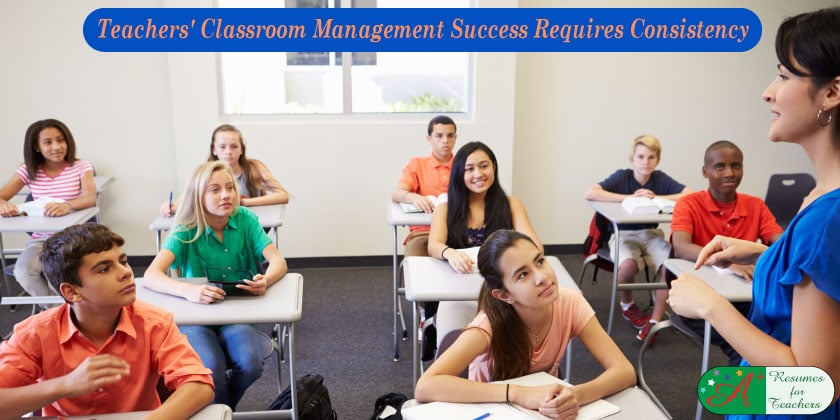
Teachers’ Classroom Management Success Requires Consistency

Teachers’ classroom management success requires consistency in classroom procedures, discipline management, teaching style, and homework assignments.

Various teaching methods can be used in the classroom. Consistency is one of the best strategies. Reducing classroom disruptions should be one of your teaching goals.

Top Classroom Management Means Making a Discipline Plan

Teachers must be fair, consequences must be issued to the student immediately, and all students should be treated the same.

Some teachers tend to give in to students’ requests after only three attempts. Some stick it out for ten. Others are like broken slot machines and pay at different times, depending on their feelings. The trouble is, if they give in at all, they are reinforcing the behavior they don’t want to see through their inconsistencies.

This will teach the students that they usually get what they want if they keep pushing. They need to try and push until the wall goes over. And they will repeat this same basic technique in all manner of ways. They know, from experience, that as long as they keep battering away with the same request, behavior, and action, students eventually get what they want through a satisfied desire or much-needed attention. Remember that not all students are like this; only a select few are.

Some teachers are very inflexible, while others are pretty easygoing. These inconsistencies between staff members make the school an unpredictable place. Students must deal with teacher differences; individual teachers give in at different rates depending on their feelings.

Consistency is Critical to Teaching

Some teachers are inconsistent, providing a great laugh one minute and raising their voices shortly after. A few teachers may also display inconsistencies in treating specific individuals differently, letting some students get away with certain behaviors and penalizing others.

An inconsistent teacher has very little chance of success because students don’t know what is expected of them – the classroom atmosphere is unstable.

They don’t know where the boundaries are from one day to the next. The feelings of insecurity and unfairness make them more inclined to push the boundaries next time and argue with you further.

One way to stop disruptive behavior in your lessons is to be more consistent in everything you do on your teaching day. That means an essential part of consistency is knowing what you will say and do in response to your students’ actions and questions. Have a set of rules and sanctions that your students are familiar with. They must know the exact consequences of their actions at any time.

Stick to Classroom Rules and Discipline Plan

Being consistent in your classroom is paramount to your success as a teacher and to earning your students’ respect. If you have a collection of guidelines and rules, you must stick to them and implement them with each student each day using the same approach.

If you are not thorough in your approach and penalize a student for one thing, then pay no attention to another student who does the same thing. It will not go unseen by your students. They will lose respect for you, and you will lose control of your class.

Gaining Respect from Students in Your Classroom is Critical

There are various ways to gain respect, but consistency is one of the main ways. This means treating every student equally; you will be labeled unfair if you don’t.

Students will be less likely to follow the rules because they think you are picking favorites. Even if the student misbehaving is one of the highest-performing students academically or behaviorally, if they break the rules, they must face the consequences like any other student.

Students need to know there are good and bad consequences depending on the action. The result must be directly correlated with the violation. Consistency in implementing outcomes is vital to effective classroom management.

Lesser offenses deserve lesser consequences; more significant infractions deserve greater punishment. If a student is caught daydreaming, they should not be sent to the principal’s office; they should be reminded to focus.

If a student hits another, do not tell them to refocus. Could you give them a timeout and contact their parents? Remain consistent when handing out punishments—the same crime earns the same sentence.

Communicate Instructions to Students in a Calm and Clear Manner

Students dislike teachers who use only punishment and shouting to deal with challenging students. When we are pushed to our limits and our instructions are ignored, it’s easy to dig ourselves into a hole in an attempt to regain control and re-establish authority by issuing unwarranted, excessive punishments.

The best way to avoid this situation is to ensure our instructions are given to reinforce understanding and compliance. Keep students focused and on task by explaining what is expected during the lesson. Consistency in the classroom will help to manage the classroom.

The instructions you give to your students are an essential part of any effective behavior plan. However, only some teachers are heard, while others are ignored. So, what can you do to ensure your instructions are followed? Perhaps the most critical factor is how you deliver your instructions.

1. Classroom Instructions Must be Given in a Calm Manner

When you give your students instructions, present them in a calm, non-hostile manner and keep them clear and specific. Kids need boundaries, but those boundaries must be calmly communicated and stated without emotion.

Shouting and ranting virtually guarantee more conflict. Students dislike hostile teachers who use only punishment and shouting to deal with problem behavior. Even though you may be instilling fear, you will more likely be inciting hostility and resentment, leading to acting out.

If we expect students to act responsibly, we need to model good communication and behavior. Your attitude must be one of support and fairness because it is the foundation for effective classroom management and positive teacher-student relationships.

2. Class Instructions Must be Clear and Precise

Students will benefit from instructions that are easy to follow. Especially when we consider the large numbers of students who have ADD/ADHD or are on the autistic spectrum, these children need unambiguous, precise instructions. To make instructions easy to follow, they must be simple and fully explained before your students begin the task.

When giving instructions, avoid ambiguous words like ‘quietly’ or ‘properly.’ These directions aren’t accurate enough; words like these are left open to different interpretations and arguments.

This may mean overexplaining a task to ensure no grey areas. For instance, when students finish a task, you must give them specific instructions on how to keep themselves occupied while others finish.

This could include handing in their assignment, taking a worksheet to complete, reading silently, or starting that night’s homework. None of these options involves bothering the other students who are still working. So, when a student disobeys the instructions, they will understand that they are in the wrong.

3. Instructions Should be Backed Up by Fair and Consistent Consequences

When our instructions are repeatedly ignored, it can be easy to dig ourselves into a hole in our attempt to regain control of our frustration. Many times, by trying to re-establish our authority, we end up issuing unwarranted, excessive punishments. Major disruptions and confrontations due to children not following instructions are easily avoidable when you have fair consequences for turning the problem into a learning opportunity.

Having pre-arranged and consistent consequences and rules will form the basis of your behavior plan and help you remain calm in challenging situations. Having pre-arranged effects in place can help you avoid easily losing your temper. When we feel threatened or powerless, we can lose our tempers— so, having pre-arranged consequences that you and your students know will help you keep control and remain calm in all situations.

Tips to Resolve Student Behavior Challenges

It is inevitable that, no matter how great a teacher you are, you will have to deal with problem behavior occasionally. This makes it essential to be prepared when a challenging classroom situation arises.

Knowing how to manage a behavior crisis is paramount to job success and your sanity. Stay calm and professional when handling these difficult situations, ensuring students receive the necessary support without compromising your professionalism.

Behavior Management Tips to Help You Get Through Difficult Situations

1. Nobody is Perfect

You can’t get everything right all the time. Even the best teachers make mistakes now and again. We are only human. You can only do your best, but you can improve through knowledgeable resources and ongoing experimentation. Although we will inevitably make mistakes, be comforted in knowing we can always learn more and improve for next time. Maintaining classroom routines will help manage student behavior. 

2. Create a Classroom Environment to Prove Your Efforts

The key to effective behavior management is building relationships with your students and earning their respect and trust. And even though this will take time, you have control over how long it will take. You will accomplish this more quickly by focusing on getting to know your students and showing genuine interest in their learning. All students want to feel valued and unique; the teacher’s job is to make this a reality. When students feel this way, they won’t need to act out to get the validation they seek.

3. Student Behaviour

Behavior management aims not to ‘make’ children behave; it trains them and helps them see the many benefits and intrinsic value of acting responsibly. It creates the correct academic environment that encourages these proper behaviors.

4. Keep a Positive Attitude

As soon as you dismiss your class as a lost cause, you will be in for a very long and painful school year. Students respond much more positively to a teacher who approaches them as people who need guidance and teaching, rather than a teacher who comes to class as if they are nothing but trouble. Respond accordingly if you will give them the time, effort, support, and guidance they need.

Following the rules regarding consistency and fairness in your classroom will make classroom management more comfortable, and students will be happier and more engaged. Student engagement is critical to reducing classroom disruptions.

Learning how to create a productive, well-managed classroom can benefit you immediately. For more information, visit our blog’s classroom management tips section or check out this up-to-date resource: 101 Classroom Management Tips.

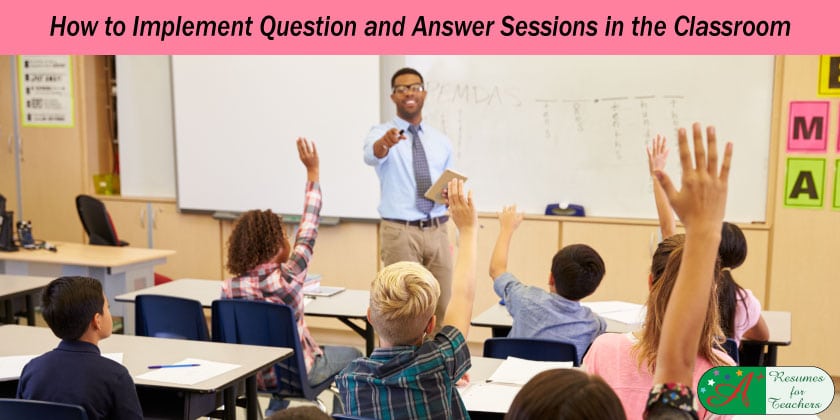
How to Implement Question and Answer Sessions in the Classroom

If you can learn how to implement question-and-answer sessions in your classroom, you will quickly test students’ comprehension of lessons while maintaining their focus and attention.

Question-and-answer sessions will help you gauge your students’ understanding of lesson concepts. However, sometimes, these sessions can go flat. Students can tune out, opt out, or play dumb to avoid participating.

As a teacher, trainer, or other educator, you will know that improving student question-and-answer sessions is essential. These Q&A sessions are an important part of classroom lessons. 

First, let’s discuss

6 Integral Ways Question and Answer Sessions Are Beneficial

  • Testing students’ comprehension of the course material and content. 
  • Helping you, the teacher, analyze and determine where students are regarding their understanding of lesson concepts.
  • I am maintaining a well-behaved and focused learning environment.
  • We are actively engaging students in the learning process. 
  • It stimulates independent and critical thinking skills.
  • We are cultivating an interactive and social class atmosphere. 

So, how can you improve your question-and-answer sessions to get more out of your students and demonstrate your control?

Nine ways to improve student question and answer sessions:

1) Don’t always ask students who have their hands up

We all know that a handful of students still raise their hands. Students know this and depend on these few to do the work for the rest. So, start calling on those students who are not paying attention. Eventually, they will have no choice but to sit up and pay attention because no student wants to look bad in front of others. Plus, if your students avoid paying attention to you, they probably react similarly to the frequent speakers in the class. Get someone who hasn’t offered input into the conversation, and others will take notice.

2) If your question stumps a student, don’t just move on to someone else

When we move on to another student, we not only let that student off the hook but also miss a chance to help that student and others who may be confused develop a new understanding. This doesn’t do anyone any favors in the long run. Maintain engagement with the same student, but break the question down into simpler terms until they can provide you with an answer.

This is important if you want to stop students from opting out. If students realize that if they say they don’t know, you will move on, they will start making that excuse to avoid answering questions. So, to stop this, you must rephrase the question to help them understand. Your students need to learn that they must participate in the lesson and that participating can be a pain-free experience.

3) Always say the student’s name after you’ve asked the question

If you use a student’s name before asking the question, the other students will relax and tune out before you’ve finished asking it because they know they aren’t responsible for understanding the answer. So, the best way to ensure everyone listens is to ask questions, pause, look around the room, and then name the student you want to answer. Using this method will keep everyone’s attention on the issue. If a student isn’t answering the question in front of the class, they should still be considering a solution.

4) Make questions a regular part of your lesson

Healthy routines are an essential part of classroom management. This article offers tips and resources on incorporating habits into your classroom.

When you give information to your class, remember that many young people have a short attention span. Furthermore, many can’t learn much information from lectures due to different learning styles. Because of this, you should frequently ask questions to gauge how much of the new data you’ve given them they’ve retained and can use.

Since all students learn differently, asking questions during lectures and other classroom activities is wise. For instance, when reading a novel as a group, conducting an experiment, or showing digital presentations, you can still ask questions to measure student focus and comprehension.

5) Ask different types of questions to students

Enhancing the nature of your questions can effectively encourage higher-level thinking. Who, What, Where, When, Why, and How are the standard questions used in the classroom; however, if you want to develop or reinforce students’ critical thinking and creativity, use different types of questions or situations. You may want to ask or compel students to:

  • Develop a similar problem to the one just examined
  • Critique a hypothetical situation and give a rationale for the answer
  • Compare and contrast Issue A and Issue B
  • Deconstruct the issue into smaller parts

Discovery Education, a fantastic site for educators, offers other excellent student behavior tips and teaching strategies.

6) Encourage students to ask their questions

After presenting a scenario, prompt students to ask questions and discover more details about the situation. If no one speaks up, give an example of what students might ask and how you respond. Don’t stop at just one or two questions.

If you are working with a guest speaker, watching a video, or using another tool, you can also model asking questions you expect might arise as you learn the new material. When the conversation has become stagnant, ask the class if there are any other questions before moving on to a new topic.

7) Don’t praise questions

This may sound a little counterintuitive, but it’s essential. Think about this. As a teacher, you’ve probably both said and heard the phrase “There’s no such thing as a stupid question” many times. Therefore, you should not evaluate the question presented to you by telling the student, “That’s a great question!”

If one student receives praise for the question she asks and the next student doesn’t, the second person may become discouraged from participating. Praising some students, but not all, will reinforce the idea that there are significant and not-so-great questions, and you want to ensure that your students are asking their queries, whatever they may be. Remind the class that all inquiries are equal and valued neutrally, neither good nor bad.

8) Tell students that question and answer sessions will help them prepare for tests

We’ve all heard, “Will this be on the exam?” Q&A time is a great way to remind students that they will be tested on your teaching content. When students become lax in participating, remind them that this is one way to study for an upcoming exam.

By asking questions, students can personalize their study needs based on the gaps they have identified in their knowledge. The more they pay attention and participate in class, the less time they will need for learning. Even if a student is primarily engaged because they want a good grade, the thought and reflection that go into asking questions are a win-win.

9) Use question-and-answer sessions as a way for students to earn bonus marks

If you want students to focus on your lectures and contribute to class discussions, offer bonus marks for participation. For instance, for every question a student answers correctly, they will receive an additional 1% on the midterm exam. If you use this method, ensure all students can answer the questions, choose students randomly, and offer these sessions regularly.

I am summing it up!

Using these nine techniques in your next question-and-answer session, you are bound to take your class off guard and see an improvement in your students’ attentiveness. Not only will these methods help your students pay greater attention, but they will also improve your students’ performance levels. The ability to gauge learning and comprehension levels in your classroom will increase.

You will likely be asked about the techniques you use as a teacher during question-and-answer sessions in the teacher job interview.

Now it is your turn. What methods have you tried in the classroom to maintain students’ attention and focus? What worked and what didn’t?

Comment below or send Candace an email. 

Preschool Teacher Resume Writing Tips and Design Strategies to Open Interview Doors

An excellent resume is the first step in landing your dream teaching job, and these preschool teacher resume writing tips will make it easier to submit your credentials confidently. Your preschool teacher resume should focus on your accomplishments and skills in educating young children.

Ensure your resume reflects your dedication and passion for teaching and it adequately conveys the skills and credentials reflective of a preschool teacher.

Below are some top preschool teacher resume writing tips to point you in the right direction and help you get that comprehensive resume that will allow you to stand out against the competition.

Note: we don’t use the term resume objective – it’s an “old school” resume writing technique. A resume objective is the title of the position you wish to secure a job interview for. Put it right at the top of the resume; the reader knows exactly what teaching job you are targeting, like this resume sample.

Your preschool teacher resume’s basic setup should include a strong professional summary followed by some key preschool teaching competencies.

Utilize the professional summary section to draw the employer in and let them know you have the skills and passion to join the team as an early childhood educator.

Remember this preschool teacher resume writing tip when creating your opening profile:

The best resume summaries are those tailored to the specific teaching job within a specific district.

Do not write a professional profile in first-person. You should refrain from using the first-person language throughout your entire resume. Your professional profile is the first glimpse that a potential employer will get of your teaching expertise and style. Create this part of the resume highlighting your skills in educating young children.

Relay some soft skills you bring to the classroom, including patience, a nurturing attitude, a caring personality, organizational skills, and dependability and dedication. You may also want to add some specific educational keywords within your profile.

Examples of a Preschool Teacher Professional Profile or Summary

“Dedicated, passionate, and patient teaching professional with over twenty years of preschool teaching expertise. Outstanding ability to create engaging and age-appropriate learning activities that adhere to curriculum standards. Ability to demonstrate effective classroom management strategies while maintaining a fun and respectful learning environment. Possess strong organizational and communication skills to work effectively with children, parents, and the school community.”

“Lead preschool teacher with proven expertise in classroom management, individualized lesson plans, and offering one-on-one support. Strong background in early childhood development that fully utilizes a strategy of fostering a child’s physical, social, and intellectual development.”

Include Keywords Under Your Professional Profile

When creating your bullet list of teaching competencies, include educational buzzwords highlighting your teaching abilities. Incorporating the right keywords is critical to getting past the applicant tracking systems.

Include the most current and relevant keywords, as well as those in the job posting. Do not make your list too lengthy; keep it to 10-12 points or keywords.

Some skills and keywords to include could be:

  • Create Lesson Planning
  • Role-Playing
  • Use of Manipulatives
  • Student Assessments
  • Early Literacy Programs
  • Cooperative Learning Strategies
  • Reflective Teaching
  • Growth Mindset
  • Parent Communications
  • Curriculum Development
  • Learning Centers

Listing Education on Your Resume

Next, include your educational background and teaching credentials on the first page. You must attain the level of education hiring managers are seeking. Below is an example of how to list your credentials:

Bachelor of Science in Early Childhood Education
College Name, Philadelphia, PA, 2014

Elementary Education, Pre-K-4
Teacher of Students with Disabilities, Pre-K-3
ESL Certification

The Professional Experience Section of a Preschool Teacher Resume

In the professional experience or work history section, each relevant teaching experience should briefly describe your day-to-day duties in paragraph form, followed by a list of accomplishments. If this is a position you are no longer in, the job description and achievements are written in the past tense.

Two Examples of Job Descriptions:

Develop and implement creative lesson plans and classroom activities that integrate manipulatives, such as guest speakers, music, reading, and dance. Establish classroom management techniques that set clear, consistent expectations and foster a fun, interactive learning environment full of positive reinforcement. Uphold consistent communication with parents, collaboration with teaching staff, and coordination of tutoring support services.

Designed and instructed age-appropriate activities that encouraged the development of physical, emotional, academic, and social skills. Maintained student portfolios, including work samples, skills checklists, and progress reports. Provided positive reinforcement and showcased children’s work throughout the classroom to boost self-esteem and ensure consistent motivation.

How to List Preschool Teacher Accomplishments in Your Resume

Listing your teaching accomplishments in bullet form allows them to stand out from the rest of your resume highlights. You want your accomplishments to reflect classroom or educational improvements, student achievements, and community involvement, including collaborative extracurricular activities.

Whether you are a new teacher, primary teacher, lead teacher, substitute teacher, or an experienced teacher, you must find and communicate achievements to include in your documents.

Examples of Accomplishments Include:

• Introduced a program that encouraged students to act out characters from storytime, thus increasing speech clarity and confidence by 15%.

• Developed hands-on activities to engage and entice students to participate in the curriculum by introducing manipulatives and interactive projects, resulting in students demonstrating a higher level of core understanding.

  • Led an intervention team to identify and create individualized lesson plans for students with learning disabilities.
  • Established activities and student-centred tasks that taught children self-reliance and independent learning and increased learning motivation by 25%.
  • Introduced and distributed a monthly student accomplishments newsletter promoting parental and community involvement.

These achievement examples show what you did, the result of your actions, and quantify your results. When thinking of accomplishments to add, use the CAR acronym of Challenge-Action-Result. This should help you to create a top-notch job history section that stands out against other applicants.

Volunteer Work, Professional Development, Affiliations, and Technical Skills

After the professional experience section, include your volunteer experience, professional development, professional affiliations, and technical skills relevant to teaching preschool students.

You don’t need to include it if it is not specifically related to teaching or preschool teaching. For instance, although excellent, volunteering at an animal shelter is not pertinent to the position. Instead, use this space to highlight volunteer experience as a tutor or den mother of the Boy Scouts. These relevant community experiences will be paramount if you have no prior teaching experience.

Use the professional development section to showcase any courses or workshops you’ve attended that show your dedication to furthering your understanding and educational experience within the preschool classroom.

To showcase your technological proficiencies, include age-appropriate software and applications, such as SMART Boards and Chromebooks.

Should you Include Color or a Graphic on Your Resume?

Adding color or an icon to your resume helps it and your credentials stand out from the many other applications. This is another preschool teacher resume writing tip that should not be overlooked. You can use many design elements to format an appealing education resume and increase interview invitations.

As previously mentioned, there could be a lot of competition for the preschool teacher position you are applying for. Why not get a leg up on the competition by showcasing your resume to the hiring authority?

Incorporating a splash of color and education-related icons is a good idea if you apply for a preschool teacher role. Color often draws attention to specific parts of your resume you want highlighted, such as your core competencies or section headings.

An icon, such as alphabet blocks or young children, will bring an extra visual appeal to the top of your resume. When your potential employer is flipping through resumes, your name and a colored icon will stand out above the others, thus gaining you a spot at the top of the list.

apple and text booksBetty Sue Teacher
123 Moon Road, Some City, Some State 22222
Phone: (123) 456-7890
Email: bettysueteacher@gmail.com

Additional Tips When Writing a Preschool Teacher Resume

• You don’t want your resume to become too long, so try not to go over two pages. Remember, you can always elaborate during the job interview.

• When putting together your resume, make sure that you know what the job opportunity entails.

Look closely at the job description or posting to target your resume to what the job posting is seeking. By targeting your preschool teacher resume toward job postings, you will have a better chance of landing at the top of the interview list.

• Always include relevant skills and teaching keywords. Researching the school and district websites and searching for similar job postings or job descriptions can help you find the keywords to sprinkle throughout your resume.

Remember that any keywords you use in your preschool teacher resume, you need to have had experience with. Don’t just use any keyword without having knowledge or experience with it.

• Your resume should be well organized, so your potential employer can easily pick relevant facts, see your experience in educating children, and understand your teaching style.

Ensure your resume draws upon your vast experience and showcases your knowledge of different learning abilities, early childhood developmental stages, and your passion for education.

• Lastly, proofread! This is probably the most important step in the writing process. After all the work you have put into creating your resume, you do not want it thrown to the bottom because you misspelled a key teaching term.

Wrapping it Up!

Once you have completed your preschool teacher resume and are confident in your ability to land your dream position, start applying. If you have included teaching buzzwords and showcased your passion and experience for early childhood education, then apply for preschool positions; sit back and wait for that interview call!

If resume writing isn’t something you enjoy or your forte, don’t hesitate to ask Candace for the help you need to put your resume and cover letter together to land a preschool teaching job interview.

18 Alternative Careers for Teachers to Switch Jobs

Are you a teacher wishing to discover a different career path that will allow you to utilize and take advantage of your previous teaching skills?

If you are an educator looking for a change of pace, this blog post will highlight some options that might be up your alley!

There is nothing wrong with switching careers. Warning signs indicate it is time to make a career change. Sometimes, a person enters a field they did not intend. Other times, they become bored or are looking for a new challenge. Which point comes closest to matching why you seek an alternative career?

  • I did not initially intend to become an educator.
  • Have more than one career goal
  • My career has become stagnant.
  • No longer excited or motivated at work
  • The job is too stressful.
  • Laid off or fired
  • Moving to a new location but can’t secure a teaching job
  • Want to try something new
  • Need a greater sense of freedom from standards and benchmarks

Ensuring you leave your current career for the right reasons is essential.

If you are considering switching jobs, is there anything you can do to improve your current position?

Is there a way to keep yourself motivated and eager at work?

Are you able to overcome the obstacles placed in front of you? Are there any courses that might help improve your outlook?

Once you have decided to take a leap of faith and follow another career path, there are other steps you must follow before you throw yourself into the job search head-on. First and foremost, the key is to discover what transferable skills you have from teaching and identifying replacement jobs that fall into your wheelhouse.

Transferable Skills

As mentioned above, it is crucial to recognize your skill sets and understand how they will serve you in a new career. Some of your skills will be specific to teaching and education, but many will at least be relatable. On the other hand, be prepared to obtain new skills, talents, and possibly education when entering a new career field. Below is a list of transferable skills you likely attained as a teacher:

  • Organization
  • Communication (verbal and written)
  • Interpersonal
  • Problem-solving and decision making
  • People management
  • Time management
  • Research
  • Critical thinking
  • Analysis
  • Planning
  • Collaboration
  • Technology

The first four skills are the most desired by the broadest range of companies and career fields. If you feel you could be lacking in those areas or need to strengthen them, make sure you do before embarking on a new challenge.

Specialized Skills

You will have developed a set of specialized skills and transferable skills. They may not translate to every career path you wish to follow, but they can aid in certain areas.

  • Classroom management
  • Student discipline
  • Curriculum development
  • Lesson planning
  • Lecturing
  • Hands-on demonstrations
  • Leading class discussions
  • Literacy instruction
  • Differentiated instruction
  • Student motivation
  • Student assessment

Now, you may wonder, “How do these specific talents translate outside the classroom?” Here is a non-exhaustive list of how and where to utilize your expertise in the working world.

  • Classroom management
    • Office management
    • Project management
    • Event coordination
  • Student discipline
    • Office management
    • Personal coaching
    • Staff training and development
  • Curriculum development
    • Staff training and development
    • Training manual development
    • Online instructional design
  • Lesson planning
    • Corporate training
    • Training manual development
    • Content development
  • Lecturing
    • Seminar presentations
    • Tutoring
    • Corporate training
  • Hands-on demonstrations
    • Sales
    • Corporate training
    • Tutoring
  • Leading class discussions
    • Corporate coaching
    • Mediation
    • Seminar presentations
  • Literacy instruction
    • Adult literacy tutoring
    • Children’s writing
    • Content development
  • Differentiated instruction
    • Patient care support
    • Content development
    • Tutoring
  • Student motivation
    • Patient care support
    • Personal coaching
    • Motivational speaking
    • Sales
  • Student assessment
    • Personal coaching
    • Research and analysis
    • Policy development

Retaining Aspects of Being an Educator

Even though you have decided to switch careers, there must be some aspects of teaching you still enjoy. When reviewing alternative careers for teachers to determine which new job will be right for you, decide what job responsibilities you would like to retain. For instance:

  • Would you prefer a job interacting with people?
  • Is your passion for helping children, or would you prefer teaching adults strictly?
  • Do you enjoy leading groups?
  • Is it the organization and planning you like the most?
  • Are you more independent or team-oriented?
  • Do you want to work a set schedule, or are you more flexible?
  • Is having your summers and holidays off necessary, or will you give that up? (This will limit your possibilities in the job search)
  • Is it rewarding to help people develop and grow?
  • Are you hands-on or more hands-off?
  • Do you love being creative and unique?

On the other hand, there may be different elements or duties you would like to integrate into your new career, which you have not been able to do while teaching.

  • Traveling
  • Comprehensive research
  • Report writing
  • Policy and procedure development
  • A greater breadth of leadership
  • Budget management
  • Grant writing
  • Outdoor exploration
  • Increased physical activity
  • Fewer constraints and standards to adhere to

Alternate Careers for Teachers – Education-Related

Now that you understand why you are leaving your position as a classroom teacher and what you seek in your next job, what are some alternative positions and career paths? You may not want to leave academia entirely but transition out of your current role. Here are some alternative career choices that might pique your interest:

  1. Administrator – Are you tired of teaching but still want to help students? Perhaps applying for a promotion to Vice/Assistant Principal or Principal is the move for you. Over the last 23 years, I have helped many teachers transition into educational leadership roles. Other administrative positions include District Superintendent and Curriculum Coordinator. Why you might like it: You can still maintain a pulse on the school while helping a larger audience to a greater degree. You can also put your leadership skills to work by collaborating with your peers to maintain an inclusive and harmonious school community. Skills you bring to the table: All the skills you gained as an educator.
  1. School Guidance Counselor – Are you concerned about whole-child development, not just academic growth? As a School Guidance Counselor, you can help students mature academically, emotionally, socially, and professionally. Why you might like it: You work with students individually and in small groups to help identify their unique goals and needs and implement a plan for achieving them—skills you bring: Student assessment, motivation, and discipline.
  1. Tutor – Do you enjoy working with students, but on a one-on-one basis? Becoming a tutor allows you to work with as few or as many children as you like. Why you might like it: This job can be done just about anywhere, including from home. You can tutor students at different age levels and across various subjects. Skills you bring to the table: Lesson planning, literacy instruction, differentiated instruction, and student assessment and motivation.
  1. College Instructor or Adjunct Professor – Perhaps you still find teaching rewarding, but would like to teach at a different level. Moving to post-secondary education brings new challenges, as you work with more advanced learners seeking guidance to support their professional endeavors. Many teachers transition into higher education with excellent success. Why you might like it: You can retain similar job responsibilities in a new environment and with a different student population. Skills you bring to the table: All the skills you gained as an educator.
  1. Teaching Abroad – Teaching abroad allows you to travel and interact with people of a different culture. There are many opportunities to teach English as a Foreign Language, from young learners to business professionals. Why you might like it: You can search for opportunities to teach abroad in almost any country. Once you develop the travel bug, you can move from one geographical region to another. Skills you bring to the table: All the skills you gained as an educator.
  1. Curriculum Developer or Curriculum Specialist – Do you enjoy the organization and planning aspects of teaching? If so, a job in instructional design or curriculum development may be the right choice for you! Developing a resume to target curriculum developer jobs will be an important step in your career transition. Why you might like it: You can decide upon and design the content teachers integrate into their classrooms. You can select the most important topics and meaningful material that students should learn. This career path offers endless opportunities, including online. Skills you bring to the table: curriculum development, lesson planning, literacy instruction, differentiated instruction, and student assessment.
  1. Business Owner – If your passion for education still runs strong, what about building your business around that field? For instance, you might want to create a company focused on after-school programs, tutoring, adult literacy education, or early childhood development. Why you might like it: You can build a business from the ground up, including establishing policies, procedures, hours of operation, a mission statement, and more. You can pretty much create anything your imagination allows you to. Skills you bring to the table: All the skills you gained as an educator.
  1. Summer School Teacher – Perhaps you aren’t ready to give up classroom teaching entirely. If this is the case, transitioning to part-time teaching could be your perfect avenue. Teaching summer school offers the opportunity to manage your classroom, but with less time commitment. Why you might like it: You will have more free time to explore other career opportunities while teaching students of your chosen grade level, as well as your desired subject matter. Skills you bring to the table: All the skills you gained as an educator.
  1. Corporate Trainer – A corporate trainer is one of the most popular alternative career choices for teachers. The focus is on job-specific duties and development. Your goal is to impart knowledge and build upon the skills of the corporate professionals you are working with. Success will depend on uncovering relevant skills, attributes, and accomplishments and effectively communicating them in your corporate trainer resume. Why you might like it: You can still collaborate with learners, but in a completely different environment and at a higher level. Skills you bring to the table: All the skills you gained as an educator.
  1. Adult Literacy Teacher – If you are still interested in working with learners but want a more flexible schedule, try teaching adult literacy. You may be working with a local population or newly landed immigrants who barely speak English. Regardless of the type of students, this is an important job that you will find challenging and meaningful.

Why you might like it: This is an extremely rewarding position, as you give people a second chance at an education and help them develop the necessary skills to improve their lives.

Skills you bring to the table: All the skills you gained as an educator.

Alternative Career Choices for Teachers – Completely Separate from Teaching

On the other hand, perhaps the thought of staying in education exhausts you, and you would instead transition out completely. There are steps to take to leave teaching for a business career, making the transition easier and quicker. If this is the case, take a look at the examples below of choices that might suit your desires and needs:

  1. Social Worker – As a teacher, you likely encountered struggling children and families. Did you ever wish there was something more you could do for them? As a social worker, you can work closely with families to ensure children have a safe and nurturing home environment. Why you might like it: You can still shape and help children while working toward the root cause of potentially life-long problems. Skills you bring: Assessment, discipline, motivation, collaboration, and child development.
  1. Grant Writer – There are countless different grants for people to apply for; however, many are related to academia. You can use your prior knowledge and skills to help teachers, students, and educational programs apply for grants. You can go beyond the scope of education and write grants for artists, authors, corporations, etc. Why you might like it: The person you are assisting has a clear goal in mind, and you can help make it a reality. If you enjoy writing, this would also be your ideal job. Skills you bring to the table: Research, planning, written communication, organization, and critical thinking.
  1. Event Planner – If you are looking at alternative career choices for teachers, completely separate from education, this could be the right path for you. Event planning allows you to set measurable goals, collaborate with others, and see your planning and creativity come to fruition in tangible ways – very rewarding! Why you might like it: Though you have transferable skills, event planning is a completely different arena from teaching. Skills you bring to the table: Organization, planning, time management, problem-solving, socialization, people management, and needs assessment.
  1. Full-Time Volunteer or NGO Worker – Have you considered becoming a full-time volunteer if finances allow? You’ve already given so much back to the community as an educator, but here is your chance to continue! Why you might like it: You can work with others, aid struggling individuals, and make a positive difference—skills you bring to the table: Communication, collaboration, analysis, and compassion.
  1. Project Manager – This position will use the many skills you developed as a classroom teacher. Why you might like it: Project management is diverse and can be applied to different industries. It can also be an easier transition than other career options. Skills you bring to the table: Organization, planning, time management, problem-solving, scheduling, and people management.
  1. Sports Coach – While you were an instructor, you most likely had to be responsible for coaching a sports team or supervising one or more intramural activities. If you have a passion for a specific sport, why not use your teaching skills to turn coaching into a full-time job? Why you might like it: You can work with individuals or a team and help them reach their full potential—skills you bring to the table: Instruction, motivation, evaluation, and discipline.
  1. Sales Representative – This is another alternative career path, completely separate from the world of education. You can pursue a sales position in almost any industry. Why you might like it: You will collaborate with people to identify and meet their unique goals and needs. Skills you bring to the table: Communication, motivation, and persuasion.
  1. Policy Developer – If you found the writing and research portions of your career to be the most satisfying, then a position in policy development is right up your alley. As with sales, you can search for this type of job in almost any field. Why you might like it: Many of the skills you gained as an educator will translate well to this new role. Skills you bring to the table: Organization, planning, analysis, evaluation, research, and report writing.

As you can see, there are many alternative careers for teachers. If you need help making a change, email Candace or call toll-free at 1-877-738-0852.

Job Search Organization Tips to Land Teaching Interviews and Offers

Seeking job search organization tips? Excellent! This post will equip you with outstanding strategies tailored for your 2024 job hunt, ensuring you stay one step ahead of the competition.

Organizing your teacher job search effectively is invaluable and crucial for swiftly achieving your goals. A well-organized approach offers immense rewards, enabling you to streamline your efforts, present your best self to potential employers, and ultimately secure your desired teaching role.

After all, searching for a new teaching position is a job in itself that requires persistence, determination, and a stellar resume and cover letter!

Adding structure to your job search will decrease the time it takes to get the desired education job. You need to have a job-search system, whether employed or unemployed. It’s essential, even if you are not ready to move on to a new job immediately. The system is the same whether you seek full- or part-time employment, consulting, casual, or contract work.

Why? Searching for a job in a changing economy means constantly being aware of the market, the opportunities inside and outside your present situation, and what you have to offer.

The time to become aware of your opportunities is not when you’re under pressure to find a new job. Always stay alert and watch for potential opportunities so you won’t be overwhelmed if and when you need to find a new teaching position.

Organization Tips and Strategies You Need to Try

Narrow Down Your Target Position

Choose your job target(s) before writing your resume and cover letter. A targeted, laser-focused resume will yield better results than an overly generalized one. A targeted resume will help you choose schools that better align with your experience, talents, and teaching philosophy.

Select a city or town where you’d be willing to work, a specific school district, a school type or size, and a teaching job or area. For example, you may want to become an Elementary Special Education Teacher at a small charter school outside Chicago. That’s your target market.

Then, it’s time to embark on the dozens of steps to seek a job. There are resumes, cover letters, philosophy of education statements, follow-up letters, and thank-you notes to compose—the network by contacting personal friends, colleagues, and recruitment firms. Answer teaching job ads and regularly follow up. It is easy to lose sight of what is most critical – so be careful to keep your goal in mind.

The National Education Association has an article on six steps to landing your first teaching job. An essential point is not to wait for the phone to ring.

Four Important Aspects of a Job Search

They include targeting job opportunities, getting interviews, the interview process, and following up. Every step of your teacher job search develops from your objectives, leading to discussions and job offers (the beautiful words you are waiting for: “We would like to make you an offer”). Don’t accept just any offer. Learn to negotiate a mutually beneficial proposal.

Organization Tips to Develop a Job Search Plan

Develop your education job search plan once you know what you want. Your job search will be more effective if you map out your strategy. If you do it correctly, you can quickly answer teaching job postings, which is critical to a successful job hunt.

Set daily and weekly objectives to have a concrete way to evaluate your progress and determine the amount of time you will spend on each job search activity, like research, targeting teaching jobs, and making contacts.

Your schedule should be built around tasks you know need to be completed. For instance, updating or creating a strong LinkedIn profile, updating your resume and cover letter, targeting your resume and cover letter for specific education postings, conducting networking activities, and job searching must all be factored into your schedule.

Before you even begin your job search, you should be able to plan the first week’s schedule based on what you know will need to be done – like updating your resume and cover letter. Once you create your job search schedule – stick with it! Don’t pick and choose which items to complete, as this is the perfect recipe for an unorganized job search disaster.

Aim to organize your job searching days like an ordinary workday if you are unemployed. You must schedule a substantial amount of time for job searching if you are currently employed.

Even when organized, job searching is a time-consuming process and will require your regular attention. Schedule at least an hour or two of time specific to your job search each day.

How Long Should a Job Search Take?

Many job seekers wonder how long their hunt will take – that’s a tricky question.

If you follow these job search organization tips, you will have better results, provided you have an excellent resume and cover letter to submit.

Each phase of your search can vary significantly, depending on your needs and desires and the number of available opportunities in your area. For example, selecting where you want to work can be as simple as saying, “I want to be an elementary teacher in a large well-ranked school.” It could be as detailed as, “I want a 5th-grade teaching position in a new charter school in any major city, where I can help to develop the school philosophy and work with team players who will collaborate to produce data-driven instruction that produces high student achievement. The position needs to lead to advancement.”

It helps to be well-connected and to know people in hiring positions. It also helps if you and the interviewer hit it off quickly. Your teacher job search could take a few months from beginning to end. The average job hunt takes longer. Statistics show that professionals and middle managers, such as educators, take an average of five to six months, sometimes longer, to find the desired position.

Job seekers seeking a career change outside of education will take longer to secure a new post because they lack direct experience. People currently employed may take longer, too – they don’t have as much time to devote to their search.

The length of your job search will depend on how you present your relevant skills and accomplishments in your resume and cover letter. For those who wish to make teaching a second career, communicating your value to a potential school district is critical to securing job interviews and an offer.

Remember how important keywords are in an education resume, too. Your resume must include these vital industry keywords to pass the applicant tracking systems.

If you are employed, though, you will be more desirable. It is estimated that your job search will take one month for every $10K you want to earn. These are joint statements, not necessarily valid for all job seekers, as each experience differs.

There are many reasons a job search can take longer than this. For example, you may not be clear about what you want, or what you want may not be practical. Maybe your goal is realistic, but there are no immediate openings. Perhaps there are openings, but you don’t know where. Maybe you hear about an opportunity, but don’t know the person in a position to hire you. Perhaps you meet someone in a position to hire you, but the two of you don’t hit it off.

Dedicate plenty of time and energy to your job hunt if you intend to find an appropriate position. A thorough teacher job search is so much work that the teaching job you finally land will seem easy by comparison.

On the other hand, job hunting is like any other skill: you’ll get better at it with practice. You’ll study the techniques and learn more about what’s right for you. You’ll become aware of what’s happening in the education field, so it won’t take as long when you start a formal search. And you’ll know how to keep organized in your job search!

Keep Logs or Folders of Job Contacts and Positions You’ve Applied for.

Staying organized is the key to a successful job search. Keeping a log/folder of all the contacts you have made, and another of the individuals you plan to contact, will help you stay organized. You must keep them all straight when applying to a whole school pile.

It can be embarrassing to cold-call the same school twice.

Along the same lines, you don’t want to potentially ruin your chance of an interview if you are on the phone with one of the many schools you’ve applied to and confuse one school for another.

Staying organized is essential for keeping your sanity and smoothing your job search. It will also help you to track your success and progress. Keep your hard-copy job search folders close by, or your electronic files in a familiar place on your device. This is especially helpful when you are applying for numerous jobs.

Organize your education job search further by keeping detailed notes on each school you’ve contacted or applied to so you can keep them all straight. When using dozens of schools, you don’t want to worry about remembering ‘which one is which’ in conjunction with your usual job search worries.

Your log/folder will be your best and most reliable job-search companion. It will be invaluable for organizing your job search and helping you land your next teaching job quickly, efficiently, and with less stress.

Brush up on teaching job interview tips and strategies to land a job offer.

Set Job Search Goals

Organizing and structuring your job search will make it much more comfortable and pleasurable and give you greater daily accomplishment. Setting yourself goals each day will also reduce your likelihood of getting discouraged.

Securing a rewarding teaching job starts with being proactive and using modern organization tips. By creating and following the necessary job search steps to obtain your employment goals, you will find yourself in a new position much more quickly.

Being consistent with your job search goals day in and day out will produce excellent results. If possible, get out and network in person daily, and get known for your story and aspirations on social media channels. Start by caring, sharing, and giving without expecting anything in return; this means avoiding instant gratification. Consistency will get you noticed. People get to know you, and that will pay huge dividends in the end. Consistency is a skill that will never let you down. 

If you found these job search organization tips helpful, please share this post on your social channels or via email with a friend or colleague.

Do you need help with your teacher job search? Contact me, Candace, today to start a job search plan that will quickly get you into a new teaching position with less stress.

Contact Candace by email at candoco@telus.net or by toll-free call at 1-877-738-8052.

A – Z Teacher Resume Writing Strategies and Tips for 2026

Are you looking for modern tips for writing teacher resumes to land the perfect teaching job? Look no further for the best resume-writing tips for teachers. You will find plenty of help in this post to guide you through this challenging and vital project. These top tips for writing an education resume or CV will help you every step of the way.

Writing an education resume for 2026 is different from previous years. Readers’ expectations regarding resume content and design have increased.

Many education job seekers feel overwhelmed or insecure about their resume-writing skills.

Rightfully so, writing a resume for a teacher who lands an interview takes knowledge, patience, and top-notch word-processing expertise. It’s an art; it takes enormous time and know-how to create the perfect resume. 

Take the time to research how to write a resume for a teaching job to ensure you get noticed and are granted an interview.

If you create your resume, you may have these usual questions when reviewing it:

  • Did I present my teaching skills effectively?
  • What if I left out the wrong information?
  • Does it look organized? Is there enough white space?
  • Are the keywords included properly?
  • Did I handle the gap in my employment in the best way?
  • Are the accomplishments listed relevant to the teaching position?
  • Is there enough information to get a teaching interview?
  • Should I include the dates of professional development?

And the list of questions goes on and on…

Your resume is your calling card – it’s your best advertisement. Getting the resume right is essential because if you do not feel confident about the resume you wrote for the dream teaching job, you will not feel 100 percent confident in the interview.

As a professional resume writer and career coach, I know what works and doesn’t work when writing teacher resumes.

These A-Z teacher resume writing tips were developed to give you the confidence to help create your resume. Once you have followed these strategies from A to Z, you can be confident your resume reflects the current knowledge and practices of what makes a strong resume for a teaching position.

Don’t worry; if you are not a DIY (do-it-yourself) person, you can always hire us to put your education resume and cover letter together. We would love to help you.

The Ultimate A-Z Resume Writing Guide for 2026

A: Areas of Expertise

All effective educator resumes include a section on an area of expertise, core competencies, or critical teaching skills. This significant segment is guaranteed to set you apart from the competition. Focus on essential skills needed to succeed in the job you are targeting. Examples include classroom management, student motivation, parental communication, differentiated instruction, and reading strategies.

Ensure your areas of expertise are focused on the grade level or content area. If you are a primary teacher, ensure you use relevant skills for teaching primary students, not high school students. Of course, there are teaching skills that do overlap between the two levels.

B: Borders Can Attract Attention

You can decide if this addition is for you. Incorporating borders in your resume can showcase organized facts and draw positive attention. You can include a visually appealing border around your resume and thinner border lines to separate different sections. Remember, teaching job resumes must look professional; don’t use hearts, smiley faces, or other inappropriate icons.

Recommended Reading: 10 Ways to Format a Visually Appealing Education Resume

C: Contact Information Needs to be Correct 

It may seem obvious that a teacher’s resume needs contact information. It would surprise you how many candidates forget to include some of their contact information on their resume and cover letter. At the top of your resume’s first page, include your full name, address, phone number, and email address. Triple-check this area to ensure there are no mistakes!

D: Double Check Resume Information

It’s incredibly vital that you double-check your resume for any spelling or grammar mistakes. Nothing looks worse on a job application document than someone who can’t spell or doesn’t know how to use spell and grammar check. By submitting mistake-free documents, you will let the potential employer know you are detail-oriented and take the time to complete the job. They will look for these skills in their prospective candidates, regardless of the position.

E: Education Listed Completely and Accurately

Suppose you have recently completed your education, possess a master’s degree or higher, or have recently completed your teaching certification. In that case, your education section should precede your work experience in your resume. If your degrees are unrelated to teaching or you have not been in school for many years, you can place your work experience before your education.

F: Facts Matter in Academic Resumes

When listing your relevant educational accomplishments, it is best to provide an exact or approximate number to emphasize the achievement’s impact. For instance, how much did you receive if you secured a grant? If you decreased absenteeism, by what percentage? Sometimes, you don’t have numbers or percentages – that’s okay. Quantifying relevant achievements in your resume is one of the most valuable resume tips we can share.

G: Gaps in Employment History

Address any gaps in employment that you may have. If you are currently out of the workforce and have been for an extended period, you may need to explain why. Perhaps you suffered from medical issues, experienced a family crisis, welcomed a new addition to your family, traveled, or were going to school. Let the reader know that you were out of the workforce.

Effectively communicates that you are now enthusiastically ready to commit to a position and the school district. Some details are best mentioned in the cover letter, while others are mentioned during an interview. Knowing what to include about the gap and what not to include is vital. Furthermore, the wording of the gap in work history is critical. Really, it is. 

H: Highlight Your Relevant Accomplishments

Under your employment history, add bullet points for your top relevant accomplishments achieved at each post after you’ve listed your job duties under each position. Achievements can include increasing student grade point average, reducing absenteeism, securing a grant, and increasing the grade level of a few at-risk students. The critical point is to describe how you achieved these accomplishments.

Ask yourself these questions. What was the challenge, what action did you take, and what were the results of your efforts? We call this the C.A.R. approach to uncovering achievements.

One of the most critical writing tips for teachers is uncovering and effectively communicating related job achievements.

I: Introduction – Resume Profile or Summary

After your name, contact details, and job title, your resume should include an introduction, professional profile, or summary. Academic resumes should include this short paragraph or bullet points introducing your critical skills, experiences, and the value you would bring to a school district. You may wish to include your years of related experience, your foreign language expertise, your love of collaboration, and your talent for assessing and solving problems. This section should summarize your top points and unique value.

J: Job Descriptions – Relevant and Concise Content 

You don’t need to devote an entire paragraph to each job description. Anywhere from three to six lines should be enough to explain relevant job responsibilities. The length will depend on the position’s relevance to the targeted education job. When describing past job responsibilities, prioritize the most important ones and identify which you can leave out.

K: Keywords in Your Resume are Critical

Scan job ads and teaching descriptions for keywords to incorporate into your writing resume. If the job posting states they are looking for someone with particular qualities and credentials, and you have them, ensure you include them in your resume and cover letter. Evaluating job ads will also give you a good idea of whether or not you may like or be suited for the position.

L: Leave White Space

White space is the key to designing anything visual, even job application documents. Using white space appropriately is fundamental to creating an eye-catching resume.

M: Market Your Value to the School Community

Whether you are a new teacher or a veteran with lots of experience, you have value to offer – you need to communicate the benefit you provide through marketing. Some new teachers assume that school districts seek someone with experience – this is not always true. Many school communities seek fresh, new minds who can help bring creativity, innovative ideas, and student-focused activities into the classroom.

N: Never Use Pronouns

It is highly discouraged to use “I” or “me” in your resume or “my” or “we.” These pronouns detract from your primary attributes (e.g., empathetic, energetic, dedicated) and actions (e.g., increased, improved, motivated). Your introductory paragraph may seem choppy because it excludes these words. You will probably get a grammar error stating that it is a fragmented sentence – ignore this error for more impact.

O: Outline Resume Content to Organize Important Points

Educators’ resumes that get results will need an organized outline. An education resume should include a job title, professional profile, areas of expertise, training and credentials, and work experience. Also, professional development, affiliations, community involvement, computer expertise, honors, and awards. By integrating these areas, you will have covered all the relevant points a potential employer is looking for in a new teacher.

P: Project Your Personality and Passion in 2026

Potential candidates must convey certain qualities and let their personalities and passions shine. All school districts are looking for passionate teachers driven to succeed, think outside the box, commit to helping the school community succeed, interact well with others, and convey their ideas creatively and concisely. Writing a cover letter that shows passion and personality is critical to a successful job search.

Q: Quotes or Testimonials

Integrate quotes from past principals, colleagues, or parents into your resume to show school districts what a great teacher you are. Quotes and testimonials in your resume allow the reader to see how you have applied your skills in the working world, read about accomplishments that other employers found noteworthy, and provide evidence of achievement.

R: Research the Education Job and School

Research the school district’s philosophy, mission, values, and goals. Use this new information to update your resume. You will have multiple versions as you tailor and tweak them to postings. Understanding what they need, want, and hope to accomplish will help you decide whether you wish to work for this school district, and it will also help you surpass your competition.

S: Sell Yourself – Share Your Value and Benefits

Your resume and cover letter are to sell yourself to employers. It must look and sound appealing to market yourself effectively. Foremost, you must ensure that you become a desirable teaching candidate. To start selling the product, you need to create a convincing advertisement that describes the benefits of purchasing. Just like a product’s packaging attracts a shopper’s attention, your resume and cover letter must catch the reader’s interest.

T: Templates – Don’t Use a Generic Boilerplate Template

Resume templates or resume builders should be avoided. If you do decide to use a template, make it your own. Don’t use the wording you found in someone else’s resume. Play with the font, borders, and spacing to make it eye-catching. Modern documents were essential in 2025, but that doesn’t mean you should create busy infographics. It still needs to get past the ATS (applicant tracking systems.

U: Understand Your Audience and Their Needs

Assessing job advertisements is an excellent first step to understanding your audience and discovering what they seek in a new hire. You can then write a targeted document that will capture their attention. However, do not rely exclusively on a job ad. Search the Internet for the school district’s website and identify the unique attributes they seek in new teaching candidates.

V: Visual Appeal – Getting the Reader’s Attention is Vital

As I said above, an educator’s resume needs to be eye-catching. The appearance of your resume and cover letter speaks volumes about the person who wrote them. Use a crisp format and an attractive design that looks like they belong in an employer’s or hiring manager’s hand. Read about ten ways to format a visually appealing education resume for interviews.

W: Work Experience Needs to Communicate Your Skills

This section will be the meat of your resume. You can title it ‘work experience,’ ‘teaching experience,’ or ‘related experience.’ This is where you will list the places you worked, the locations, the dates employed, and the job titles. Next, concisely lay out your job responsibilities, followed by your accomplishments in each role. Don’t elaborate on the employment if the work experience isn’t relevant.

X: Xeroxed

WOW! What an old word. Of course, don’t use photocopies of your documents. Each one should be printed out on top-quality resume bond paper.

Y: Yesterday – Always Be Prepared 

Ensure your teaching job resume is ready to go. There are many reasons to keep your resume up to date at all times! If someone asks you for your resume and needs it by “Oh, yesterday” – meaning RIGHT now – you need to be prepared. Ensure you have a completed resume ready to send via email or in person in the form of a stellar, visually appealing document.

Z: Zealous or Zest

Lastly, among all the education resume writing tips, ensure your resume is filled with enthusiasm and a strong sense of career zest. School principals hire teachers who are passionate about teaching. Stating you have passion is not enough. Share evidence of your achievements that are motivated by your love for teaching. This proof would demonstrate to prospective employers that you could do it for them if you did it for another school district or organization.

Most job seekers spend a lot of time researching how to write a resume that gets results. A top-notch resume will save you countless hours and frustration during your job search. It is worth the energy and effort to get it just perfect.

Need help?

What if I told you that you could hire me instead of spending countless hours figuring out what keywords to include, what design is correct, how to uncover and write accomplishments, and how to create passionate cover letters?

That’s right; I can relieve all your stress, frustration, and work hours from trying to figure out the 2026 job search maze.

Candace is just a click or phone call away—toll-free: 1 877 738-8052 or International: 780 513-0010. Of course, you can review our packages and pricing to get the resume help you need.