Are you interested in making a career transition to higher education? If so, there are many things you need to consider before making the big move to ensure it’s successful.
These days, it is common to make a significant career change at some point in your working life. After working in one area for a while, it may start to feel like it is time to make a change. You may feel challenged in your current role, or maybe you are a bit burnt out; whatever your initial reason for desiring a career change, choosing to make a career transition to higher education is noble.
Professionals from all industries can become employed in higher education. Higher learning institutions may strive to hire people who have practical work experience in the subject matter they will teach. Additionally, some colleges or universities are moving away from hiring academics and hiring more business or corporate working professionals.
Are you wondering why? Academics tend to hold PhDs in their specialty, whereas professionals from outside industries may only have master’s degrees. Thus schools save money on their teaching talent.
It may be great news for a career changer like you!
Additionally, not all higher education jobs for career changers are found in teaching positions. Institutions of higher learning have lots of possible employment opportunities outside of the classroom. These include working in administration, admissions, human resources, student affairs, career development, and alumni relations.
So, regardless of what type of higher education position you are seeking, you will need to do your due diligence.
Tips to make your career transition to higher education easier.
1. Do you need to go back to school?
The level of education required for working in higher education depends on the position and the type of college or university. Four-year undergraduate institutions often prefer their full-time professors to possess doctoral degrees. However, many colleges and universities are now hiring professionals with master’s degrees in their subject areas as adjunct college instructors. If you don’t yet possess a master’s degree, you will need to return to school before applying for a position.
2. Teaching-related experience and subject-related expertise
Make sure to highlight any teaching-related experience you have in your job search documents. If you are a K-12 teacher transitioning into higher education, then this will be easy for you. If you are transitioning out of another profession, then make sure to highlight any training, presenting, or mentoring experiences you have had in the past.
Showcase your skills and expertise in the subject area you want to teach when writing your cover letter and curriculum vitae or resume. Colleges and universities want to hire professionals who are experts in their field. So, you must demonstrate your expertise.
If you apply to positions within the campus but outside of the classroom, highlight your relevant skills and experiences to target the desired higher education position.
3. Start small and grow
Many aspiring professors set their sights on only traditional four-year college campuses. However, for new and aspiring higher education teachers like yourself, this can be a lofty goal.
Community colleges and local business schools are an excellent way to get your foot in the door of the higher education community. It is easier to find entry-level positions because they are smaller, more local establishments. You may discover the culture at these schools more welcoming, which may help ease your transition into higher education teaching.
4. Networking is the key to success
As with all jobs, who you know can make all the difference in finding and landing a new job. Start networking as soon as possible with your colleagues and members of your professional organizations. You can also look to past teachers and professors and anyone you may know in higher education.
Make a LinkedIn profile and use this social network to help you find connections and research job opportunities.
Equipping yourself properly with targeted job search documents, including a targeted cover letter when attempting to make a career transition to higher education, will save hours of frustration.
Colleges are looking for subject experts, experienced educators, and expertise in teaching and training adult learners. When targeting your job search, keep these aspects in mind to ensure a successful career transition to higher education.
Submitting a generic teaching cover letter doesn’t work. It is imperative to take the time to tailor your letter of intent to meet the school district’s needs.
Start with writing a top-notch teaching cover letter that is unique to you and what you have to offer a school community and modify it to each application.
Before crafting any career-related document, as well as planning for an interview, you must do research. Once you have chosen a school district you are interested in, find its goals, philosophy, and standards.
Communities tend to focus on different key issues such as literacy, multiculturalism, inclusion, special needs, outreach programs, etc. Find out two central concerns that the district concentrates on and adapt your teacher resume and cover letter accordingly.
Let’s start with writing your resume and cover letter to target the position. This means including relevant information only. Meeting the school’s requirements in your application letter is vital to landing a teaching interview.
If a learning community is most concerned about incorporating literature in the classroom, you can showcase related competencies in your expertise section areas. For instance, you might include Reading Strategies, Interdisciplinary Reading, Literature Circle, Writer’s Workshops, etc.
In the main body of your resume, under teaching experience, you should highlight your expertise in literature-based activities and units. Describe the results you achieve by implementing certain activities or lessons.
This is evidence of your expertise.
For example, “Developed a fun thematic unit on Charlie and the Chocolate Factory and integrated correlating units that examined key themes throughout the book. This group sparked students’ interest and imagination, left them wanting to learn more, and helped instill a love of reading and writing”.
You do not need to dwell explicitly on the topic of literature, as you want to demonstrate that you are well-rounded, but make sure you touch on it as much as possible.
Your resume profile, located at the top of your resume, should reflect the same ideals. Explain your commitment to the X issue and convey why you feel it is important to incorporate it in the classroom. Again, do not solely focus on the one or two main concerns of the district.
A potential employer needs to see that you are committed to addressing the same concerns that they have. Also, communicate you enjoy tackling the everyday issues that most schools face (i.e., classroom discipline, attendance, appropriately challenging the students).
The education resume and cover letter need to keep the style and voice.
Ensure they complement each other.
It is a bit easier to convey your passion and dedication to the school community in a teaching cover letter. Take advantage of this opportunity and make your personality and commitment intrigue the reader to learn more.
If you know for a fact that the school district you are applying to is, for example, very diverse, explain how you have incorporated culturally diverse literature, celebrated cultural diversity, and promoted inclusion in your past teaching positions. Also, reinforce that you seek to bring these same talents and expertise to your new job.
Aside from the cover letter, writing a philosophy of education statement is an added marketing document and should set you apart from the other candidates. It is an excellent opportunity to communicate your thoughts and beliefs of learning. Furthermore, you get a chance to show authenticity.
Make certain your cover letter, also known as a letter of interest, highlights your other outstanding traits, instructional methods, and teaching style. By communicating concrete evidence, always sell yourself as a versatile and adaptable educator who is willing to face new challenges and employ innovative methods to cultivate a supportive and nurturing school community.
Add a call to action at the end of the cover letter to further discuss job opportunities in person.
Need help writing your cover letter or other job search documents? Don’t procrastinate; you may miss an extraordinary career opportunity.
Contact us if you require assistance to gain a competitive advantage to secure a job interview for a dream position. For 16+ years, we have been writing education-targeted resumes and cover letters that get results, even in a competitive job market.
The role of an Education Consultant is becoming increasingly popular in the field of education. You need to ensure your education consultant resume meets the applicant tracking systems’ needs and the reader.
This post should help you with your job search as a consultant in education.
First: What is an Education Consultant?
As new teaching techniques become available and state and federal policies change, Education Consultants’ needswill only continue to grow. Education Consultants work with teachers, administrators, students, and parents to develop, implement, and assess academic programs and learning environments. They help schools integrate the most effective curriculum, locate beneficial resources, and adapt their educational philosophy to ensure only the best for their students.
Education Consultants also lead workshops, meetings, and committees that focus on various topics and bring key issues to light. They provide instruction to teachers and parents and offer top-notch resources for helping improve student success rates. Education Consultants collect data to help drive instruction, make curriculum modifications, and determine the need for specialists and various programs.
Since most Education Consultants were once classroom teachers themselves, it’s not difficult to understand why they leaped from one position to another. This is a great role for individuals looking for a change from being in the classroom but do not want to take on a Principal or Assistant’s administrative duties.
Being an Education Consultant allows teachers to support their colleagues on a greater level and provide more students with a high-quality education. This position also enables educators to interact with other school members and districts regularly to devise methods for helping students reach their full potential, regardless of the academic challenges and social obstacles they may face.
Steps to Write An Education Consultant Resume
Establish Yourself as an Education Expert and Leader
One of the most tried and true ways to land any job is by responding to job postings. However, what if there aren’t any? You must create the need for the position if one is not currently available. One such way is by establishing yourself as an expert in the field of education. This may occur by:
Putting yourself out there. Teachers, administrators, and parents should be well aware of your exemplary qualities and skills concerning curriculum development and student success.
Networking. Cultivate relationships with individuals in the local and school community who will create and help you secure the position of Education Consultant.
Networking online. Social media plays a huge role in moving an idea forward, whether it is instilling a perceived need, developing more positions in the school, or helping you land your new dream job.
LinkedIn. Post your resume, qualifications, and profile on LinkedIn to help gain interest in you as a potential hire.
Twitter. Advertise your strengths, knowledge, and services on Twitter. Utilize relevant educational hashtags to drive traffic to your account. Engage in discussions with members of the local school district or anyone who may list you as a positive reference or source of information. Reach out to parents and fellow educators to provide them with tips.
Facebook. Keep your Facebook page professional, post information, photos, and links relevant to education enhancement. Make sure you direct readers to your website (see below).
Writing articles and blogs. Be a regular contributor to the more popular education and teacher websites. Write informative and engaging articles on Curriculum Improvement, Parent Workshops, Differentiated Instruction, Growth Mindset, Professional Development, Teacher Training and Support, and even Education Consultants themselves.
Creating your own website. If you are regularly contributing to popular educational sites, it is a good idea to develop your own website. There you can list all of your articles, blogs, thoughts, resources, etc., in one place – a place that is focused solely on YOU, not other educators.
Compiling an eBook or hard copybook. If you have garnered enough interest and have amassed several helpful articles and blogs, you should consider transforming them into a book. This book may either be an electronic or hard copy (paper) in nature. eBooks are quite easy to develop if the content is readily available. Add a link for purchase to your website, offering snippets to potential buyers. When you have a published (or self-published) product available, you instantly gain a great deal of credibility. This can also be added to your resume!
Keeping up-to-date on changing topics, techniques, and issues in the world of education. Even if you’ve published a book, continue researching and writing about the academic world’s changes and advancements. Continue contributing to educational websites, as well as your own.
Holding workshops or in-services. This is one of the duties that Education Consultants must execute; therefore, it is easy for potential employers if you are already doing it to picture you in that role. This is a productive way to network as well. Hand out a business card to fellow educators and administrators. Suggest that you are available for individual consultations, as well as on a contract basis. Attend teacher job fairs and do the same. If the administrator likes what he or she sees during your contract period, there is a good chance of being offered a full-time position.
Offering free assessments. If you are speaking to a Principal or District Superintendent who may be hesitant about hiring an Education Consultant, suggest a free assessment of the curriculum or learning environment. After you have performed the evaluation, provide a list of potential issues you see and fixes that should be implemented. Don’t give away your entire service, but offer just a taste of what you can do to help the district.
Applying to education consultant job advertisements
If you are looking to transition into the role of Education Consultant but haven’t had any formal experience under that title, you need to develop your resume in a way that overshadows the issue. For instance, if you are a 15-year classroom teacher, who has experience presenting to other adults, excels in the area of curriculum development and improvement, and have the educational degrees to back it, you should have no problem landing your new dream job.
When creating your Education Consultant resume, use the actual words “Education Consultant” at the top of your resume, i.e., as your title. Your profile should highlight your proven abilities and skills that make you an excellent job candidate. Next, build a table or bullet-point section to convey your areas of expertise.
Your Education Consultant Resume Should Communicate Relevant Strengths
Though your greatest strengths may still be linked to the classroom environment, you must pick out the qualities and hard skills you have that directly correlate to Education Consultants. For instance, you may want to list:
Curriculum Development and Implementation
Curriculum Assessment and Improvement
Staff In-Services
Parent Workshops
Compliance with Federal, State, and Local Laws
Teacher Manual Development and Assessment
Student Assessment and Motivation
Differentiated Instruction
District-Wide Initiatives
Pilot Programs for Schools
Include your education, professional development, professional affiliations, community involvement, and the like as per normal. However, when you’re developing the section about your career experience, you will want to demonstrate job duties and accomplishments related to an Education Consultant’s role. For example, under the job you held as a classroom teacher, you may want to mention:
Designed and presented parent workshops on Education in the Home and Transitioning Between Grade Levels.
Created and hosted a teacher in-service focusing on Integrating Fountas and Pinnell. Developed hand-outs and provided follow-up materials to reinforce the concepts.
Served on the Curriculum Evaluation Team to assess and revamp the curriculum.
Liaised with Special Education Teachers to revise teaching techniques used in the regular classroom setting.
Create An Education Consultant Position
Consider applying to an education consulting firm if there are no posted opportunities in your local school districts. On the other hand, why not become an independent consultant? If you’ve already followed the steps above (writing and posting articles, building your website, networking), marketing yourself as an independent contractor should be quite simple. Consider getting your voice out there even if you land a new position by a school district or a consulting firm.
Many Education Consultants are hired on a part-time basis or are on a contract. Acting as an independent contractor is a good way to supplement your income and continue networking. Parents are some of the best people you can approach or reach out to. Every parent wants their child to succeed. Work with the school to advertise your services.
Even though you may not be hired directly by them, if the school endorses your services, you are one step closer to being hired as an Education Consultant. Offer informative hand-outs or free community workshops to spark parents’ interest and concretely demonstrate your talents and skills.
Regardless of how you choose to market yourself, make sure you get your name out there. If no one knows you are looking for a position as an Education Consultant, you won’t be offered a job.
Submitting a top-notch, targeted education consultant resume should get the results you desire. Reach out to me for help if you need assistance writing your resume.
Make your name (positively) known throughout the educational world, regardless of the county or state you reside. Finally, make yourself available to answer relevant questions or offer excellent advice to further your cause and job search.
If you are already here, you might as well check out our popular eBooks
152 School Teacher OR School Administrator Job Interview Questions and Answers
Instantly prepare for your next education job interview to win the job offer of your dreams. 152 job interview questions and detailed sample responses to WOW the interview panel. Download NOW via our career bookstore.
Many situations may lead to being unhappy with your job. It is vital to research and recognize job dissatisfaction to have a fulfilling life.
These events could include: bullying, poor management, redundant duties, physically exhausting, lack of challenge, poor wage or benefits, and the list goes on.
If you find yourself hitting the snooze button on your alarm clock each morning and dreading the day ahead, it is time for you to make a change!
Does your job have you down?
Life is too short to be unhappy! Making immediate job changes can turn your dissatisfaction around quickly.
The key is not merely to wake up one morning and tell your boss you quit. You must plan and make sure you have another job in place, or at least have a stable financial situation (and supportive partner/family), which would allow you to be unemployed for an undetermined amount of time.
The current job market is highly competitive, and you must be willing to work hard to land a new job – perhaps even the career of your dreams!
6 steps for dealing with job dissatisfaction
You don’t have to be unhappy with your job anymore.
1. Recognize whether something small has left you dissatisfied at work or something big that can’t easily be remedied.
Sometimes all we need is just a slight tweak to our workday or job responsibilities to make life a lot easier. The key is to understand why you are unhappy at work.
a. Are you being challenged enough in your current job?
If the answer is no, then ask your supervisor for additional challenging responsibilities.
b. Are you struggling with a certain work project?
Please discuss with your supervisor about getting additional training or assistance to complete it.
c. Do you constantly feel stressed and overworked in your position or work environment?
Take a two-week holiday, a short getaway for a weekend, or even a personal day to regain your mental health.
d. Is there a bigger problem you face, such as a boss that is a micromanager or a co-worker who is bullying you?
If the latter is the issue, you need to take the appropriate steps to remedy the solution, such as speaking to the bully, your manager, or the Human Resources Department. If the former is the issue, you must either learn to get past it or move on.
2. Decide whether it’s your job you are unhappy with or yourself.
Self-reflection is an exercise you should practice regularly to help determine if you are unhappy with your job.
Are you living up to your full potential? Are you happy at work and at home? Are there things you wish you could change about yourself? Are you letting home affect work, or perhaps vice-versa? Once you have identified the root of the problem – work or otherwise – take action to address it and resolve it. The solution will depend on the problem and the realm of your life it is occurring in.
3. If you have decided the actual cause of why you are unhappy with your job, it is time to consider searching for a new one.
If you are in a long-term relationship with someone and/or have children, you will need to examine your finances, health benefits, and your partner’s feelings to decide when the best time to look for a new job is. However, there is nothing wrong with reading these 6 steps to secure the perfect teaching job. Something may happen to fall in your lap, or you may have to hunt rigorously for the position.
4. Update your resume and be prepared to apply for a job the second you come across one that interests you.
When was the last time you updated your school administrator or teacher resume? How professional does it look? Is it easy to read, and does it display your skills and expertise most productively? Would you hire yourself based on that document? If it has been a while since you last touched your resume, it is time to update it and create a whole new one.
You must highlight your education and training, professional experience, and solid skills that make you a desirable job candidate. Keep updating your resume as new positions or responsibilities are given to you, ensuring you are always ready to apply for something that interests you.
5. If you are unhappy with your job, it’s time to begin the job hunt.
This step can be performed simultaneously with the above step. It is always good to have a general resume on hand, but once you find a job advertisement, you wish to tailor it accordingly. The same applies to your cover letter. A cover letter should showcase the skills and experience the company is looking for and will vary depending on the position. Cover letter writing tips will help you get a competitive edge.
Conduct an effective job search with these methods and techniques, whether online, cold calling or attending job or career fairs. If you are still currently employed, you will want to be a bit discrete with your job hunt. Network to uncover potential job opportunities, but only tell trusted friends and family that you are actively searching for a new job. You do not want your current boss to get a hold of that information, as your work life could quickly become even unhappier.
6. Apply for positions that interest you.
Do not put all of your eggs in one basket. If you find five jobs of interest, which meet your skill sets and expertise, then apply to all five.
If you uncover ten jobs, then apply to all ten. If you find there aren’t any jobs out there that grab your attention, you may want to re-evaluate your expectations, perform some upgrading, or do a little soul searching career-wise.
“Its not just words. Actions express priorities”
– Mahatma Gandhi
If you are unhappy with your job, please take steps to ensure you find peace and happiness in everything you do.
Learn more about Candace Alstad-Davies by reviewing this about me page. From that page, you can review testimonials and frequently asked questions.
Need some help making a stellar resume? Connect with us.
Send an email if you like or give me a call toll-free at 1 877 738-8052. I would enjoy chatting with you.
An education literacy coach’s resume is one of the most influential factors in securing a new reading or literacy coach position. Resume keywords, formatting, and relevant teaching accomplishments play a major factor in landing a job interview.
To successfully land an academic interview, you will need a targeted resume and cover letter focused on the value you will bring to a school as a literacy or reading specialist position.
For most employers, holding interviews and then going through the recruitment process helps them find the best people for the job. Similarly, employees who land a job interview are allowed to achieve a platform, which can help them present their viewpoints and skills.
Relatively speaking, having a well-written and professional resume is the first and foremost step to getting a job. Your resume needs to be perfect for you to impress your employers. However, in a market like today’s, getting a job might not be easy, especially for some Education Literacy Coaches.
Most Education Literacy Coaches are not familiar with how to write an engaging resume to land an interview. Let us now tackle this subject and talk about how an Education Literacy Coach can write a professional and compelling resume that will result in more interviews.
Tips To Write an Education Literacy Coach Resume:
Add Clear Objectives:
One of the most important things to do when writing an education literacy coach resume is to clearly add your objectives. Employers need to know what your expectations, aims, and goals are. They want to make sure that your expectations and goals match up with the available job.
A good way to clearly communicate your objectives is to include them in your professional profile at the beginning of your resume. Your objectives and goals as a literacy coach should be professional in nature and should be targeted in your resume and cover letter.
Add Academic Resume Keywords Targeted to a Literacy Coach position:
After writing a strong resume profile that outlines your key strengths in education literacy coaching, you have to make sure that you also add a list of resume keywords.
These keywords will help more principals read your resume. Since most schools now scan applicants’ resumes with a computer program that targets certain information, you need to make sure your resume contains as much of this information as possible to increase your resume’s chances of getting read.
For an education literacy coach application, schools will be looking for keywords specific to the job, such as reading assessment, standardized testing, common core, step up to writing, guided reading and writing, reader’s/writer’s workshop, etc. Only choose keywords that are both relevant to the job posting, and you have expertise in.
Incorporate all of Your Job-Related Skills:
You should include items that showcase your relevant knowledge and expertise in education literacy coaching throughout your entire resume. First, read a sample job posting if you can. This will let you know what schools are looking for. Try to incorporate as many of the items they are looking for into your resume.
Outside of direct experience, this can include English language arts and literacy teaching experience, tutoring experience, related degrees and certifications, literacy courses and professional development training, related volunteer or community activities. If you lack direct experience, highlight your ability to mentor and coach teachers, model lesson plans, provide constructive feedback, develop educational resources, and research and implement innovative instructional practices.
Include all of Your Relevant Work Experience:
If you already have experience as an education literacy coach, it should be at the front and center of your resume. These positions should be the most detailed and take up the most real estate on your resume. Make sure to include quantifiable accomplishments and utilize strong action verbs to show what you did in these past positions.
If you have yet to hold an education literacy coaching position, you will need to rely on your other teaching experiences. If you have a background in English language arts and/or teaching leadership, these experiences will need to be highlighted the most.
Showcase the accomplishments you made with students, what literacy programs you used, what interventions you implemented, tutoring programs you initiated, teaching methods you used, professional development sessions you coordinated, committees you participated in, and collaborations with fellow educators you took part in, etc. Include anything relevant to the position or showcases important skills you will use in an educational literacy coach position.
Don’t Forget to Include all of Your Academic Qualifications:
Add all of your degrees, certifications, licenses, training, and courses into your literacy coach resume, not just the ones you have acquired recently. Don’t make the mistake of potentially leaving important information off of your resume. Just because something is directly related to literacy coaching doesn’t mean that schools won’t be interested. Schools may want to know you are a well-rounded educator with training and schooling in various educational areas.
Proofread Your Literacy Coach Resume:
One of the most important things you need to do when writing a literacy coach resume is to proofread for any grammatical or spelling issues. Don’t miss out on a job interview because you were careless with typing it up!
Bottom Line:
If you are an Education Literacy Coach looking to write a compelling resume to help you land an interview, following the above-mentioned resume writing tips will definitely get you started on the right path.
If you’d like more information or assistance with getting your resume written, contact Candace today. She can help you with your resume, cover letter, philosophy statement, interview coaching, or any other aspect of your job search.
Suppose you want to make your application for school administration positions stand out. In that case, you should consider sending a philosophy of digital leadership statement along with your resume and cover letter.
You probably already know that competition for highly sought-after school administrative jobs is fierce. If you want to gain more interviews, you need to go the extra mile to make an excellent impression with your employment application. A well-written philosophy of digital leadership statement can help you do just that.
Every aspect of society is growing more reliant on technology, so it only makes sense that schools are now harnessing digital technologies to enrich instruction throughout their classrooms.
As there are a growing number of techno-babies who can expertly handle iPads and similar devices long before learning how to tie their shoelaces, schools are tapping into this area more and more. Therefore, if you seek a position in school administration with dreams of leading a school, you need to establish a vision for the effective use of school educational technology to gain an edge over other applicants.
Your question may be:
Why Not Send a Regular Philosophy of Administration and Leadership Statement?
A philosophy of administration and leadership is still considered a valuable document and an integral part of a school administrator’s job application. It gives your potential employer an idea of your beliefs and attitudes about education leadership while communicating your thoughts on your school leader’s responsibilities.
On the other hand, a Philosophy of Digital Leadership shows you are ready to take on the challenge of using technology in the classroom. It communicates that you understand the “why,” “how,” and “where to begin” when it comes to educational technology, making you a valuable asset for any educational institute.
Many other educators and administrators are not tech-savvy and may even be leery about learning new technology skills. Therefore, knowing that an applicant for a school administrative position is well-versed in educational technology tools and has a well-thought-out plan for implementing and managing the school’s technology will go a long way for the hiring managers.
“So, What Should My Philosophy of Digital Leadership Cover?”
According to Eric Sheninger, author of Digital Leadership: Changing Paradigms for Changing Times’ and Senior Fellow and Thought Leader on Digital Leadership with the International Center for Leadership in Education (ICLE), there are seven Pillars of Digital Leadership. Each of these represents an area in all schools’ culture, which can be improved through technology. Therefore, you need to focus on these while writing your philosophy statement to show that you can use technology to make a sustainable change.
Communication
Demonstrate you value communication and prove you are ready to provide relevant information in real-time to stakeholders. It would be best if you also communicated you are adept at using different tools to meet those involved regardless of where they are in the digital age.
Public Relations
As a leader in education, your job is to tell your school’s story before someone else does. This is especially important since another’s version won’t necessarily be the one you want to be told.
Using different tools, you need to create a platform where you can showcase your school’s positives and promise transparency. So, show that you’re up for this task in your Philosophy of Digital Leadership.
Positive Branding
Like business leaders, digital education leaders should demonstrate they understand their school’s value as a brand and create a positive brand presence. At the same time, write your personal digital statement, including how you’ll use technology to emphasize school culture’s positives. How will you increase community pride and attract families seeking a good school to send their children to and retain them later on?
Student Engagement
The primary goal of digital education is to help today’s students learn using the devices they use beyond school hours. Keeping in mind that schools should reflect real life, your Philosophy of Digital Leadership needs to highlight how you intend to put real-world tools into the hands of students and allow them to apply what they’ve learned using them.
You should especially focus on how you plan to cultivate students’ communication skills, creativity, media literacy, and other core competencies which society demands.
Professional Growth
Today’s schools are no longer silos of information. Digital education leaders can easily get the support and feedback they need by forming Personal Learning Networks (PLN). You need to include in your statement how you can build one of these to meet different learning needs, get more resources, access knowledge, connect with experts and practitioners in education, and share strategies that enhance learning, teaching, and even leadership.
Transformation of Learning Spaces and Environments
In addition to showing how you’ll initiate change, your Philosophy of Digital Leadership should explain how you’ll be transforming learning spaces and environments to support students’ skill sets and align them to the real world.
Establish a vision and strategic plan to advance the school toward the digital world. You’ll need to show off your knowledge of the characteristics and dynamics that make a learning space innovative.
Opportunity
The last thing to cover in this document is how you intend to improve existing programs and resources. You should explain how you plan on leveraging the connections you create using technology to make multiple improvements across the school culture.
“Is There Anything Else I Should Know?”
While your Philosophy of Digital Leadership should address the seven pillars to stand out from other leaders’ applications, you must also express your general beliefs in education. Since this task can be easier said than done, reflect on the following questions one at a time to create an engaging, focused document.
What are my beliefs based on? Do my past experiences, the knowledge gained, or classical ideals motivate me as a leader in education?
What is the purpose of being a school leader? In addition to empowering students to use technology to learn and gain knowledge, should education be directed towards a core curriculum, students’ actions, behaviors, fostering citizenship, or teaching critical thinking and decision-making?
What roles should the teachers I lead play? Should I decide for them or entrust them to choose their roles themselves or based on the students’ feedback?
What role will learners play in the digital educational environment you plan to establish? Will they only have to memorize facts, apply knowledge, or form opinions and make decisions?
Jot down the answers to these questions and a few concise statements covering the seven pillars of digital leadership. However, before you start writing, keep in mind the following tips:
Make your Philosophy of Digital Leadership an accurate reflection of your beliefs.
Be clear and concise. As tempted as you may be to flex your vocabulary skills, use plain language that can be easily understood.
Learn about the school you’re applying to so that you can incorporate its mission, goals, and objectives into your philosophy.
Remember to focus on the students since all your efforts target them. Highlight how you will meet students’ needs and help teachers fulfill them.
Avoid writing a very long Philosophy of Digital Leadership. Try to keep it to one page, or your potential employer will think you’re long-winded.
Don’t use empty words or space fillers, as these will diminish the effect of the document.
Don’t come off as a know-it-all. A leader should always be a lifelong learner, so showcase your humble side and ability to adapt to students’ and teachers’ needs.
While you should use strong statements, make sure they don’t offend others who may have different beliefs. Not offending others is an imperative aspect of digital education since this is a new direction many have yet to accept.
Having someone proofread your document for spelling, grammar, and clarity is an excellent idea.
With these tips, you’ll be able to write a unique Philosophy of Digital Leadership that best reflects how you’ll lead any school to embrace digital technologies and step into the next century. Don’t worry if you can’t write one right away. With so much on your plate daily, you may not have the time to think clearly and create this document.
Luckily, Candace has the skills and experience to draft a document that’ll transform you from just a good administrative candidate to the best choice to lead your prospective school.
Get in touch with her at candoco@telus.net, and let us create a Philosophy of Digital Leadership Statement that’ll get you shortlisted or directly hired.
Unfortunately, job dissatisfaction is too prevalent in today’s education working world. Recognizing job dissatisfaction and taking steps to turn your career around is critical to happiness.
Between managers who are not leaders, lack of progress or challenges, unpleasant co-workers, and job insecurity, it is easy to feel dissatisfied at work.
The key is recognizing career discontentment, so you may take steps to remedy it as quickly as possible.
The lingering issues can manifest worse if you do not resolve your unhappiness at work. Unhappiness can escalate to weight gain or loss, depression, anxiety, and other health problems. It can also spin off into your home/family life. Take action to resolve your unhappiness. Resolving your dissatisfaction could mean rejuvenating your education career or making a career transition within the academic sector or outside of the field of education. Take the time to self-reflect and evaluate your current job.
8 Job Dissatisfaction Indicators
1. Lack of motivation to get out of bed
Do you spring out of bed or hit the snooze button when the alarm clock goes off? If you hit “snooze,” how many times? Why don’t you want to get out of bed? Is it simply a lack of sleep or feeling under the weather? Or is it because you dread facing another day of work? We all have our bad days, and everyone is entitled to them; however, if you are having “bad days” regularly, you must examine the cause.
2. Lack of drive while at work
After you’ve hit snooze several times and dragged yourself to work, can you motivate yourself once you’re finally there? Or do you sit at your desk, fiddle around, and stall as much as possible? If you lack drive and enthusiasm, your work may begin to suffer – quality and meeting deadlines will slip. A supervisor will most definitely notice if this starts to happen. It can be tough to get motivated sometimes, but you must try your most complex and put in a total effort.
3. Absence of focus and concentration
If there is a lack of enthusiasm, concentration will surely be absent. Menial tasks may be hard to concentrate on as you do not find them challenging or rewarding. Sometimes, redundant tasks require the most precise precision that drives a person to job dissatisfaction.
Do not let yourself become unfocused. Take a quick walk around the building or office, grab coffee or tea, and then focus on the work.
4. Lack of energy at work and home
Are the everyday responsibilities of your job sapping every ounce of energy from your being? Does it take all of your willpower to force yourself to complete a project on time? A lack of energy can be a part of job dissatisfaction. However, it could also mean a lack of sleep and health issues. Take time to examine why you don’t have energy throughout the workday. Or is it only at certain times of the day or week?
5. No longer caring about quality or pace of work
Did you take pride in a job well done, but that is no longer the case? Do you put in minimal effort without concern for the finished product? Does a task take you longer to complete than it really should? When you stop caring about your work, you have entered the realm of job dissatisfaction. If you find you are no longer there to do a good job but collect a paycheck, you know it’s time to move on to a different position.
6. Constant worry or looking over your shoulder
There is a degree of discontentment when a person constantly looks over their shoulder, worrying about the boss walking by or what a co-worker might think. It is never fun worrying about what the boss will ask you to do next or being concerned about what your next-door work neighbor might say. If this has become a constant concern for you, the issue must be addressed to the appropriate person(s). Though worrying may not be a sure sign of job dissatisfaction, it can lead to it.
7. Withdrawing from co-workers and supervisor
Were you once a bubbly and outgoing person but now are quiet and withdrawn? Did you regularly attend lunches or after-work gatherings with colleagues but have distanced yourself? Retreating into your world and wishing to be away from others is an excellent indicator of discontentment in the workplace.
Humans are social beings, and the work environment is no different. Interaction is necessary for many. Being shy or keeping certain matters private is one thing, but cutting yourself off from co-workers is another. Everyone should have at least one person at work to confide in—a person to share good news and challenges and enjoy the other’s company.
8. Daydreaming
As mentioned earlier, a lack of focus can be a symptom of job dissatisfaction. Daydreaming is another form of being unfocused. Some people daydream as a creative outlet, while others fantasize about other careers or different life. If you are contemplating the “what if’s” or various job options, you will not be in the right career.
Life is too short to spend in a career you hate!
Recognize job dissatisfaction indicators, examine your life, and make adjustments to ensure a happy and fulfilling life. I’m not saying quit your current job immediately; take the time to assess your financial situation, talk to your significant other, and start transitioning toward a more meaningful career!
It is important not to procrastinate on career happiness. All you need to do is take the first step and review alternative career choices to make a career transition.
A+ Resumes for Teachers can help you every step of the way – reach out via 1 877 738 8052 or email Candace.
Preparing for the many school administrator or assistant principal interview questions that you may be asked is probably the most overlooked phase of securing a new principal or any other education leadership position.
Everyone thinks it is easy until they enter an interview room in front of a panel of educators who judge every move and every word.
Then, reality sinks in!
The panel might include the school district’s superintendent, school principals, teachers, and parents, making it critical to address your answers to all involved. The more you prepare for an education job interview, the better your odds will secure a job offer.
If you took the time to write an achievement-based, skill-focused educational leadership resume with accomplishments, it would help you ace the school administration interview.
Sample school administrator interview questions and possible answers
Get prepared for your next educational leadership interview.
1. Why do you want to move into school administration?
Be a: Principal? Vice Principal? University/College Administrator? Assistant Superintendent?
If you have not already, mention your love for children and your wish to make a greater impact on their education by becoming an administrator. This question also addresses the job for which you are applying. Create at least two reasons why you are anxious to get the job.
For example, if you want a vice principal’s position, perhaps it’s because you enjoy interacting with students while dealing with discipline and helping students become more successful in school. You are visionary and have the ability and desire to see the big picture or a school community and get excited when you know your decisions will be instrumental in students’ and teachers’ academic and social growth.
You can further state you would be able to motivate and make sure no one gives up on the students. If you are interested in becoming a university/college administrator, perhaps it’s because you enjoy finance, program planning, public relations, student retention, and maximizing resources.
2. Why do you want to leave your current position?
Interviewers want to find out why you are moving on from your past position. If you were fired or let go from your previous school, you shouldn’t lie about this. A background check will easily find you out, so you need to tell the truth from the start. If you were fired due to a school closing, downsizing, or layoffs, explain this and tell them that you were not fired for your mistakes or poor performance. If you were fired due to a more serious issue like breaking a school policy, not meeting your teaching goals, or not getting along with your principal, tell the interviewers why you were asked to leave but try to paint it in as positive a light as possible. Don’t elaborate.
If you left of your own accord, be direct in your answer and focus your answer on the future, especially if leaving wasn’t under the best circumstances. Regardless of why you left, don’t speak badly about your previous employer. If you do, this may cause the interviewer may wonder if you will bad-mouth his district/school next time you’re looking for work.
Although it’s paramount, to tell the truth, you need to use some tact when describing any negativity in your past position. If you tell your interviewer that your last employer was terrible, that they didn’t pay you enough, the hours were awful, and you hated the job, this will leave a negative impression.
Some other ways that you can phrase your interview response to this question include:
There isn’t room for growth with my current school, and I’m ready to move on to a new challenge.
I’m looking for a bigger challenge and advancing my career. I couldn’t job hunt part-time while working. It didn’t seem ethical to use my former school’s time.
I’m relocating to this area due to family circumstances and left my previous position to focus on moving.
After several years in my last position, I’m looking for a school to contribute to and grow in a team-oriented environment.
I am interested in a new challenge and an opportunity to use my technical skills and experience differently than I have in the past.
I recently received my administrative degree, and I want to utilize my educational background to bring value to my next job.
I am interested in a job with more responsibility, and I am ready for a new challenge.
3. What are your professional goals for the next 5-10 years?
Be prepared to outline, briefly, your goals for the next five to ten years. Include your educational goals that will develop your skills, as well as your job goals. Don’t seem too anxious to move into other jobs. State that you intend to stay in the job you are being hired for at least five years. (Quick principal turnover is not considered to be good for schools.)
Never mention your plans to move to another area or take time off to have a child. This is also a great time to list your professional goals for the school you are applying for. State that you’d like to have the school renowned for its testing scores, its graduation rates improved, its technology increased, or its student retention increased. Showing that you have specific school goals will put you in the forefront as a serious administrative candidate.
4. Tell us a story about yourself.
Whatever story you decide to tell in this situation, make sure that it has some relevance to the world of your professional endeavors. The tale you tell should demonstrate, or refer to, one or more of your key behavioral profiles in action – perhaps honesty, integrity, being a team player, or determination. If you choose “team player” (maybe you’re the star player on your intramural basketball team), you can tell a story about yourself outside of work that also speaks volumes about you at work.
In part, your answer should make the connection between the two, such as, “I put my heart into everything I do, whether it be sports or work. I find that getting along with teammates or professional peers makes life more enjoyable and productive.”
The best way to answer this question is to tell a story that reveals something about your character and experience. A great story to tell about this situation is how you got started in education. What made you want to be a teacher? What made you want to transition into administration? You can use an unusual educational situation in which you have been involved and describe it briefly.
It could be when you showed your humorous side and improved the school community morale, climate, culture, and spirit. Make sure it makes you look good! Explain how you were motivated to become a school administrator.
5. What is your philosophy of education?
This is a question you must think about carefully before interviewing. It is a good idea to write out your philosophy of administration and leadership. Bring the document with you to the interview to refer to if appropriate. You should include:
A brief statement of why you became an educator.
Mentors you have had and what they taught you.
A statement about the purpose and importance of a good education in a student’s life.
The nature of the learning environment in a school, for example, is challenging, enjoyable, safe, open, and supportive.
Your preferred administrative (leadership) style.
Ways in which you communicate with staff members, parents, and students.
Your beliefs on discipline.
How you will provide an excellent role model for students.
Ways in which you would like to improve education.
How your school will meet students’ individual needs.
The values you want students to learn including responsibility, good citizenship, hard work, caring, conflict resolution, excellent people skills, and honesty.
How you want to be remembered by students, parents, teachers, and others.
Your ultimate goal as an educational leader.
Here is an example of a response:
“My philosophy of education is a statement of my views and beliefs about education. I became an educator because I want to improve the lives of children and the education process. Education is vital to a student’s future success in life. I believe a school should be intellectually challenging, motivating, safe, and supportive of students regardless of their needs. I am a visionary, supportive leader who will maintain an open-door policy. I believe in a firm but fair discipline. I will be an excellent role model because I am honest, hard-working, responsible, and caring. I want to improve instruction and ultimately test scores by implementing a school-wide ESL program and research-based instructional techniques. My goal is to do the best job I possibly can as a school administrator.”
6. Why should we hire you over all the other applicants with similar educational backgrounds and experience?
This is a difficult question as you cannot rely on your education and experience to sell yourself. What hiring panels are looking for when they ask this question is whatever you feel is most important to share. They’re looking for candidates who avoid canned responses. They are seeking to learn how you see yourself and what you value about yourself.
You should focus on your best qualities, such as your work ethic: Did you work your way through college? Or were you the first in your family to earn a university degree?; your background in other areas: finance, fund-raising, charity work, adult education, training student teachers, ability to speak a second language, grant writing; maybe you have a license in special education, and so forth. Interviewers like to hear about your tenacity or “stick to it” attitude even when things get difficult.
Interviewers also want to hear about responsibility, integrity, kindness, and a love for children, as well as a desire to make a difference in their lives. But don’t just focus on your love for children. That is not enough to set you apart from the other candidates. The panel wants to detect a sense of professionalism and wants to hear what is in your heart. Make sure you express a real passion for improving education and helping students maximize their potential.
If there is a compelling reason the hiring panel should hire you, make sure you mention it during and at the end of the interview. Take a minute or two to tell why your unique selling feature will benefit the school district. Perhaps you and your staff raised test scores a significant amount or turned around a school with student gangs in your last position.
It would also not be inappropriate to read a short recommendation from an upper-level administrator. But whatever you do, don’t ever answer this question by saying, “I don’t know.”
7. Who has most influenced you to become an educator/administrator, and how did they influence you?
Try to make your response to this question as personal and as sincere as possible. Maybe you will need to spend some time thinking to figure out the real answer to this issue. The panel wants to know your motivation to enter into the education sector and if there was anyone who influenced you, and how you discovered your passion.
Mention one or two university professors, other educators, or family members who have positively impacted you and tell how they did it. Maybe you had a special teacher growing up that made you want to become a teacher. If none come to mind, consider mentioning the mentor/coach who guided you through student (intern) teaching or your current principal. You could further say as you read and learned more about education and learning, your interest in becoming an educator continued to grow.
8. Describe the best teacher, parent, and student you know.
One or more teachers have positively influenced most of us in our educational careers. We get into education because some teachers made a profound difference in our lives. Let the interviewer know about the best teacher you know, what makes them great and how they have influenced your education beliefs. This is the time to be passionate, sincere, and complimentary. Make sure the interviewer knows precisely how you’ve been influenced and precisely how you will affect others.
The same method will work when describing the best parent you know. What characteristics does this parent have? What makes them so great? He/she is probably very involved in their child’s life, incredibly supportive and encouraging, and provides a very structured environment. This parent will undoubtedly be actively involved in their child’s academic lives, participate in school activities, volunteer in the classroom, and stay up-to-date with school work and their child’s progress.
Finally, you will need to describe the best student you know. This student will probably represent the very reasons why you wanted to enter education in the first place. He/she is likely to be enthusiastic and eager to learn, is cooperative and helpful with other learners, is social and friendly, respects the rules and the learning environment, and puts forth a strong effort in their education.
9. What interests do you pursue outside of the classroom?
This question offers a prime opportunity to differentiate yourself by presenting a vivid description of your life outside of work. Schools are interested in balanced, likable applicants. Your professional life is only part of an interrelated whole. Schools expect you to demonstrate the same level of dedication and passion in outside activities as you do in administration. They are also well aware that many of the best work-related ideas occur when people are not at work, so what you do out of school has a measurable impact on what you can do on the job. Besides, funny, offbeat, interesting people make work and school more exciting and often are better at out-of-the-box thinking. Communicate feelings of passion, commitment, and devotion. Wherever possible, demonstrate the leadership abilities you have developed in these activities.
To answer this question, make a brief statement about your interests and hobbies. If you have a family, mention that you enjoy spending time with them. Do not mention parties, drinking, or other pastimes that will give a poor impression of you. Reading and sporting activities are also good to mention.
10. What is your most significant achievement in education?
Choose your most significant achievement in education and briefly describe what you did, what skills you used, and how you did it. Consider mentioning: implementing curricular changes, establishing a school-wide discipline program, creating a tutoring program, earning a Ph.D., helping raise test scores, implementing an anti-gang or anti-drug program, creating a program for second language learners, writing a book, or creating a program for music or the arts.
Dedicate time to prepare for any potential administration-related interview questions in advance.
Failing to prepare is preparing to fail. Don’t get caught off-guard.
If you are having difficulty narrowing down your achievements to just one, try to pick one that you are most proud of or one that deals with an issue that is important to the school you are applying for. For instance, if the school you are interviewing with is struggling with bullying, it would be great to mention your experience introducing successful anti-bullying campaigns.
To discover your accomplishment, answer these questions: What was the challenge? What was the action and skills you used? What was the result of your actions?
For example:
Boosted high-risk students’ academic and social success by coordinating with 150 special education educators to implement 2500 IEPs to appropriately modify instruction, services, and expectations for students referred for special education placement.
Identifying your greatest strengths is a critical exercise to help you answer interview questions that may be asked at your next interview.
Know them inside and out, choose educational leadership strengths that are RELEVANT and most VITAL to success in the position you wish to secure.
After identifying these strengths, be prepared to back up your core competencies with evidence, such as real stories or examples, to prove you have that strength.
Don’t forget to follow up after the interview to get the best job hunting results.
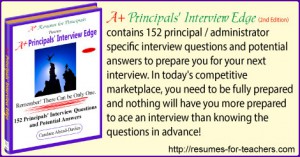
As you know, preparing for your next education leadership interview is critical to receiving a job offer—review 142 additional principal / assistant principal interview questions.
Check out this exceptional resource: A+ Principal Interview Edge eBook.
You can find our principal interview eBook here, along with our other education-related eBooks and resources to help you with your job search.
Books aren’t enough to motivate some kids to read. Thanks to cell phones, social media, and video games, they’re more distracted than ever before and looking for things that stimulate their imagination and engage them.
In many cases, kids struggle with the activity, which makes them less likely to do it.
The following reading websites and tools are great resources for parents and teachers motivating kids to read more. While reading regularly is only one way to engage young readers or help struggling learners overcome their literacy problems, it’s a start—and everyone needs to start somewhere.
This news website is brought to you by the Smithsonian, filled with teen-appropriate content on various subjects, including culture, animals, technology, and tweens in the news.
Kids will be attracted to content such as “How Do Spiders Make a Web” and choose their own reading level. When you (teacher or parent) sign up, you’ll be able to see the Lexile level of the articles they’re reading along with quiz scores, which come with each article; scores are automatically delivered to you.
Whooo’s Reading, an online reading log and tracking program, uses key gamification elements—personalization, goal setting, progress indicators, advancement, rewards, and recognition—to entice kids to read more every day.
Kids are also interested in reading with the Whooo’s Reading program because it gives them the freedom to select the fiction or nonfiction books of their choice, rather than forcing them to read something they have no interest in.
As kids become better and deeper thinkers, the extrinsic rewards (Wisdom Coins and Badges) quickly become intrinsic, making reading in and of itself rewarding.
While this site is designed specifically for teachers, as a parent, you can recommend that the educators at your child’s school get signed up.
You don’t always need flashy content or distracting games to engage kids—sometimes, a simple change in topics does the trick. Wonderopolis attracts kids with offbeat topics like, “Is Biting Your Nails Bad For You?” or “What Makes the Ocean Blue When Water is Clear?” All the articles are accompanied by videos, pictures, vocabulary lists, and quizzes.
As a teacher or parent, you can feel comfortable letting your kids peruse this site for any articles they want to read—all the content is kid-safe.
The school library may not be lined with hardcover Britannica books like when you were in school, but that doesn’t mean kids can’t access that same great content.
Head to Britannica’s website, where kids can access current event articles along with Britannica-style pieces that include biographies and historical explanations.
Kids can take quizzes, scroll image galleries, and scan fun, list-based articles. When you sign up as a teacher or parent, you’ll also receive access to interactive learning activities, research and study guides, and thousands of images, videos, and statistics.
Making reading relevant may be just what some of your kids need to begin loving it. You can do that with TIME for Kids, which provides kids grades K-6 with articles about current events written just for them.
As a teacher or parent, you have access to a library of free printables. If you subscribe to the weekly digital edition, you’ll also receive the accompanying assessments, classroom resources, teacher guide, whiteboard edition, and online teaching tools. Note that pricing is on a per-child basis.
Motivating students to read more is just one piece of the puzzle for helping kids overcome literacy problems or learn to love reading. However, daily reading practice is an important piece that shouldn’t be overlooked and is now easier than ever, thanks to these fun websites and tech tools to motivate reading.
Bio: Jessica Sanders is the Director of Social Outreach for Whooo’s Reading, a San Diego-based education organization that motivates students to read more every day. It’s available to teachers, schools, and districts. Jessica grew up reading books like The Giver and Holes and is passionate about making reading as exciting for young kids today as it has always been for her. Follow Learn2Earn on Twitter and Facebook, and check out their new ebook, How to Bring Technology Into the Classroom, for just $2.99 on Amazon.com.
To secure a rewarding career change to education, you need to discover and efficiently use the critical steps necessary to move forward.
Are you ready to advance from possibly a state of “stuck in a rut” or “bored” in your present profession to a desire to do what’s necessary to build a joyful career change to education?
If you are a first-year teacher wondering how to write your resume or CV, look no further. Check out this in-depth blog post specific to writing a new teacher resume.
What is your reason for wanting to make a career change to education?
There are many reasons why people decide to switch careers: perhaps they are unhappy or unfulfilled with their current jobs, they are looking for more challenge and excitement, or maybe it is just time for a change. Regardless of the reason for wanting to try a new career path, you must know there is nothing wrong with making a switch and attempting a new venture, particularly when transitioning into something as fulfilling as entering the world of education.
Educating others can be an enriching experience. It takes a special person to connect with students and present information so learners of all styles can absorb and remember it. Regardless of the career you are coming from, others will tell you that instructors can make a real difference. It is important first to discover if you have what it takes to be a teacher, and then you must convince potential school district hiring authorities and principals of the value you can bring to the position.
How to Determine Your Dream Education Career
If you’ve decided to make a career change to education, that’s great! But your decision-making doesn’t end here. You need to figure out precisely what you want in your career in the education sector and determine what instruction area would suit you best. Most importantly, to ensure that you want to move forward with this career change to education. The Guardian has an informative post on what you need to know if you are considering changing careers into teaching.
1. First, you need to evaluate what you want and don’t want for your career. You may wish to specialize in an area you enjoy and are passionate about doing. Narrowing your job target will help you to target the options you selected in your resume and cover letter.
2. Research the various education sectors where you can pursue a career based on your skills and proficiency. If you are good at teaching, complete some preliminary research in this area and find out whether you can find opportunities to advance you professionally.
3. Identify your unique skills that you can use as leverage when seeking an employment opportunity in education. When making a career change, the skills you have that can transfer into teaching are important to highlight. These are called “transferable skills” and will help you land interviews if they are highlighted and written correctly throughout your resume and application letter.
4. Networking is important to get your career in the right direction. Your network contacts can lead to many potential job opportunities in education, and it can be instrumental in uncovering what you want to pursue.
5. Consider the assistance of a career mentor; they can help you evaluate the right direction and ask you thought-provoking questions to get you thinking. They have the right expertise and can help you avoid common career pitfalls.
6. After talking with a career mentor, evaluate whether there are other career opportunities in the education sector you never considered pursuing. By taking the time to research, you should also determine any areas of interest outside the school system.
7. you need to realize that you are in the preliminary stage of establishing your education career. Therefore, you need to enhance your experience relevant to the job position you want to pursue in this field.
8. Complete career training and skill development will help further your chances of employability. For instance, you must likely complete teacher training before applying for teaching positions. Most teaching positions require current teaching certifications. You may wish to check into the alternate route program many individuals have used to enter education.
9. Learn the basics of job hunting because this is important in realizing your career in education. How you present yourself to potential employers will matter a lot in determining whether you get the job. Focus your resume and cover letter to target the teaching position of interest.
10. Think about adaptability and the importance of being flexible. Like with any other career options, education is also a multifaceted industry. It would be helpful if you are willing to pursue other career alternatives when the position you want is not yet available. For instance, if you want to become an elementary teacher, you may first need to take a substitute teacher position or a teaching assistant job until you gain more experience in the classroom.
How to Make a Career Change to Education Quickly, Without Mistakes or Setbacks
Deciding where to start your new career will depend on your current education and work experience. If you are looking to transition into the educator role and have no relevant training or experience, then you will need to start from square one: earning a Bachelor’s Degree in Education. If you already have a bachelor’s degree but are in a different field, you may complete a second major or follow an alternative route program. State certification or licensure is usually required as well.
Once you have completed the necessary schooling and passed all related exams, analyze your work experience and determine any positions you may have held relevant to teaching. For example, maybe you led instructional courses or training sessions as a business manager, coached a little league baseball team, or volunteered for an adult literacy program. If you possess no formal classroom experience, then these are the types of positions you can showcase to demonstrate your teaching ability.
On the other hand, if you have completed a Bachelor’s Degree in Education, you will most likely have participated in classroom observations, finished a teaching practicum, or served as a teacher’s aide/assistant. Any instructional or classroom experience you can highlight for potential schools is invaluable.
Next, you must dig for relevant teaching skills and keywords to include in your resume.
Ensure your resume positions yourself for a career change to education.
What skills or talents have I developed that will enable me to be an outstanding teacher? Look back to your schooling and past career(s). For instance, communication, problem-solving, time management, and leadership skills are necessary for establishing a productive learning environment. You should also possess patience, creativity, commitment, and compassion to understand and accommodate the unique needs of your students. These are all qualities that you must showcase for potential schools.
After you have determined everything related to the above categories, you can complete a resume and application letter package.
By highlighting related education, work experience, skill sets, and personal traits, you will capture the reader’s attention and appeal to the needs of his/her school or district. You may also want to write a philosophy of education statement, also called a teaching philosophy – a brief document detailing your beliefs about instruction, classroom environments, helping students, education as a whole, and your teaching goals – as many administrators will ask for one before the interview.
After Your Resume and Application Letter Are Targeted
It’s time to make a career transition to education by submitting applications.
You may want to search through the newspaper, take a look at your local school district’s website, or use a teacher recruiter site to find positions of interest to you. Apply to as many jobs relevant to your teaching area as possible, minding strict deadlines. The more resumes you submit, the better your chance of receiving a call for an interview.
When called for an interview, research the school and its district to prepare and tailor your responses to interview questions. You should prepare for the opportunity of meeting with a school administrator or perhaps a panel of individuals (if you make it past the initial screening).
After the interview, make sure you send a thank you letter promptly.
A career change to education IS possible if you equip yourself with the right action plan. By following the steps outlined in this article, you will be off to a great start in finding your second career.
For more information or assistance with your resume or other areas of your job search, please contact Candace at 1 877 738-8052 or by email.
This website uses cookies to improve your experience. We'll assume you're ok with this, but you can opt-out if you wish.AcceptRejectRead More
Privacy & Cookies Policy
Privacy Overview
This website uses cookies to improve your experience while you navigate through the website. Out of these, the cookies that are categorized as necessary are stored on your browser as they are essential for the working of basic functionalities of the website. We also use third-party cookies that help us analyze and understand how you use this website. These cookies will be stored in your browser only with your consent. You also have the option to opt-out of these cookies. But opting out of some of these cookies may affect your browsing experience.
Necessary cookies are absolutely essential for the website to function properly. This category only includes cookies that ensures basic functionalities and security features of the website. These cookies do not store any personal information.
Any cookies that may not be particularly necessary for the website to function and is used specifically to collect user personal data via analytics, ads, other embedded contents are termed as non-necessary cookies. It is mandatory to procure user consent prior to running these cookies on your website.